Tabassum Rubaiya, Jeong Na Young, Jung Junyang
Department of Anatomy and Cell Biology, College of Medicine; Department of Medicine, Graduate School, Dong-A University, Seo-gu, Busan, Korea.
Department of Anatomy and Neurobiology, College of Medicine, Kyung Hee University, Dongdaemun-gu, Seoul, Korea.
Neural Regen Res. 2020 Feb;15(2):232-241. doi: 10.4103/1673-5374.265543.
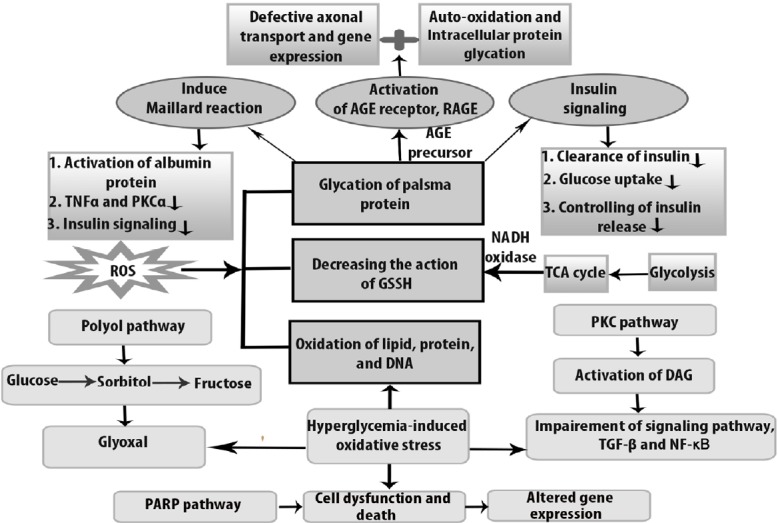
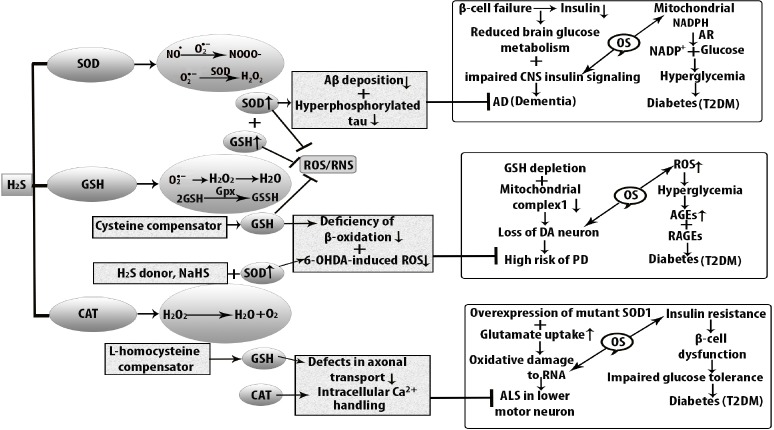
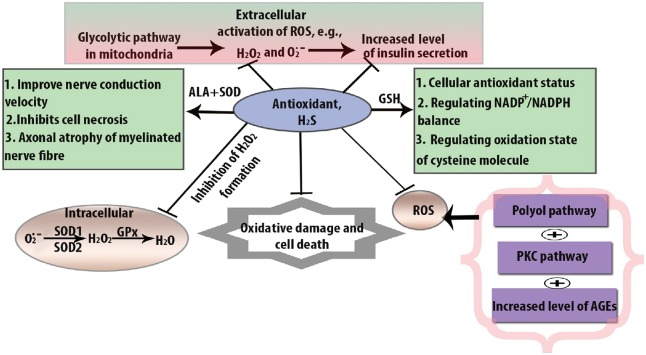
Hydrogen sulfide is an antioxidant molecule that has a wide range of biological effects against oxidative stress. Balanced oxidative stress is also vital for maintaining cellular function in biological system, where reactive oxygen species are the main source of oxidative stress. When the normal redox balance is disturbed, deoxyribonucleic acid, lipid, and protein molecules are oxidized under pathological conditions, like diabetes mellitus that leads to diabetic peripheral neuropathy. In diabetes mellitus-induced diabetic peripheral neuropathy, due to hyperglycemia, pancreatic beta cell (β cell) shows resistance to insulin secretion. As a consequence, glucose metabolism is disturbed in neuronal cells which are distracted from providing proper cell signaling pathway. Not only diabetic peripheral neuropathy but also other central damages occur in brain neuropathy. Neurological studies regarding type 1 diabetes mellitus patients with Alzheimer's disease, Parkinson's disease, and amyotrophic lateral sclerosis have shown changes in the central nervous system because high blood glucose levels (HbA1c) appeared with poor cognitive function. Oxidative stress plays a role in inhibiting insulin signaling that is necessary for brain function. Hydrogen sulfide exhibits antioxidant effects against oxidative stress, where cystathionine β synthase, cystathionine γ lyase, and 3-mercaptopyruvate sulfurtransferase are the endogenous sources of hydrogen sulfide. This review is to explore the pathogenesis of diabetes mellitus-induced diabetic peripheral neuropathy and other neurological comorbid disorders under the oxidative stress condition and the anti-oxidative effects of hydrogen sulfide.
硫化氢是一种抗氧化分子,对氧化应激具有广泛的生物学效应。平衡的氧化应激对于维持生物系统中的细胞功能也至关重要,其中活性氧是氧化应激的主要来源。当正常的氧化还原平衡受到干扰时,在病理条件下,如导致糖尿病性周围神经病变的糖尿病,脱氧核糖核酸、脂质和蛋白质分子会被氧化。在糖尿病诱发的糖尿病性周围神经病变中,由于高血糖,胰腺β细胞对胰岛素分泌表现出抵抗。因此,神经元细胞中的葡萄糖代谢受到干扰,无法提供适当的细胞信号通路。不仅糖尿病性周围神经病变,在脑神经病中还会发生其他中枢损伤。对患有阿尔茨海默病、帕金森病和肌萎缩侧索硬化症的1型糖尿病患者的神经学研究表明,由于高血糖水平(糖化血红蛋白)与认知功能差同时出现,中枢神经系统发生了变化。氧化应激在抑制对脑功能至关重要的胰岛素信号传导中起作用。硫化氢对氧化应激具有抗氧化作用,其中胱硫醚β合酶、胱硫醚γ裂解酶和3-巯基丙酮酸硫转移酶是硫化氢的内源性来源。本综述旨在探讨氧化应激条件下糖尿病诱发的糖尿病性周围神经病变及其他神经合并症的发病机制以及硫化氢的抗氧化作用。