Liu Min-Hui, Li Wen, Zheng Jia-Jun, Xu Yu-Ge, He Qing, Chen Gong
Guangdong-HongKong-Macau Institute of CNS Regeneration (GHMICR), Jinan University, Guangzhou, Guangdong Province, China.
Guangdong-HongKong-Macau Institute of CNS Regeneration (GHMICR), Jinan University, Guangzhou, Guangdong Province, China; Department of Biology, The Huck Institutes of Life Sciences, The Pennsylvania State University, University Park, PA, USA.
Neural Regen Res. 2020 Feb;15(2):342-351. doi: 10.4103/1673-5374.265185.
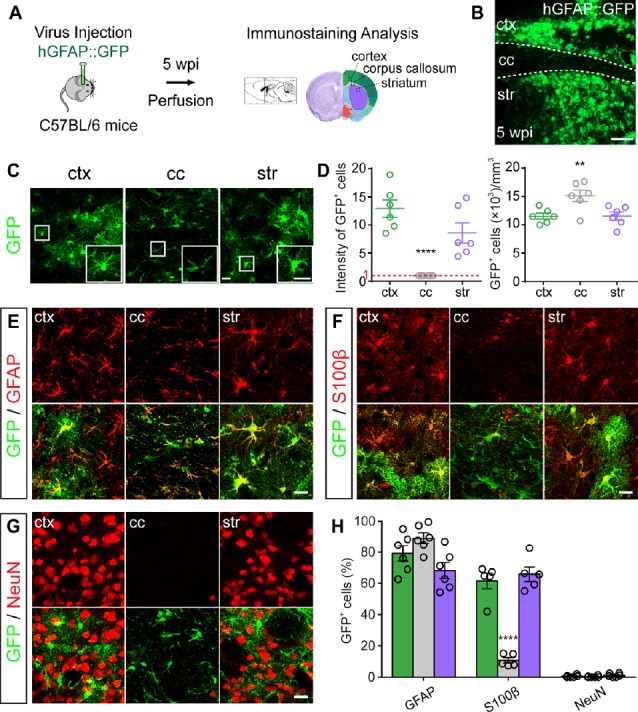
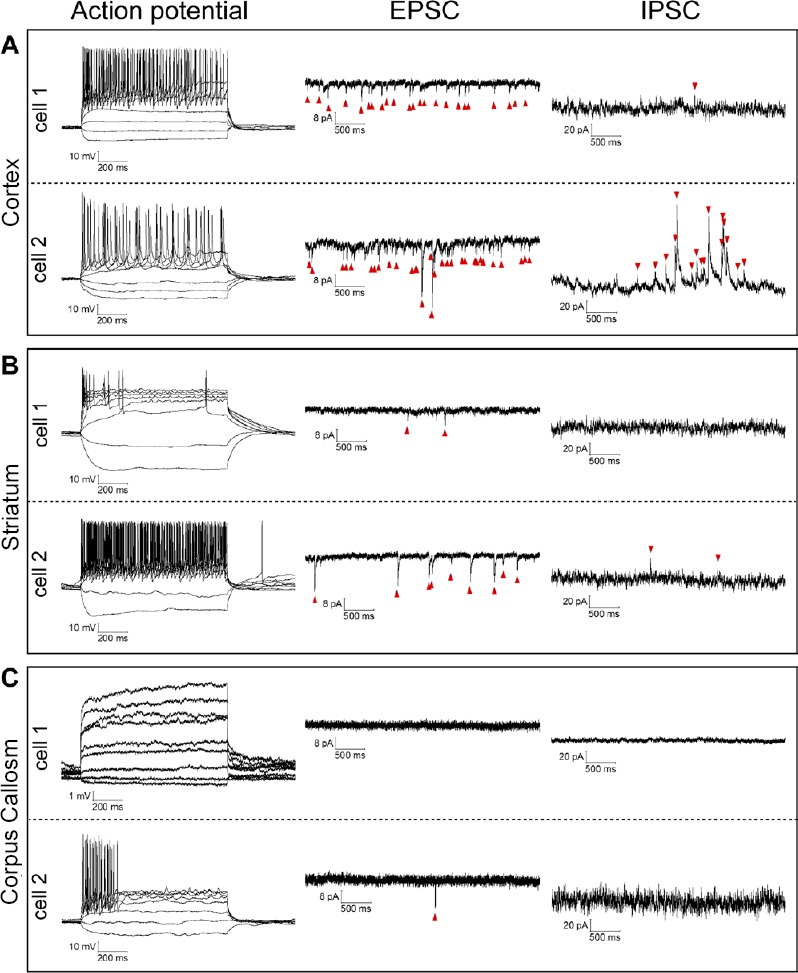
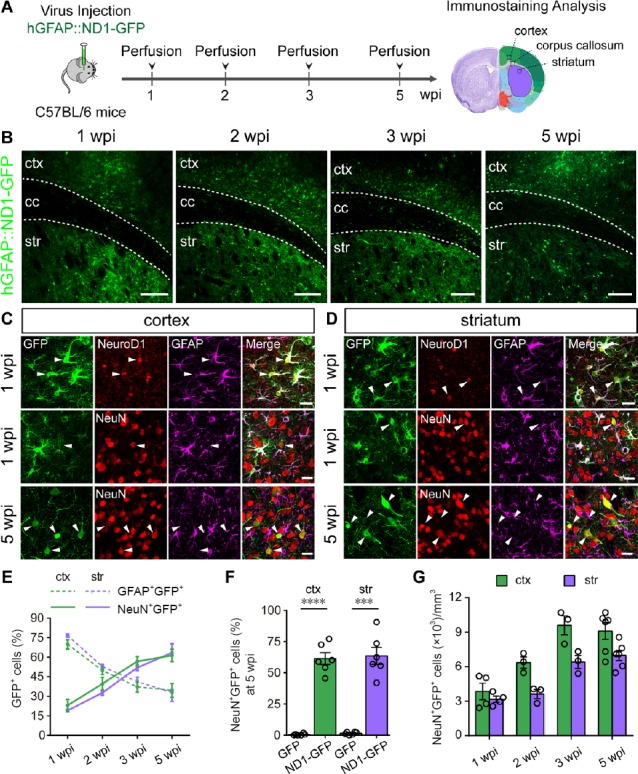
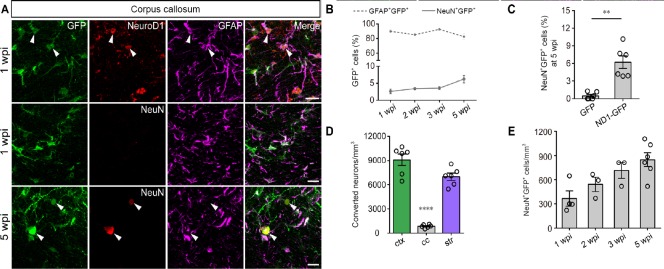
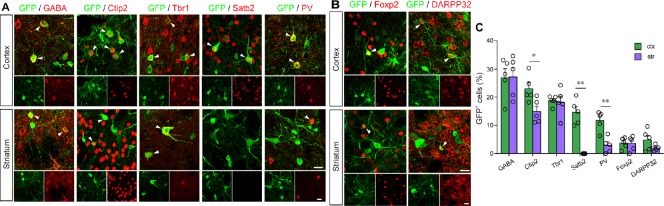
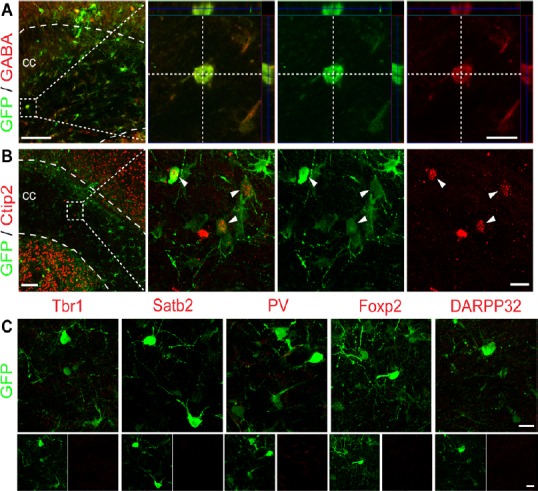
A new technology called in vivo glia-to-neuron conversion has emerged in recent years as a promising next generation therapy for neural regeneration and repair. This is achieved through reprogramming endogenous glial cells into neurons in the central nervous system through ectopically expressing neural transcriptional factors in glial cells. Previous studies have been focusing on glial cells in the grey matter such as the cortex and striatum, but whether glial cells in the white matter can be reprogrammed or not is unknown. To address this fundamental question, we express NeuroD1 in the astrocytes of both grey matter (cortex and striatum) and white matter (corpus callosum) to investigate the conversion efficiency, neuronal subtypes, and electrophysiological features of the converted neurons. We discover that NeuroD1 can efficiently reprogram the astrocytes in the grey matter into functional neurons, but the astrocytes in the white matter are much resistant to neuronal reprogramming. The converted neurons from cortical and striatal astrocytes are composed of both glutamatergic and GABAergic neurons, capable of firing action potentials and having spontaneous synaptic activities. In contrast, the few astrocyte-converted neurons in the white matter are rather immature with rare synaptic events. These results provide novel insights into the differential reprogramming capability between the astrocytes in the grey matter versus the white matter, and highlight the impact of regional astrocytes as well as microenvironment on the outcome of glia-to-neuron conversion. Since human brain has large volume of white matter, this study will provide important guidance for future development of in vivo glia-to-neuron conversion technology into potential clinical therapies. Experimental protocols in this study were approved by the Laboratory Animal Ethics Committee of Jinan University (approval No. IACUC-20180321-03) on March 21, 2018.
近年来,一种名为体内胶质细胞向神经元转化的新技术作为一种有前景的神经再生和修复的下一代疗法应运而生。这是通过在胶质细胞中异位表达神经转录因子,将中枢神经系统中的内源性胶质细胞重编程为神经元来实现的。先前的研究一直聚焦于灰质中的胶质细胞,如皮质和纹状体,但白质中的胶质细胞是否可以重编程尚不清楚。为了解决这个基本问题,我们在灰质(皮质和纹状体)和白质(胼胝体)的星形胶质细胞中表达NeuroD1,以研究转化效率、神经元亚型以及转化神经元的电生理特征。我们发现NeuroD1可以有效地将灰质中的星形胶质细胞重编程为功能性神经元,但白质中的星形胶质细胞对神经元重编程具有更强的抗性。来自皮质和纹状体星形胶质细胞的转化神经元由谷氨酸能和γ-氨基丁酸能神经元组成,能够产生动作电位并具有自发突触活动。相比之下,白质中少数由星形胶质细胞转化而来的神经元相当不成熟,突触事件很少。这些结果为灰质与白质中星形胶质细胞的差异重编程能力提供了新的见解,并突出了区域星形胶质细胞以及微环境对胶质细胞向神经元转化结果的影响。由于人类大脑中有大量白质,本研究将为体内胶质细胞向神经元转化技术未来发展为潜在临床疗法提供重要指导。本研究中的实验方案于2018年3月21日获得暨南大学实验动物伦理委员会批准(批准号:IACUC - 20180321 - 03)。