Zhang Lei, Lei Zhuofan, Guo Ziyuan, Pei Zifei, Chen Yuchen, Zhang Fengyu, Cai Alice, Mok Gabriel, Lee Grace, Swaminathan Vishal, Wang Fan, Bai Yuting, Chen Gong
Department of Biology, Huck Institute of Life Sciences, Pennsylvania State University, University Park, PA, United States.
Guangdong-Hongkong-Macau Institute of CNS Regeneration, Jinan University, Guangzhou, China.
Front Cell Neurosci. 2020 Nov 5;14:594170. doi: 10.3389/fncel.2020.594170. eCollection 2020.
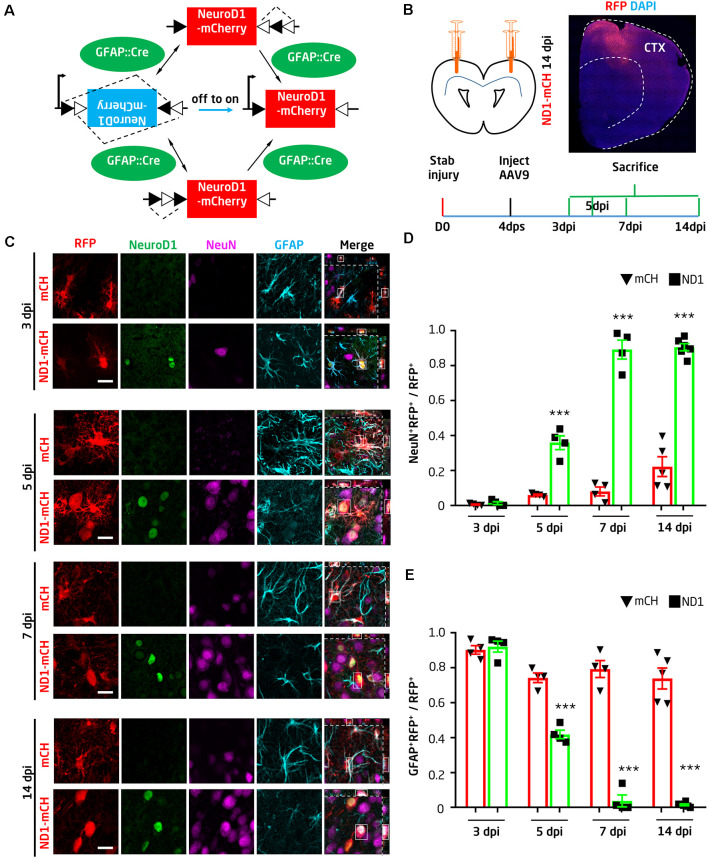
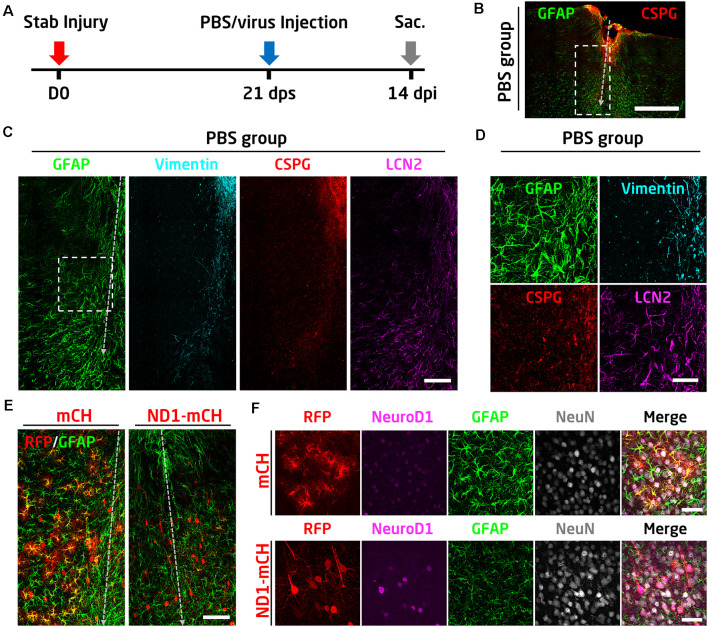
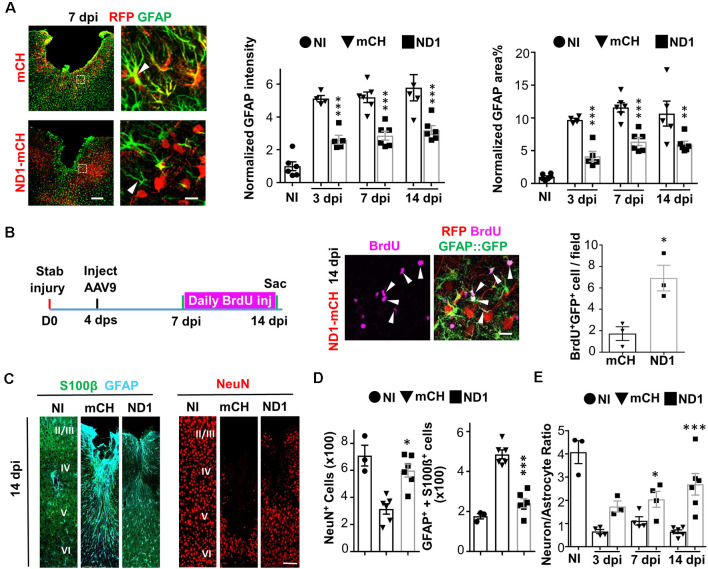
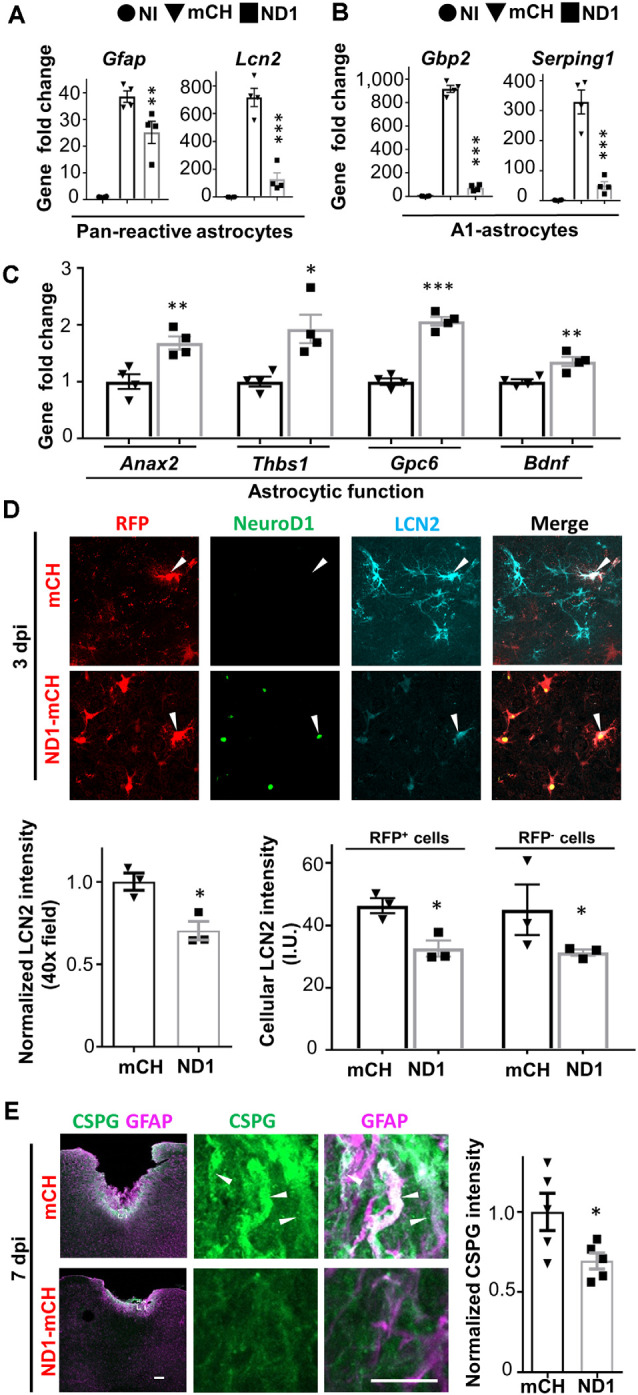
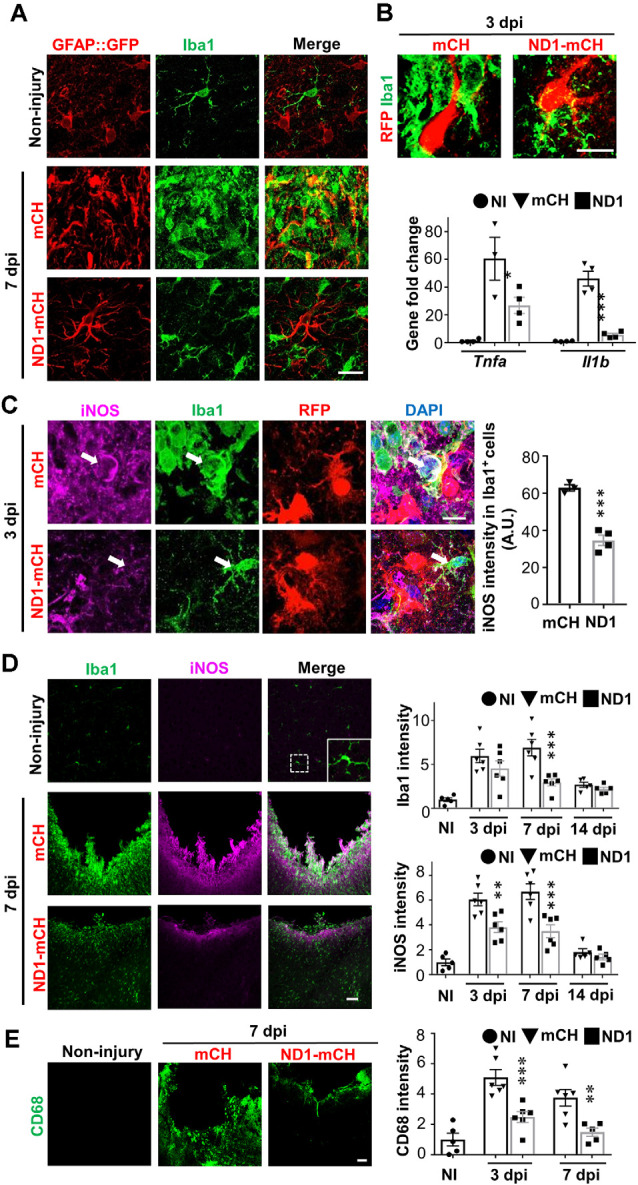
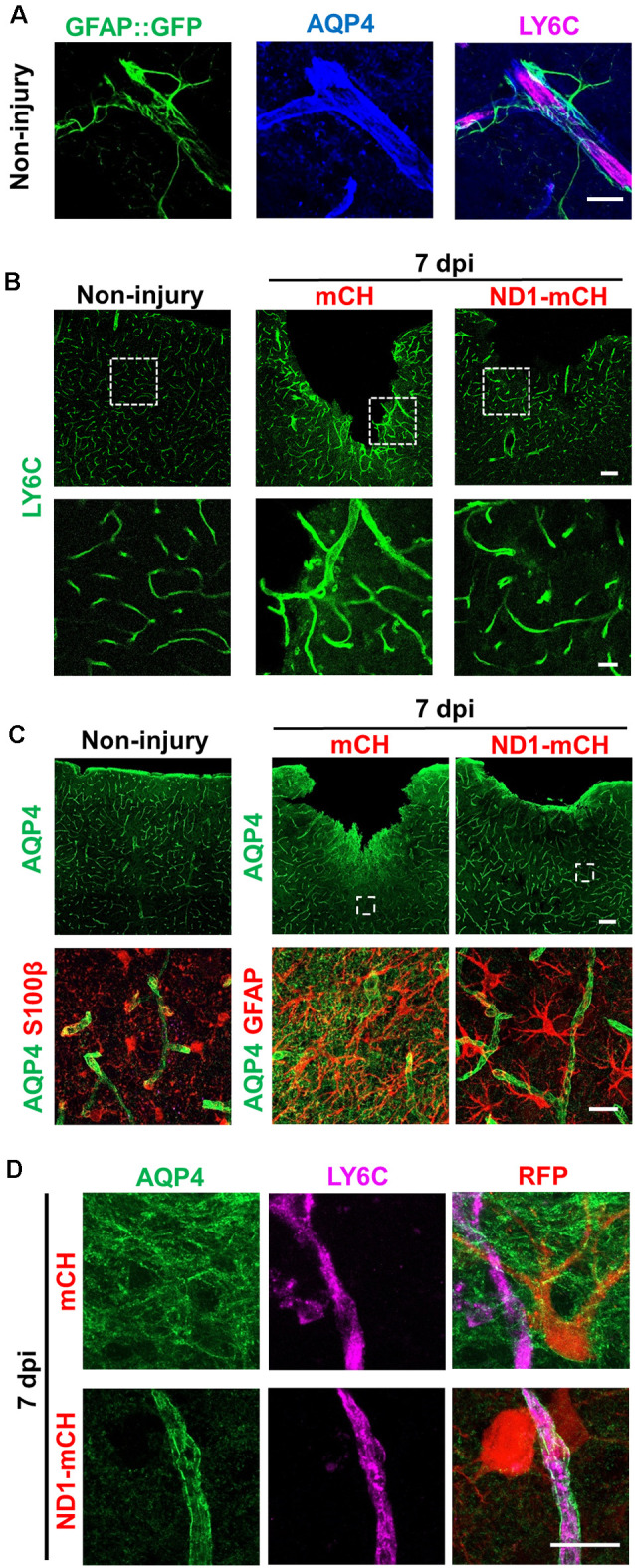
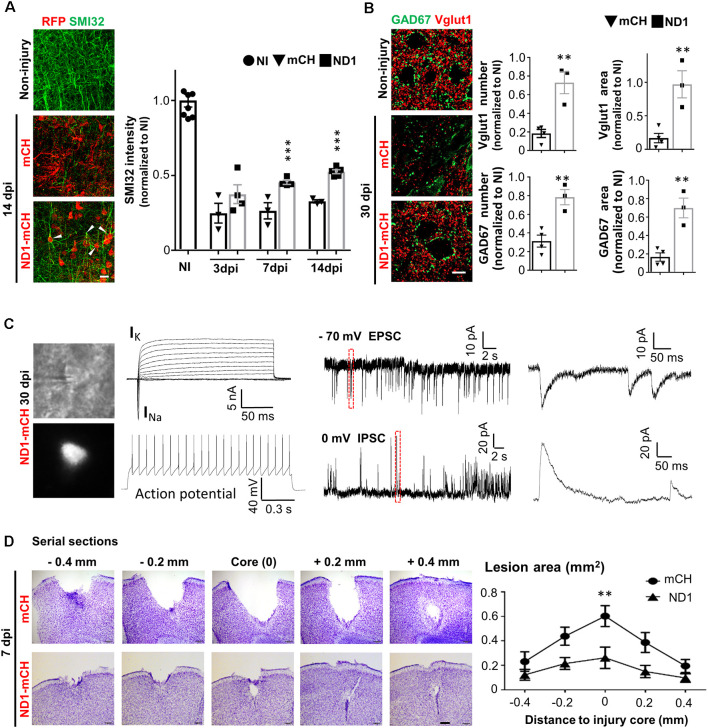
Injuries in the central nervous system (CNS) often causes neuronal loss and glial scar formation. We have recently demonstrated NeuroD1-mediated direct conversion of reactive glial cells into functional neurons in adult mouse brains. Here, we further investigate whether such direct glia-to-neuron conversion technology can reverse glial scar back to neural tissue in a severe stab injury model of the mouse cortex. Using an adeno-associated virus (AAV)-based gene therapy approach, we ectopically expressed a single neural transcription factor NeuroD1 in reactive astrocytes in the injured areas. We discovered that the reactive astrocytes were efficiently converted into neurons both before and after glial scar formation, and the remaining astrocytes proliferated to repopulate themselves. The astrocyte-converted neurons were highly functional, capable of firing action potentials and establishing synaptic connections with other neurons. Unexpectedly, the expression of NeuroD1 in reactive astrocytes resulted in a significant reduction of toxic A1 astrocytes, together with a significant decrease of reactive microglia and neuroinflammation. Furthermore, accompanying the regeneration of new neurons and repopulation of new astrocytes, new blood vessels emerged and blood-brain-barrier (BBB) was restored. These results demonstrate an innovative neuroregenerative gene therapy that can directly reverse glial scar back to neural tissue, opening a new avenue for brain repair after injury.
中枢神经系统(CNS)损伤常导致神经元丢失和胶质瘢痕形成。我们最近证明了NeuroD1介导的成年小鼠大脑中反应性胶质细胞直接转化为功能性神经元。在此,我们进一步研究这种直接的胶质细胞向神经元转化技术是否能在小鼠皮质严重刺伤模型中将胶质瘢痕逆转回神经组织。使用基于腺相关病毒(AAV)的基因治疗方法,我们在损伤区域的反应性星形胶质细胞中异位表达单一神经转录因子NeuroD1。我们发现,在胶质瘢痕形成之前和之后,反应性星形胶质细胞都能有效地转化为神经元,剩余的星形胶质细胞增殖以自我补充。星形胶质细胞转化而来的神经元功能高度正常,能够产生动作电位并与其他神经元建立突触连接。出乎意料的是,NeuroD1在反应性星形胶质细胞中的表达导致毒性A1星形胶质细胞显著减少,同时反应性小胶质细胞和神经炎症也显著降低。此外,随着新神经元的再生和新星形胶质细胞的补充,新血管出现,血脑屏障(BBB)得以恢复。这些结果证明了一种创新的神经再生基因治疗方法,可直接将胶质瘢痕逆转回神经组织,为损伤后脑修复开辟了一条新途径。