Department of Gastroenterology, The First Affiliated Hospital, Sun Yat-sen University, Guangzhou, Guangdong, China.
Department of Gastroenterology, The Sixth Affiliated Hospital, Sun Yat-sen University, Guangzhou, Guangdong, China.
Cell Death Dis. 2019 Sep 26;10(10):718. doi: 10.1038/s41419-019-1957-7.
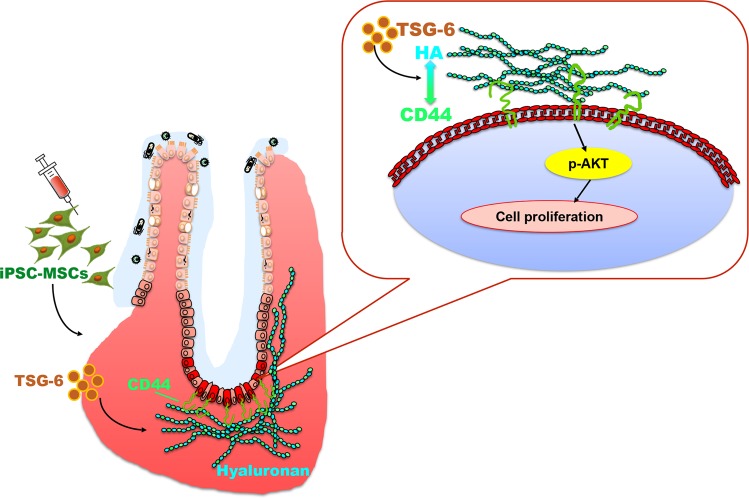
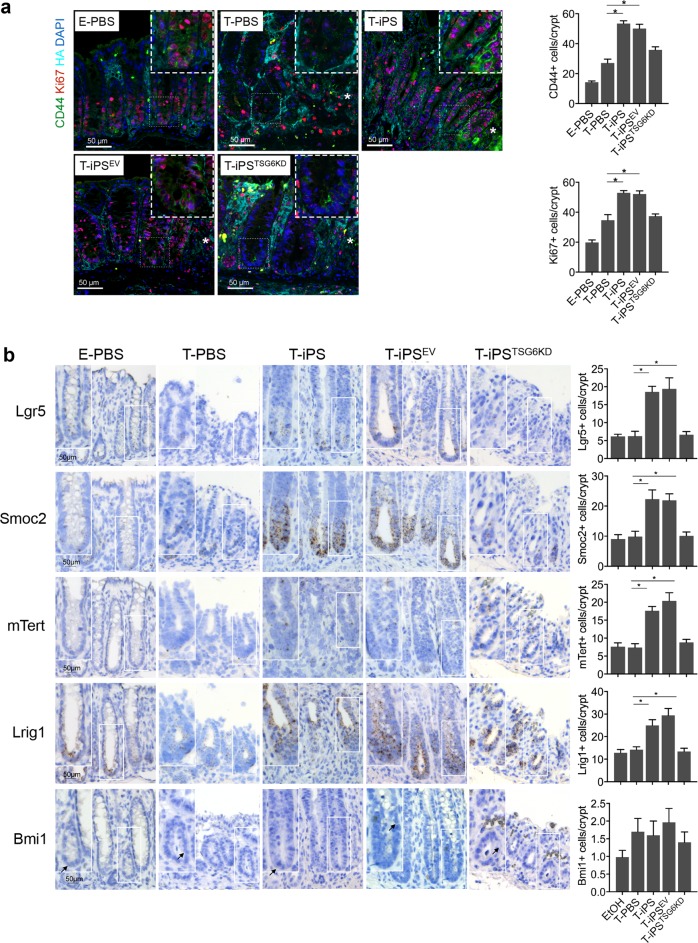
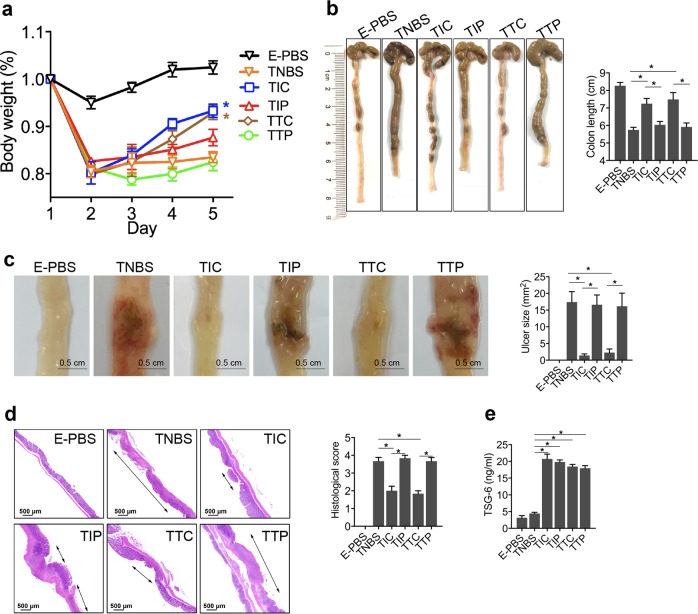
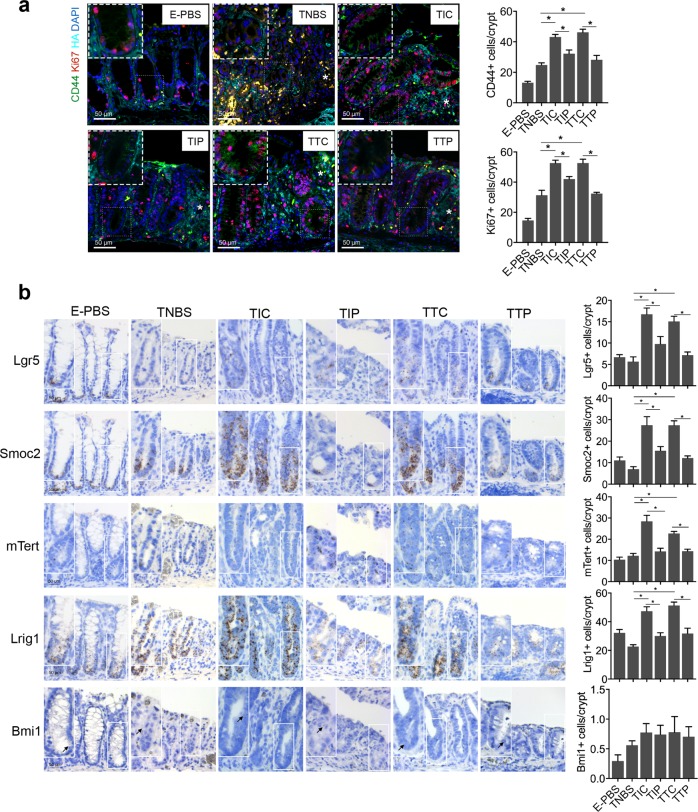
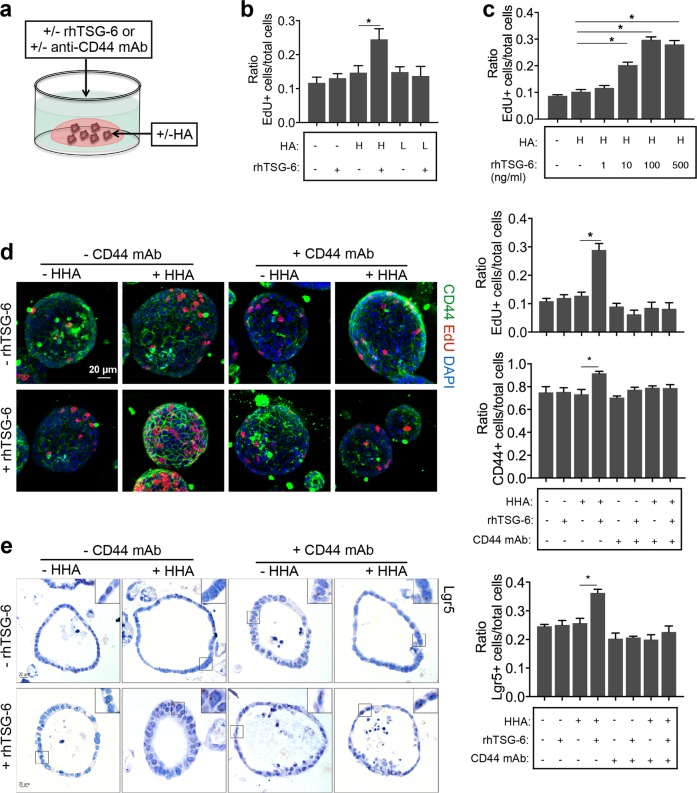
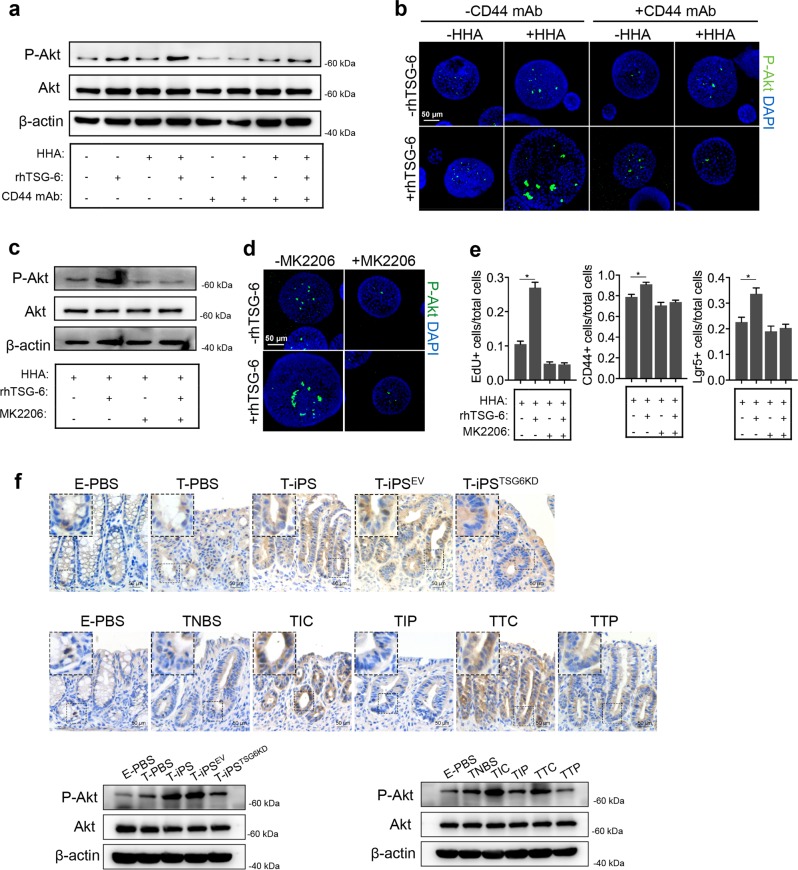
Therapeutic applications of tissue-derived mesenchymal stem cells (MSCs) are hindered by their limited expansion ability and variation across donors. Human induced pluripotent stem cell (iPSC)-derived MSCs show greater expandability and therefore offer potential for use in tissue repair therapies. Here we explored the regenerative effects of iPSC-MSCs and the mechanisms by which iPSC-MSCs promote mucosal healing via tumor necrosis factor-α-stimulated gene 6 (TSG-6) in mouse models of inflammatory bowel disease (IBD). Human iPSCs were induced to differentiate into MSCs following a clinically compliant protocol. The iPSC-MSC treatment promoted mucosal healing in colitic mice, accompanied by increased epithelial cell proliferation, CD44-positive cells, and Lgr5-positive cells. TSG-6 knockdown in iPSC-MSCs or blocking of hyaluronan-CD44 interactions by PEP-1 abrogated the therapeutic effects of iPSC-MSCs, whereas use of recombinant TSG-6 showed therapeutic effects similar to those of iPSC-MSCs. A mouse or patient-derived organoid culture system was developed. Organoids co-cultured with iPSC-MSCs showed increased epithelial cell proliferation, CD44-positive cells, and Lgr5-positive cells, which was abolished by TSG-6 knockdown. TSG-6-induced promoting effects in organoids were dependent on Akt activation and abrogated by the anti-CD44 antibody or MK2206. In conclusion, iPSC-MSCs promoted epithelial cell proliferation to accelerate mucosal healing in a murine colitis model via TSG-6 through hyaluronan-CD44 interactions in an Akt-dependent manner, demonstrating a patient-specific "off-the-shelf" format for IBD treatment.
组织来源的间充质干细胞(MSCs)的治疗应用受到其有限的扩增能力和供体间变异性的限制。人诱导多能干细胞(iPSC)衍生的 MSCs 显示出更大的扩增能力,因此为组织修复治疗提供了潜力。在这里,我们通过肿瘤坏死因子-α刺激基因 6(TSG-6)探索了 iPSC-MSCs 的再生作用及其促进黏膜愈合的机制,在炎症性肠病(IBD)的小鼠模型中。按照临床合规的方案,将人 iPSC 诱导分化为 MSCs。iPSC-MSC 治疗促进了结肠炎小鼠的黏膜愈合,伴随着上皮细胞增殖、CD44 阳性细胞和 Lgr5 阳性细胞的增加。在 iPSC-MSCs 中敲低 TSG-6 或通过 PEP-1 阻断透明质酸-CD44 相互作用,阻断了 iPSC-MSCs 的治疗效果,而使用重组 TSG-6 则显示出与 iPSC-MSCs 相似的治疗效果。开发了一种小鼠或患者来源的类器官培养系统。与 iPSC-MSCs 共培养的类器官显示上皮细胞增殖、CD44 阳性细胞和 Lgr5 阳性细胞增加,而 TSG-6 敲低则消除了这种增加。类器官中 TSG-6 诱导的促进作用依赖于 Akt 激活,并被抗-CD44 抗体或 MK2206 阻断。总之,iPSC-MSCs 通过透明质酸-CD44 相互作用和 Akt 依赖性途径,通过 TSG-6 促进上皮细胞增殖,加速了小鼠结肠炎模型中的黏膜愈合,为 IBD 治疗提供了一种患者特异性的“现货”治疗方案。