Li Guangyao, Zhou Yuan, Sze Daniel Man-Yuen, Liu Chao, Zhang Qianru, Wang Zihao, Yu Hua, Chan Ging, Wu Zhongdao, Su Shibing, Hu Yuanjia
State Key Laboratory of Quality Research in Chinese Medicine, Institute of Chinese Medical Sciences, University of Macau, Macau SAR, China.
Research Center for Traditional Chinese Medicine Complexity System, Shanghai University of Traditional Chinese Medicine, Shanghai, China.
Evid Based Complement Alternat Med. 2019 Sep 3;2019:2408126. doi: 10.1155/2019/2408126. eCollection 2019.
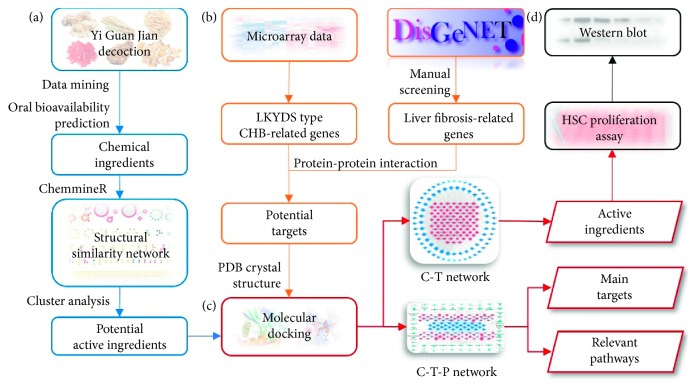
The progression of liver fibrosis in chronic hepatitis B (CHB) patients is currently insufficiently controlled worldwide. The Yi Guan Jian decoction (YGJD) has been widely used in the treatment of liver fibrosis in CHB cases. Although animal studies have reported the antifibrotic effects of the decoction, the active ingredients of the YGJD remain unknown. This study aimed at identifying the potential active ingredients and exploring the mechanisms of action (MOA) of the decoction when treating CHB patients with fibrosis.
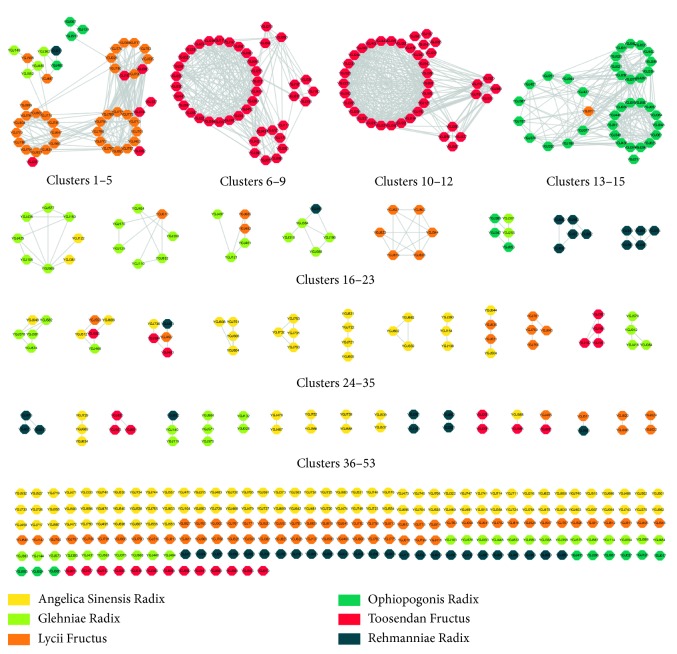
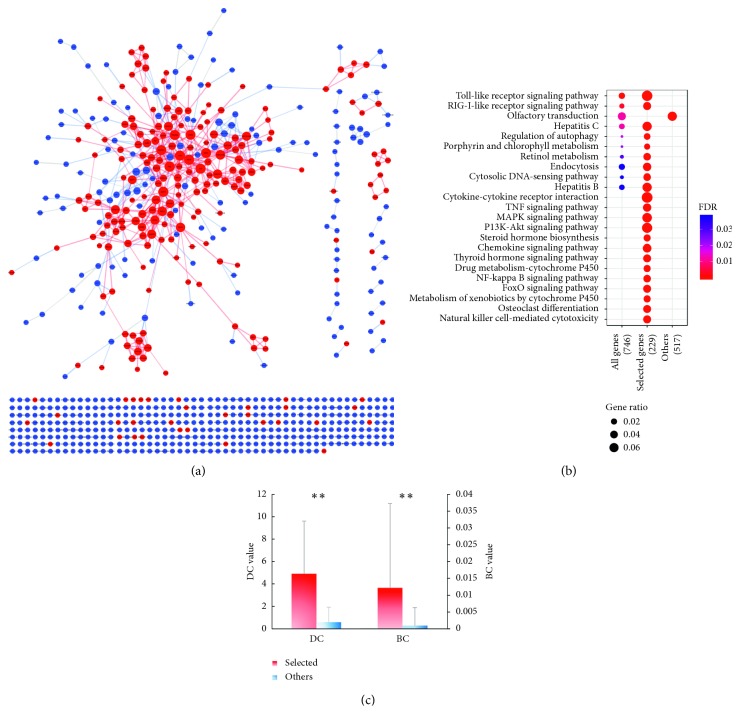
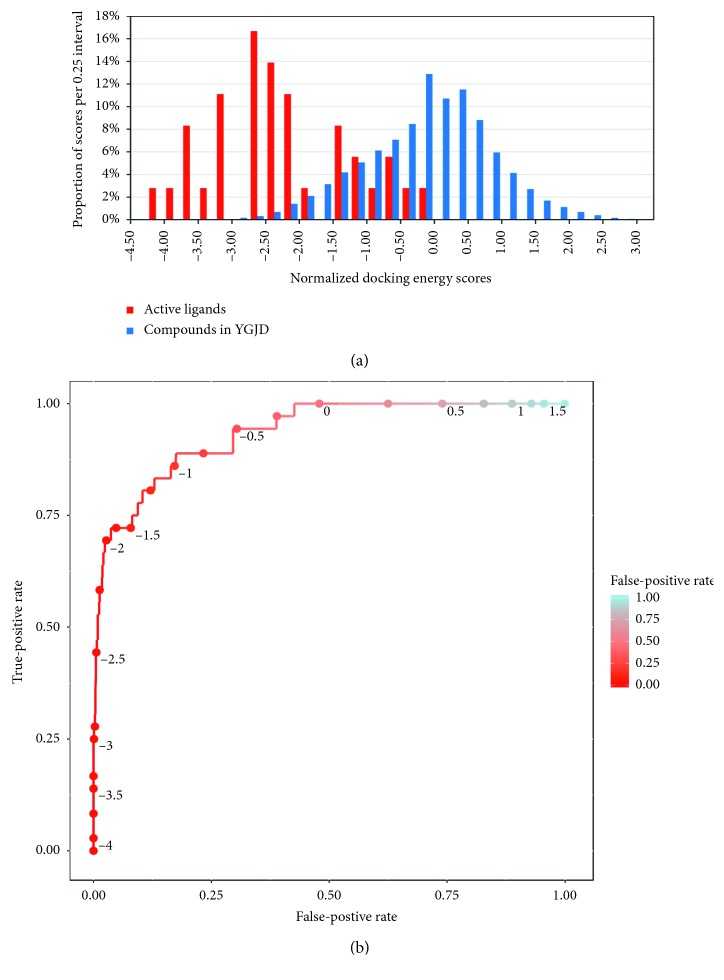
Using data mining techniques and a structural clustering analysis, the potential active ingredients were determined. A network analysis of the differentially expressed genes was conducted to identify the potential targets. Selected compounds were docked to the potential targets for the compound-target interaction simulation. validation, including a cell proliferation assay and Western blot analysis, was conducted to evaluate the prediction results.
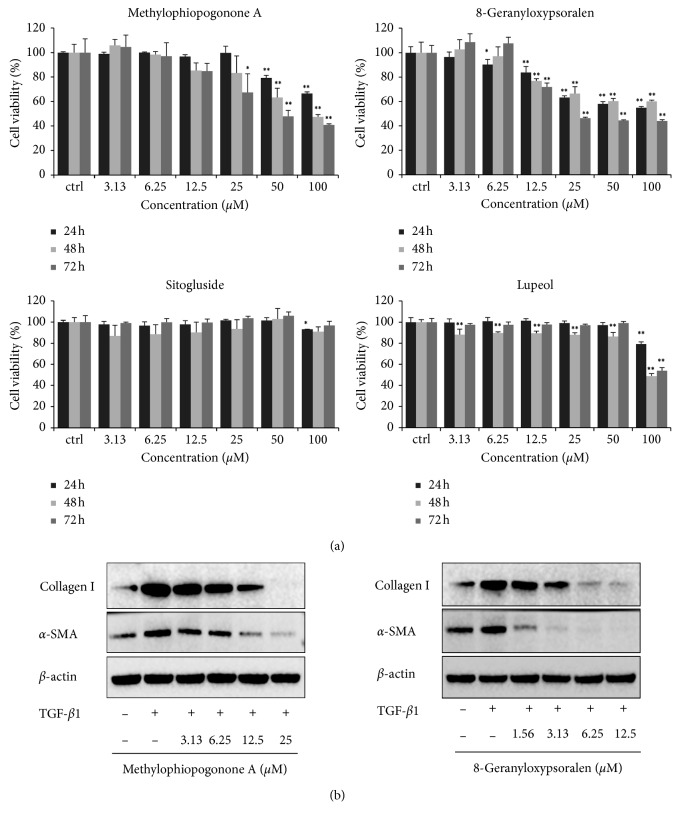
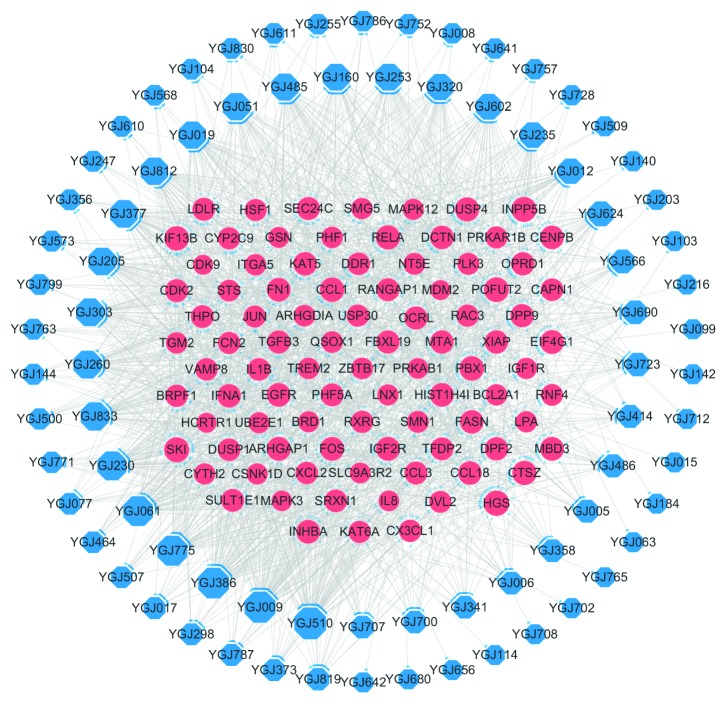
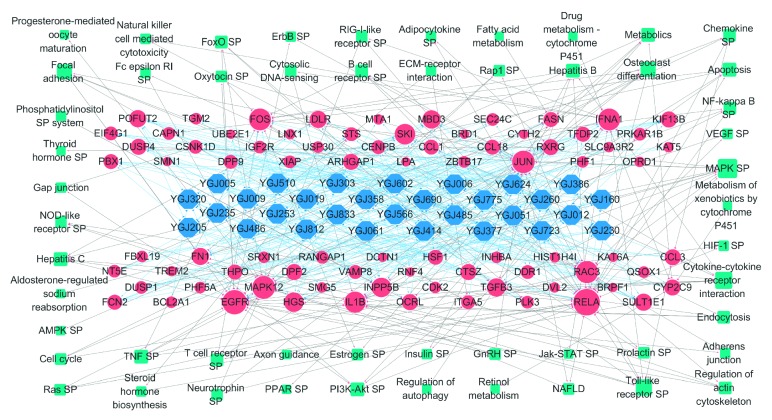
In the microarray data, 224 differentially expressed genes related to liver fibrosis were considered to be potential targets. Thirty active ingredients of the YGJD and 15 main targets and relevant pathways were identified. Among them, two active ingredients, methylophiopogonone A and 8-geranyloxypsoralen, were validated as exhibiting antifibrotic effects on hepatic stellate cells.
We identified the potential active ingredients of the YGJD and proposed the possible explanation for the MOA in the treatment of CHB patients with liver fibrosis. Moreover, this study provides a methodological reference for the systematic investigation of the bioactive compounds and related MOA of a traditional Chinese medicine formula in a clinical context.
目前,全球范围内慢性乙型肝炎(CHB)患者肝纤维化的进展控制仍不充分。一贯煎(YGJD)已广泛用于CHB病例肝纤维化的治疗。尽管动物研究报道了该汤剂的抗纤维化作用,但其有效成分仍不清楚。本研究旨在确定潜在的有效成分,并探索该汤剂治疗CHB纤维化患者的作用机制。
运用数据挖掘技术和结构聚类分析确定潜在的有效成分。对差异表达基因进行网络分析以识别潜在靶点。将选定的化合物与潜在靶点进行对接以模拟化合物-靶点相互作用。通过细胞增殖试验和蛋白质印迹分析等验证实验来评估预测结果。
在微阵列数据中,224个与肝纤维化相关的差异表达基因被认为是潜在靶点。确定了YGJD的30种有效成分以及15个主要靶点和相关通路。其中,两种有效成分,甲基麦冬黄酮A和8-香叶氧基补骨脂素,被证实对肝星状细胞具有抗纤维化作用。
我们确定了YGJD的潜在有效成分,并提出了其治疗CHB肝纤维化患者作用机制的可能解释。此外,本研究为在临床背景下系统研究中药配方的生物活性化合物及相关作用机制提供了方法学参考。