Department of Neurobiology, Physiology and Behavior, University of California, Davis, Davis, United States.
Department of Physiology and Membrane Biology, University of California, Davis, Davis, United States.
Elife. 2019 Sep 30;8:e48750. doi: 10.7554/eLife.48750.
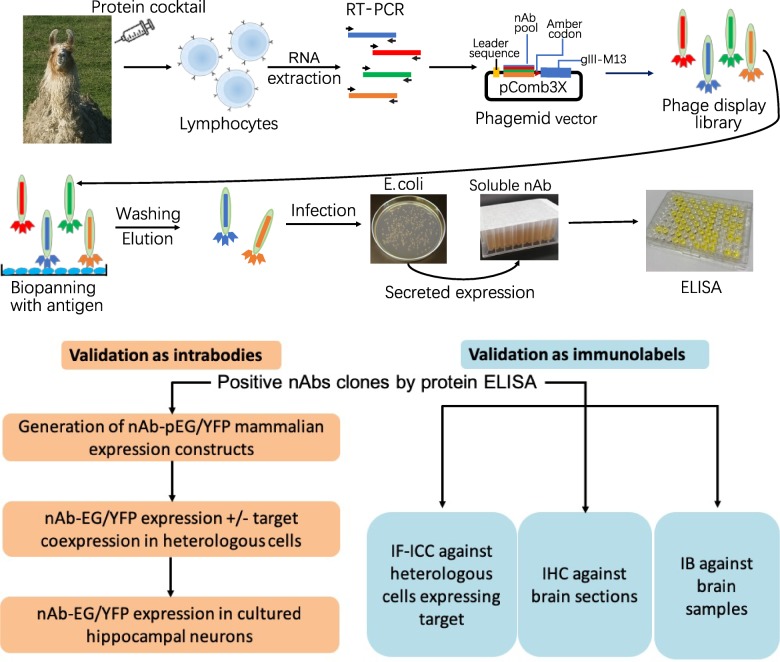
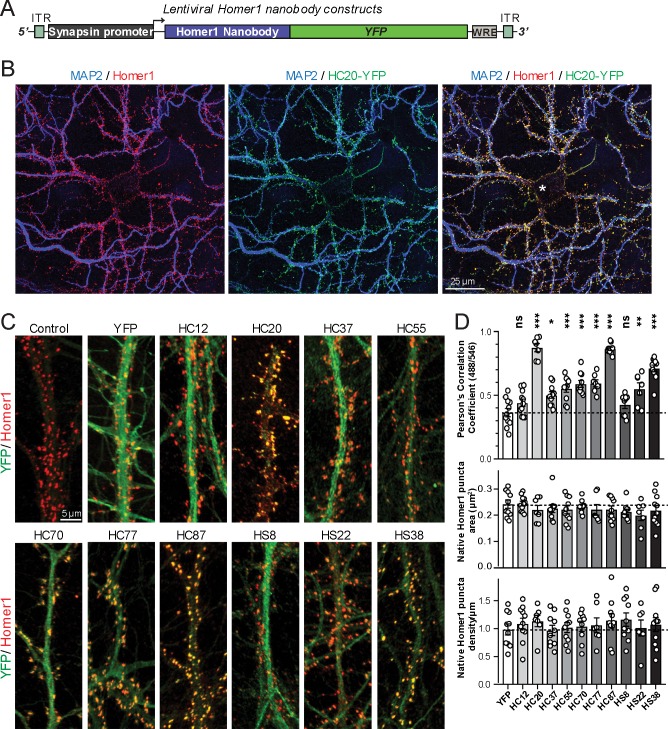
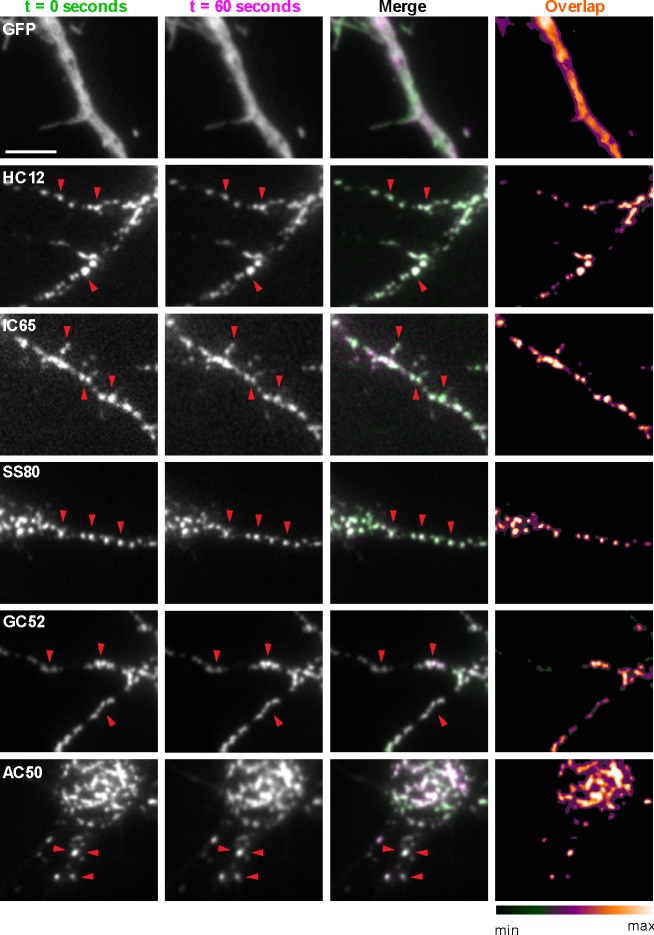
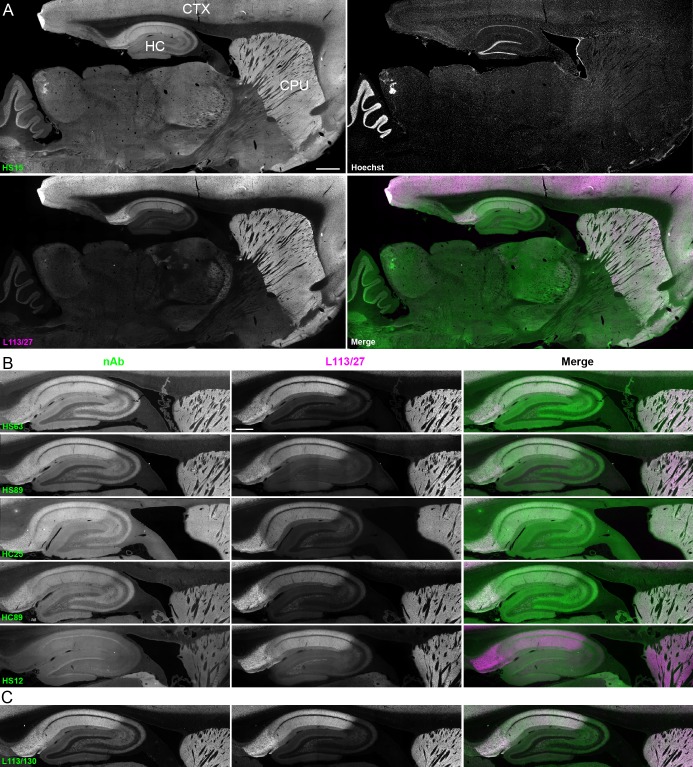
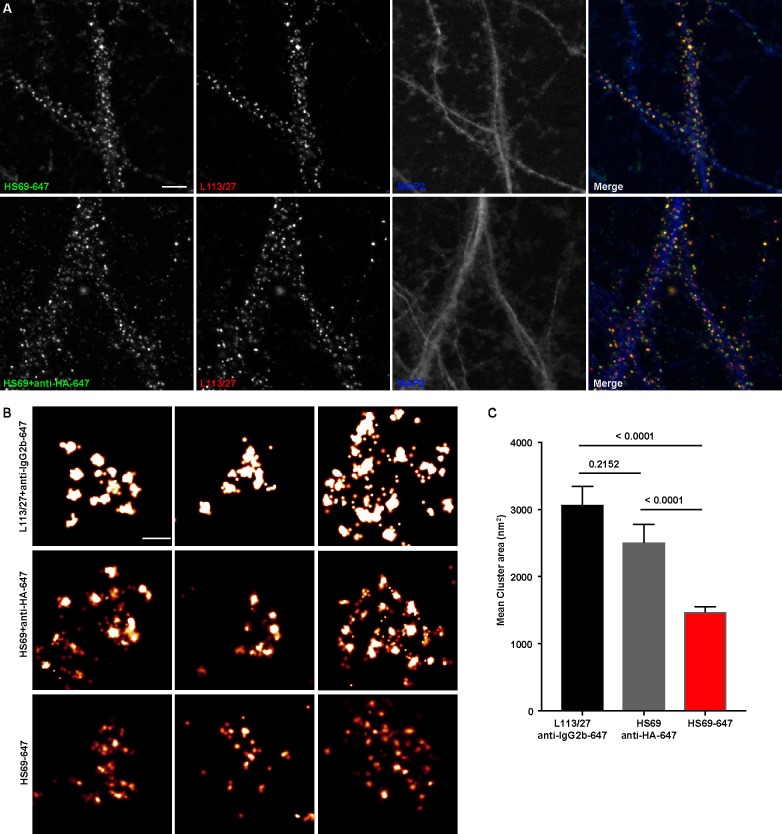
Nanobodies (nAbs) are small, minimal antibodies that have distinct attributes that make them uniquely suited for certain biomedical research, diagnostic and therapeutic applications. Prominent uses include as intracellular antibodies or intrabodies to bind and deliver cargo to specific proteins and/or subcellular sites within cells, and as nanoscale immunolabels for enhanced tissue penetration and improved spatial imaging resolution. Here, we report the generation and validation of nAbs against a set of proteins prominently expressed at specific subcellular sites in mammalian brain neurons. We describe a novel hierarchical validation pipeline to systematically evaluate nAbs isolated by phage display for effective and specific use as intrabodies and immunolabels in mammalian cells including brain neurons. These nAbs form part of a robust toolbox for targeting proteins with distinct and highly spatially-restricted subcellular localization in mammalian brain neurons, allowing for visualization and/or modulation of structure and function at those sites.
纳米抗体(nAbs)是一种小型的最小抗体,具有独特的特性,使其非常适合某些医学研究、诊断和治疗应用。突出的用途包括作为细胞内抗体或内体,将货物结合并递送到细胞内特定的蛋白质和/或亚细胞部位,以及作为纳米级免疫标记物,以增强组织穿透和提高空间成像分辨率。在这里,我们报告了针对一组在哺乳动物大脑神经元中特定亚细胞部位表达的蛋白质的 nAbs 的产生和验证。我们描述了一种新颖的层次验证管道,用于系统地评估噬菌体展示分离的 nAbs,以有效地和特异性地用作内体和免疫标记物在哺乳动物细胞中,包括脑神经元。这些 nAbs 构成了一个强大的工具箱的一部分,用于靶向在哺乳动物大脑神经元中具有独特和高度空间限制的亚细胞定位的蛋白质,允许在这些部位可视化和/或调节结构和功能。