Man Andy W C, Li Huige, Xia Ning
Department of Pharmacology, University Medical Centre, Johannes Gutenberg University Mainz, Mainz, Germany.
Front Physiol. 2019 Sep 12;10:1173. doi: 10.3389/fphys.2019.01173. eCollection 2019.
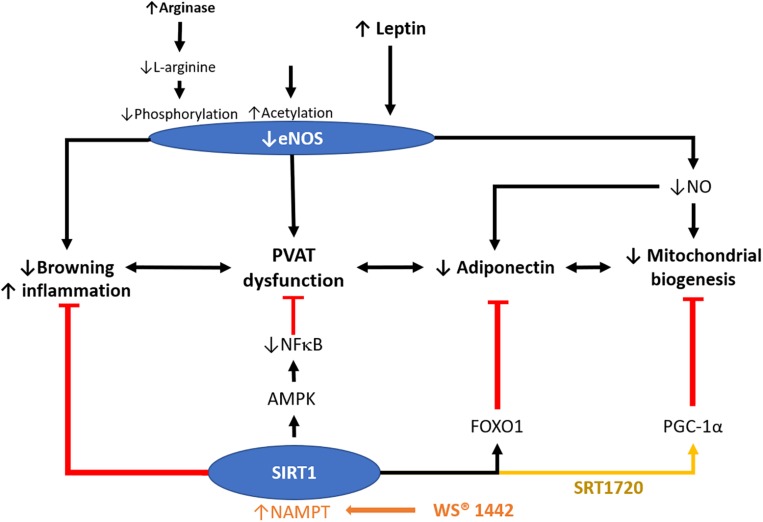
Sirtuin1 (SIRT1), which belongs to a highly conserved family of protein deacetylase, is one of the best-studied sirtuins. SIRT1 is involved in a variety of biological processes, including energy metabolism, cell proliferation and survival, chromatin dynamics, and DNA repair. In the vasculature, SIRT1 is ubiquitously expressed in endothelial cells, smooth muscle cells, and perivascular adipose tissues (PVAT). Endothelial SIRT1 plays a unique role in vasoprotection by regulating a large variety of proteins, including endothelial nitric oxide synthase (eNOS). In endothelial cells, SIRT1 and eNOS regulate each other synergistically through positive feedback mechanisms for the maintenance of endothelial function. Recent studies have shown that SIRT1 plays a vital role in modulating PVAT function, arterial remodeling, and vascular aging. In the present article, we summarize recent findings, review the molecular mechanisms and the potential of SIRT1 as a therapeutic target for the treatment of vascular diseases, and discuss future research directions.
沉默调节蛋白1(SIRT1)属于蛋白脱乙酰酶的一个高度保守家族,是研究最为深入的沉默调节蛋白之一。SIRT1参与多种生物学过程,包括能量代谢、细胞增殖与存活、染色质动态变化以及DNA修复。在脉管系统中,SIRT1在内皮细胞、平滑肌细胞和血管周围脂肪组织(PVAT)中广泛表达。内皮型SIRT1通过调节多种蛋白质,包括内皮型一氧化氮合酶(eNOS),在血管保护中发挥独特作用。在内皮细胞中,SIRT1和eNOS通过正反馈机制相互协同调节,以维持内皮功能。最近的研究表明,SIRT1在调节PVAT功能、动脉重塑和血管衰老方面起着至关重要的作用。在本文中,我们总结了近期的研究发现,回顾了SIRT1作为血管疾病治疗靶点的分子机制和潜力,并讨论了未来的研究方向。