From the School of Women's and Children's Health, Faculty of Medicine (A.W.W., G.N.S.), and Department of Maternal-Fetal Medicine (A.W.W.), University of New South Wales, Royal Hospital for Women, Locked Bag 2000, Barker Street, Randwick, NSW 2031, Australia; Departments of Radiology (J.B.F., S.Z.P., J.M.R., O.D.K.), Biomedical Engineering (K.A.I.), and Pediatrics (G.E.O.), University of Michigan Health System, Ann Arbor, Mich; Nuffield Department of Women's and Reproductive Health, University of Oxford, Oxford, England (P.L., S.L.C.); and Fetal Medicine Unit, Women's Centre, John Radcliffe Hospital, Oxford, England (S.L.C.).
Radiology. 2019 Nov;293(2):460-468. doi: 10.1148/radiol.2019190248. Epub 2019 Oct 1.
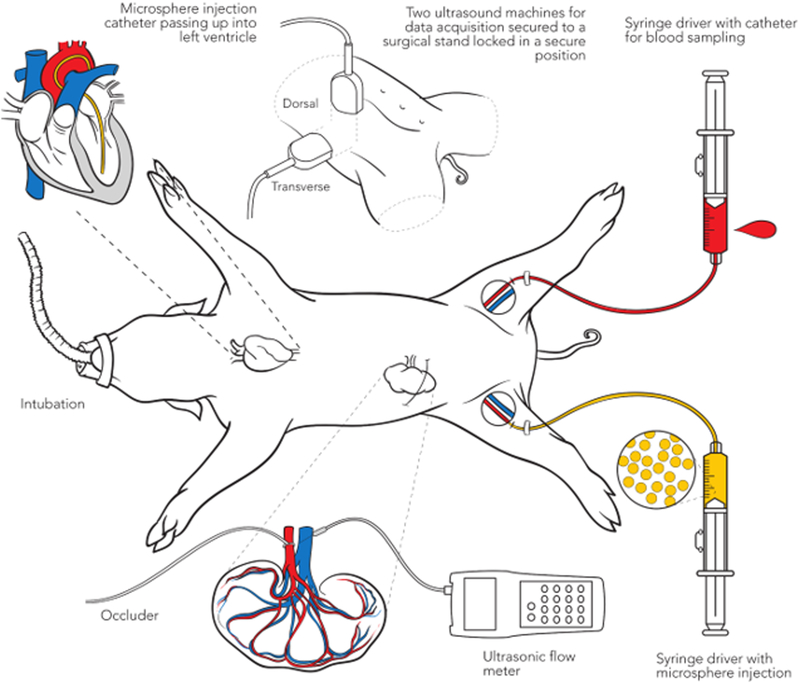
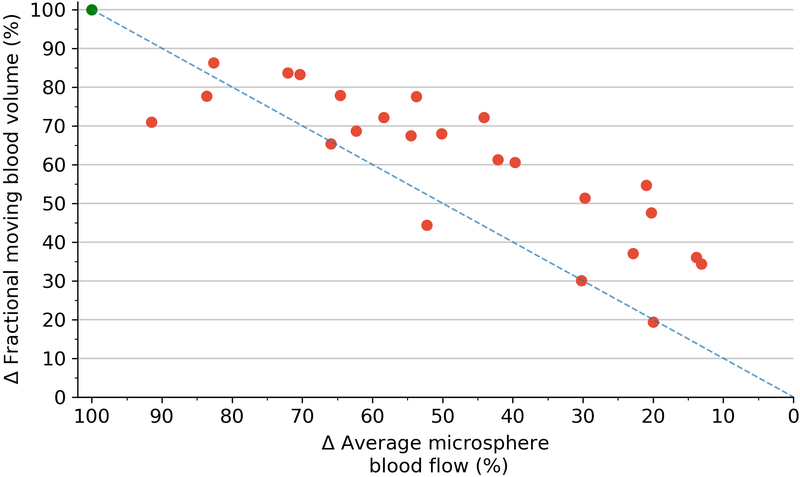
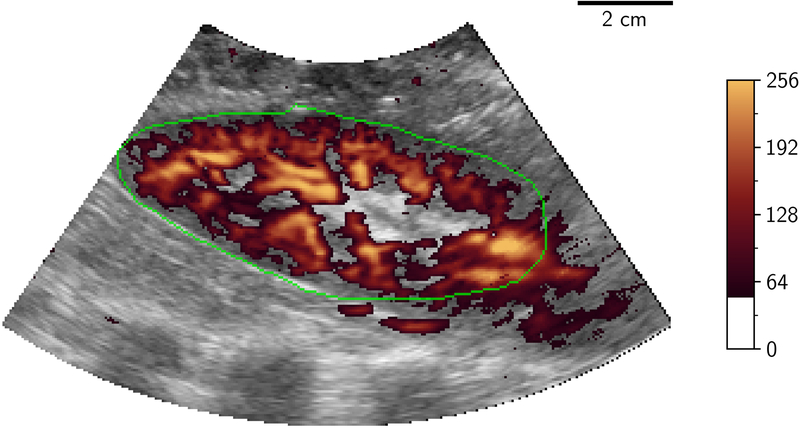
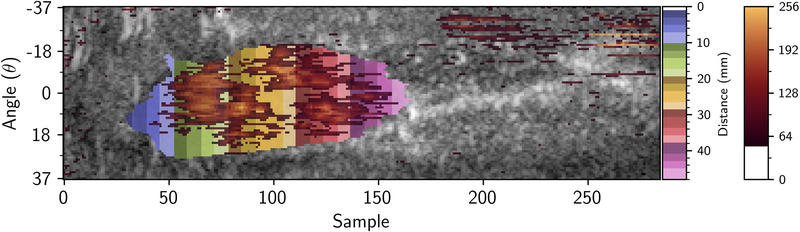
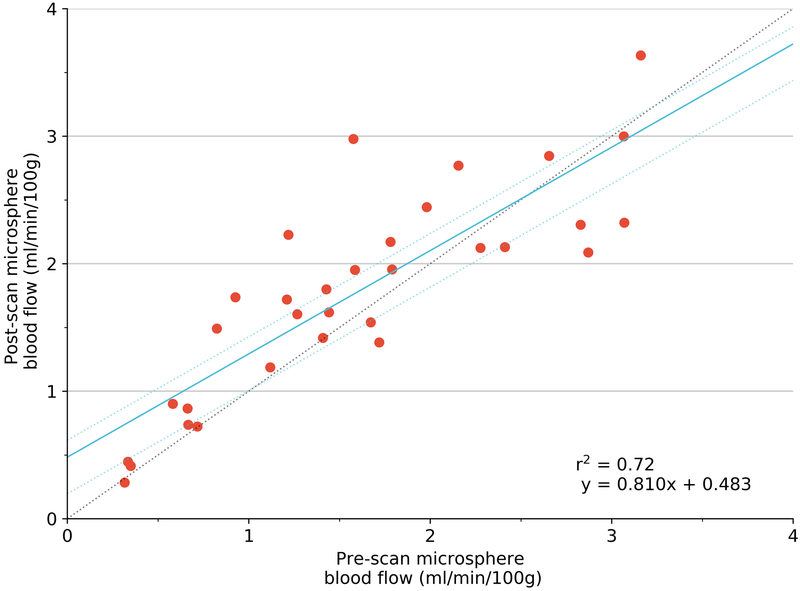
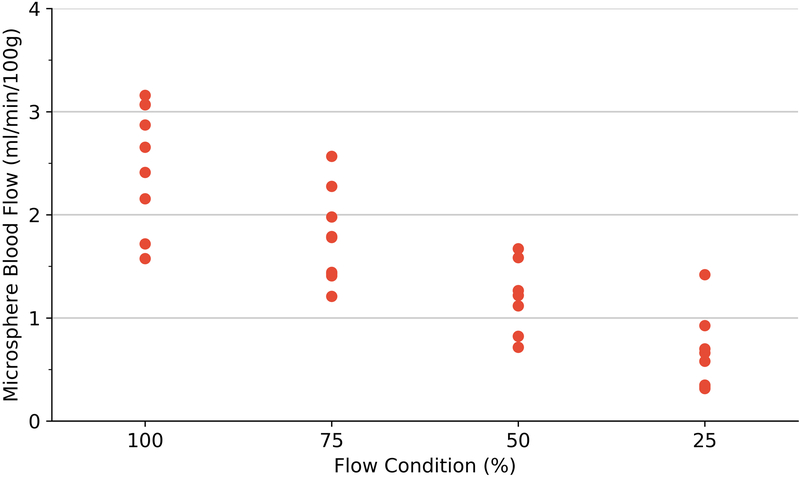
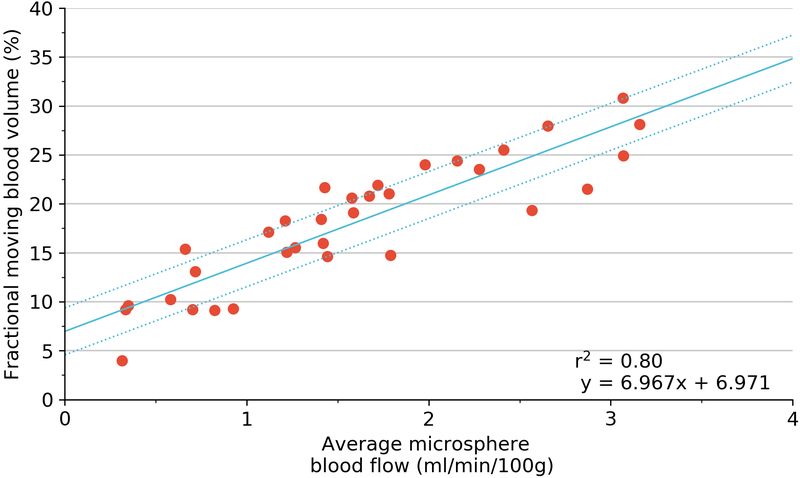
Background Three-dimensional (3D) fractional moving blood volume (FMBV) derived from 3D power Doppler US has been proposed for noninvasive approximation of perfusion. However, 3D FMBV has never been applied in animals against a ground truth. Purpose To determine the correlation between 3D FMBV and the reference standard of fluorescent microspheres (FMS) for measurement of renal perfusion in a porcine model. Materials and Methods From February 2017 to September 2017, adult pigs were administered FMS before and after measurement of renal 3D FMBV at baseline (100%) and approximately 75%, 50%, and 25% flow levels by using US machines from two different vendors. The 3D power Doppler US volumes were converted and segmented, and correlations between FMS and 3D FMBV were made with simple linear regression (). Similarity and reproducibility of manual segmentation were determined with the Dice similarity coefficient and 3D FMBV reproducibility (intraclass correlation coefficient [ICC]). Results Thirteen pigs were studied with 33 flow measurements. Kidney volume (mean Dice similarity coefficient ± standard deviation, 0.89 ± 0.01) and renal segmentation (coefficient of variation = 12.6%; ICC = 0.86) were consistent. The 3D FMBV calculations had high reproducibility (ICC = 0.97; 95% confidence interval: 0.96, 0.98). The 3D FMBV per-pig correlation showed excellent correlation for US machines from both vendors (mean = 0.96 [range, 0.92-1.0] and 0.93 [range, 0.78-1.0], respectively). The correlation between 3D FMBV and perfusion measured with microspheres was high for both US machines ( = 0.80 [ < .001] and 0.70 [ < .001], respectively). Conclusion The strong correlation between three-dimensional (3D) fractional moving blood volume (FMBV) and fluorescent microspheres indicates that 3D FMBV shows excellent correlation to perfusion and good reproducibility. © RSNA, 2019 See also the editorial by Morrell et al in this issue.
背景 三维(3D)分数运动血容量(FMBV)来自 3D 能量多普勒超声,已被提出用于无创性近似灌注。然而,3D FMBV 从未在动物身上与荧光微球(FMS)的基准进行过应用。
目的 确定 3D FMBV 与荧光微球在猪模型中测量肾灌注的参考标准之间的相关性。
材料与方法 2017 年 2 月至 2017 年 9 月,在使用两台不同供应商的 US 机测量基线(100%)和大约 75%、50%和 25%流量水平之前和之后,给成年猪施用 FMS。将 3D 能量多普勒 US 体积进行转换和分割,并通过简单线性回归()建立 FMS 和 3D FMBV 之间的相关性。手动分割的相似性和可重复性通过 Dice 相似系数和 3D FMBV 可重复性(组内相关系数[ICC])来确定。
结果 对 13 头猪进行了 33 次流量测量。肾脏体积(平均 Dice 相似系数±标准偏差,0.89±0.01)和肾脏分割(变异系数=12.6%;ICC=0.86)一致。3D FMBV 计算具有很高的可重复性(ICC=0.97;95%置信区间:0.96,0.98)。来自两台 US 机的每头猪的 3D FMBV 相关性显示出很好的相关性(平均 =0.96 [范围,0.92-1.0]和 0.93 [范围,0.78-1.0])。来自两台 US 机的 3D FMBV 与微球测量的灌注之间的相关性均很高(=0.80 [ <.001] 和 0.70 [ <.001])。
结论 三维(3D)分数运动血容量(FMBV)与荧光微球之间的强相关性表明,3D FMBV 与灌注具有极好的相关性和良好的可重复性。