Thompson Kelsey, Zimmerman Emily
Communication Sciences & Disorders, Northeastern University, Boston, MA, United States.
JMIR Rehabil Assist Technol. 2019 Sep 26;6(2):e13966. doi: 10.2196/13966.
While technology use in pediatric therapies is increasing, there is so far no research available focusing on how pediatric speech-language pathologists (SLPs) in the United States use technology.
This paper sought to determine if, and to what extent, pediatric SLPs are using mobile apps, to determine what purpose they are using them for, and to identify gaps in available technology to provide guidance for future technological development.
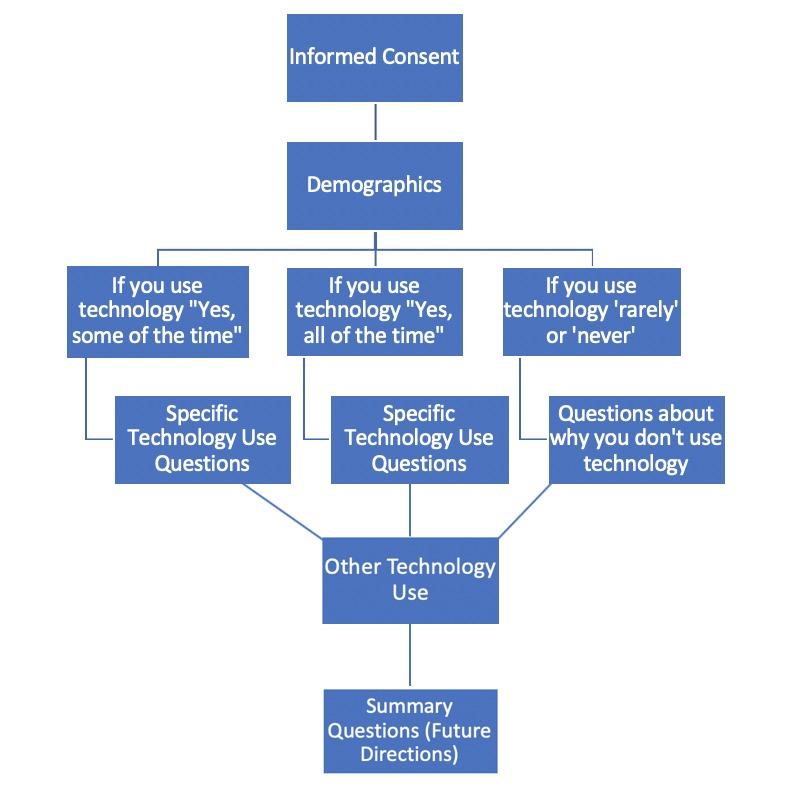
Pediatric SLPs completed an online survey containing five sections: demographics, overall use, use in assessment, use in intervention, barriers, and future directions.
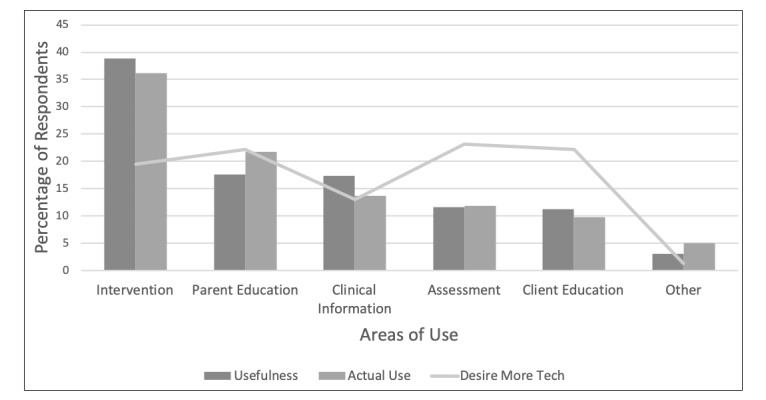
Mobile app use by 485 pediatric SLPs in the clinical setting was analyzed. Most (364/438; 83.1%) pediatric SLPs reported using technology ≤50% of the time in their clinical work, with no differences evident by age group (<35 years and ≥35 years; P=.97). Pediatric SLPs are currently using apps for intervention (399/1105; 36.1%), clinical information (241/1105; 21.8%), parent education (151/1105; 13.7%), assessment (132/1105; 12%), client education (108/1105; 9.8%), and other uses (55/1105; 5.0%). Cost (46/135; 34.1%) and lack of an evidence base (36/135; 26.7%) were the most frequently reported barriers. Most SLPs (268/380; 70.7%) desired more technology use, with no difference evident by age group (P=.81).
A majority of pediatric SLPs are using mobile apps less than 50% of the time in a pediatric setting and they use them more during intervention compared to assessment. While pediatric SLPs are hesitant to add to their client's screen time, they would like more apps to be developed that are supported by research and are less expensive. Implications for future research and app development are also discussed.
虽然儿科治疗中技术的使用正在增加,但迄今为止,尚无针对美国儿科言语语言病理学家(SLP)如何使用技术的研究。
本文旨在确定儿科SLP是否以及在何种程度上使用移动应用程序,确定他们使用移动应用程序的目的,并找出现有技术中的差距,以为未来的技术发展提供指导。
儿科SLP完成了一项包含五个部分的在线调查:人口统计学、总体使用情况、评估中的使用情况、干预中的使用情况、障碍以及未来方向。
分析了485名儿科SLP在临床环境中使用移动应用程序的情况。大多数(364/438;83.1%)儿科SLP报告在临床工作中使用技术的时间≤50%,各年龄组(<35岁和≥35岁)之间无明显差异(P = 0.97)。儿科SLP目前使用应用程序进行干预(399/1105;36.1%)、获取临床信息(241/1105;21.8%)、家长教育(151/1105;13.7%)、评估(132/1105;12%)、客户教育(108/1105;9.8%)以及其他用途(55/1105;5.0%)。成本(46/135;34.1%)和缺乏循证基础(36/135;26.7%)是最常报告的障碍。大多数SLP(268/380;70.7%)希望更多地使用技术,各年龄组之间无明显差异(P = 0.81)。
大多数儿科SLP在儿科环境中使用移动应用程序的时间不到50%,与评估相比,他们在干预期间使用得更多。虽然儿科SLP对增加客户的屏幕使用时间持犹豫态度,但他们希望开发更多有研究支持且成本较低的应用程序。还讨论了对未来研究和应用程序开发的启示。