Molecular Immunology and Pharmacology Group State Key Laboratory of Bioactive Substance and Function of Natural Medicines Institute of Materia Medica Chinese Academy of Medical Sciences and Peking Union Medical College Beijing China.
Institute of Medicinal Biotechnology Chinese Academy of Medical Sciences and Peking Union Medical College Beijing China.
J Am Heart Assoc. 2019 Oct 15;8(20):e012338. doi: 10.1161/JAHA.119.012338. Epub 2019 Oct 2.
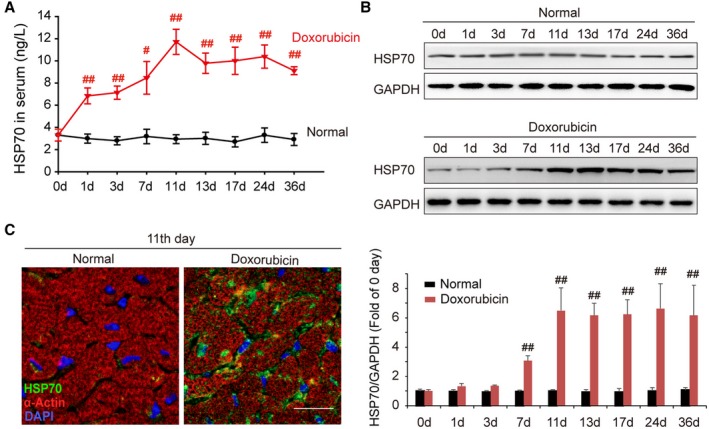
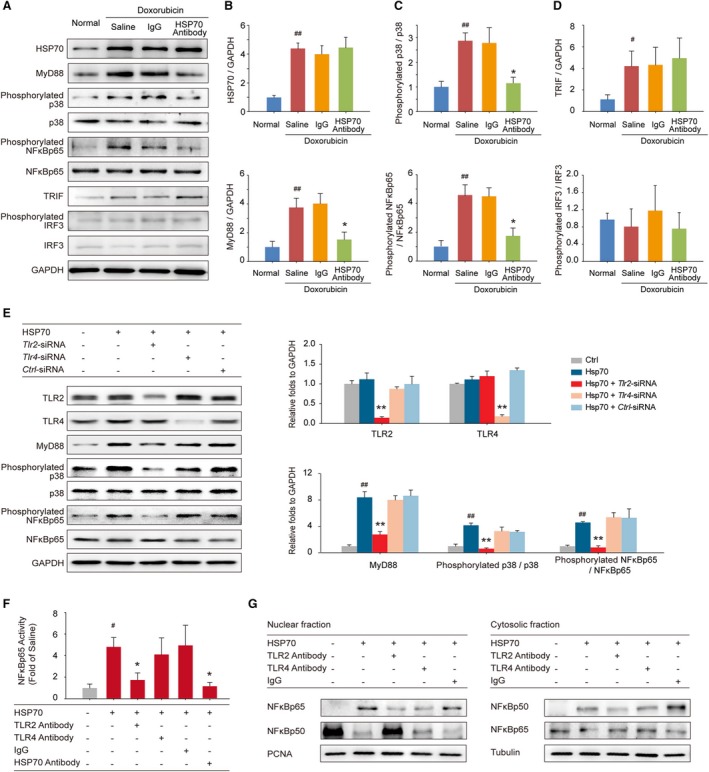
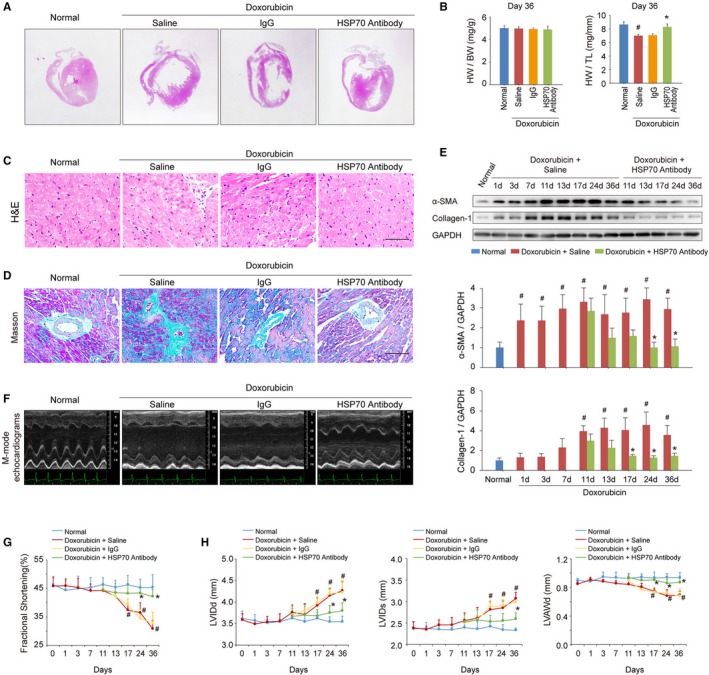
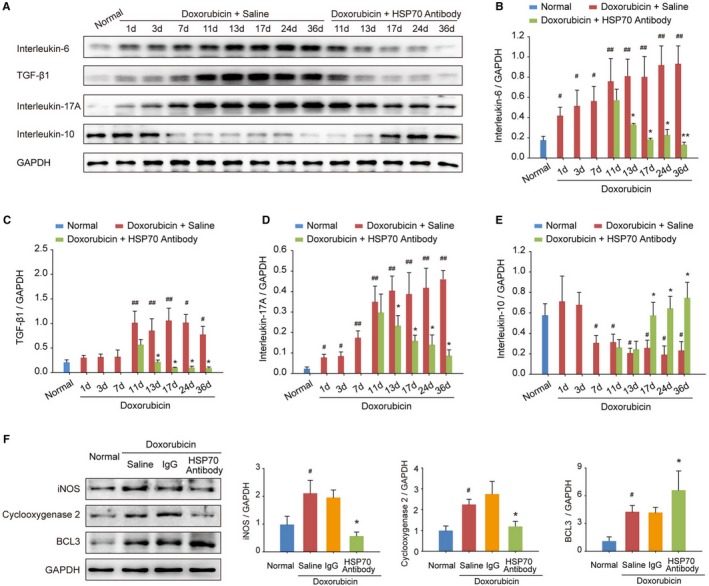
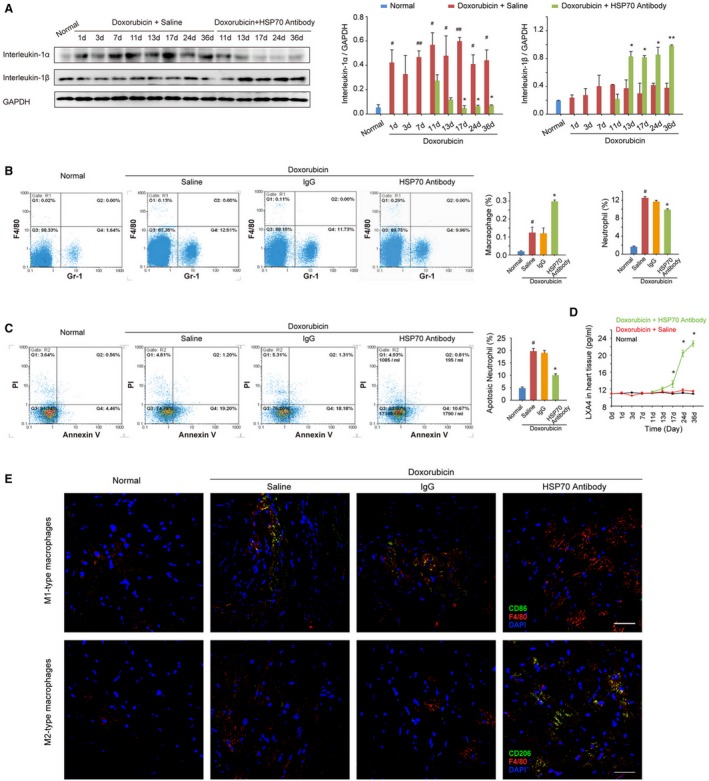
Background Heart failure (HF) is one of the most significant causes of morbidity and mortality for the cardiovascular risk population. We found previously that extracellular HSP70 (heat shock protein) is an important trigger in cardiac hypertrophy and fibrosis, which are associated with the development of heart dysfunction. However, the potential role of HSP70 in response to HF and whether it could be a target for the therapy of HF remain unknown. Methods and Results An HF mouse model was generated by a single IP injection of doxorubicin at a dose of 15 mg/kg. Ten days later, these mice were treated with an HSP70 neutralizing antibody for 5 times. We observed that doxorubicin treatment increased circulating HSP70 and expression of HSP70 in myocardium and promoted its extracellular release in the heart. Blocking extracellular HSP70 activity by its antibody significantly ameliorated doxorubicin-induced left ventricular dilation and dysfunction, which was accompanied by a significant inhibition of cardiac fibrosis. The cardioprotective effect of the anti-HSP70 antibody was largely attributed to its ability to promote the resolution of myocardial inflammation, as evidenced by its suppression of the toll-like receptor 2-associated signaling cascade and modulation of the intracellular distribution of the p50 and p65 subunits of nuclear factor-κB. Conclusions Extracellular HSP70 serves as a noninfectious inflammatory factor in the development of HF, and blocking extracellular HSP70 activity may provide potential therapeutic benefits for the treatment of HF.
心力衰竭(HF)是心血管风险人群发病率和死亡率的最重要原因之一。我们之前发现细胞外 HSP70(热休克蛋白)是心肌肥大和纤维化的重要触发因素,而心肌肥大和纤维化与心脏功能障碍的发展有关。然而,HSP70 在心力衰竭反应中的潜在作用以及它是否可以成为心力衰竭治疗的靶点尚不清楚。
通过单次腹腔注射 15mg/kg 的阿霉素在小鼠中建立心力衰竭模型。10 天后,这些小鼠用 HSP70 中和抗体治疗 5 次。我们观察到阿霉素处理增加了循环 HSP70 和心肌中 HSP70 的表达,并促进其在心脏中的细胞外释放。其抗体阻断细胞外 HSP70 活性显著改善了阿霉素诱导的左心室扩张和功能障碍,同时显著抑制了心肌纤维化。抗 HSP70 抗体的心脏保护作用主要归因于其促进心肌炎症消退的能力,这表现在其抑制 toll 样受体 2 相关信号级联和调节核因子-κB 的 p50 和 p65 亚基的细胞内分布。
细胞外 HSP70 是心力衰竭发展过程中的一种非传染性炎症因子,阻断细胞外 HSP70 活性可能为心力衰竭的治疗提供潜在的治疗益处。