Uusi-Rasi Kirsti, Karinkanta Saija, Tokola Kari, Kannus Pekka, Sievänen Harri
The UKK Institute for Health Promotion Research, Tampere, Finland.
Department of Orthopaedics and Traumatology, Tampere University Hospital and Medical School, University of Tampere, Tampere, Finland.
J Osteoporos. 2019 Sep 9;2019:5134690. doi: 10.1155/2019/5134690. eCollection 2019.
Low bone mineral density is a risk factor for fractures. The aim of this follow-up study was to assess the association of various bone properties with fall-related fractures.
187 healthy women aged 55 to 83 years at baseline who were either physically active or inactive were followed for 20 years. They were divided into two groups by whether or not they sustained fall-related fractures: fracture group (F) and nonfracture group (NF). At baseline, several bone properties were measured with DXA and pQCT, and their physical performance was also assessed.
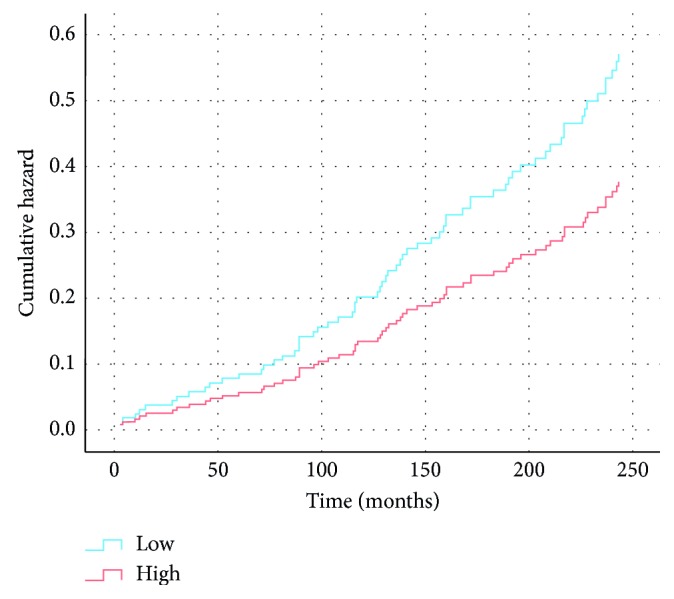
During the follow-up, 120 women had no fall-related fractures, while 67 (38%) sustained at least one fall with fracture. NF group had about 4 to 11% greater BMD at the femoral neck and distal radius; the mean differences (95% CI) were 4.5 (0.3 to 8.6) % and 11.1 (6.3 to 16.1) %, respectively. NF group also had stronger bone structure at the tibia, the mean difference in BMC at the distal tibia was 6.0 (2.2 to 9.7) %, and at the tibial shaft 3.6 (0.4 to 6.8) %. However, there was no mean difference in physical performance.
Low bone properties contribute to the risk of fracture if a person falls. Therefore, in the prevention of fragility fractures, it is essential to focus on improving bone mass, density, and strength during the lifetime. Reduction of falls by improving physical performance, balance, mobility, and muscle power is equally important.
低骨矿物质密度是骨折的一个风险因素。这项随访研究的目的是评估各种骨特性与跌倒相关骨折之间的关联。
对187名年龄在55至83岁之间、基线时身体活动或不活动的健康女性进行了20年的随访。根据是否发生跌倒相关骨折将她们分为两组:骨折组(F)和非骨折组(NF)。在基线时,用双能X线吸收法(DXA)和外周定量计算机断层扫描(pQCT)测量了几种骨特性,并评估了她们的身体机能。
在随访期间,120名女性没有发生跌倒相关骨折,而67名(38%)至少发生了一次跌倒并伴有骨折。非骨折组在股骨颈和桡骨远端的骨密度高出约4%至11%;平均差异(95%置信区间)分别为4.5(0.3至8.6)%和11.1(6.3至16.1)%。非骨折组在胫骨处的骨结构也更强,胫骨远端骨矿含量(BMC)的平均差异为6.0(2.2至9.7)%,在胫骨干为3.6(0.4至6.8)%。然而,身体机能方面没有平均差异。
如果一个人跌倒,低骨特性会增加骨折风险。因此,在预防脆性骨折方面,在一生中注重提高骨量、骨密度和骨强度至关重要。通过改善身体机能、平衡能力、活动能力和肌肉力量来减少跌倒同样重要。