Department of Biomedical Engineering, University of California, Irvine, CA 92697, United States of America.
Department of Neurology, University of California, Irvine, CA 92697, United States of America.
J Neural Eng. 2019 Nov 12;16(6):066043. doi: 10.1088/1741-2552/ab4b0c.
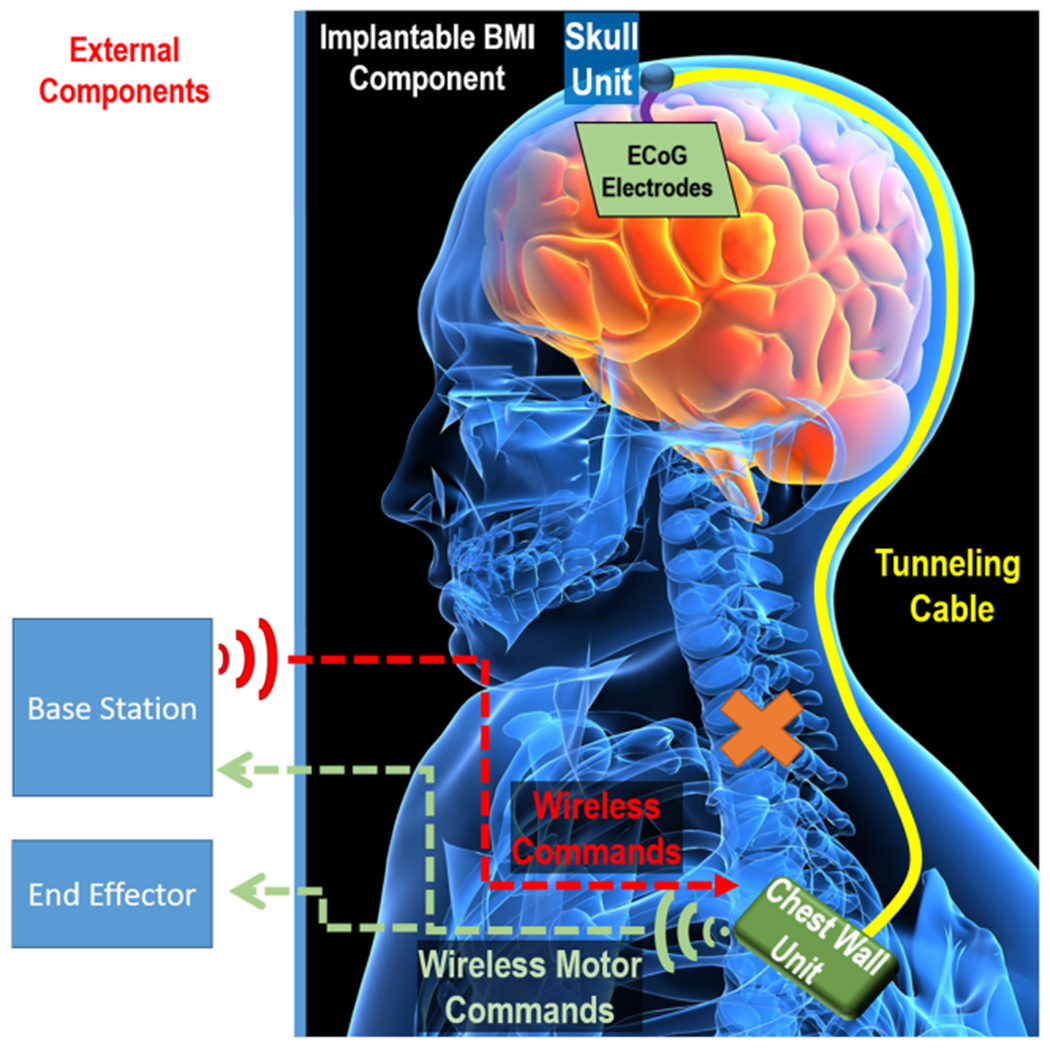
State-of-the-art invasive brain-machine interfaces (BMIs) have shown significant promise, but rely on external electronics and wired connections between the brain and these external components. This configuration presents health risks and limits practical use. These limitations can be addressed by designing a fully implantable BMI similar to existing FDA-approved implantable devices. Here, a prototype BMI system whose size and power consumption are comparable to those of fully implantable medical devices was designed and implemented, and its performance was tested at the benchtop and bedside.
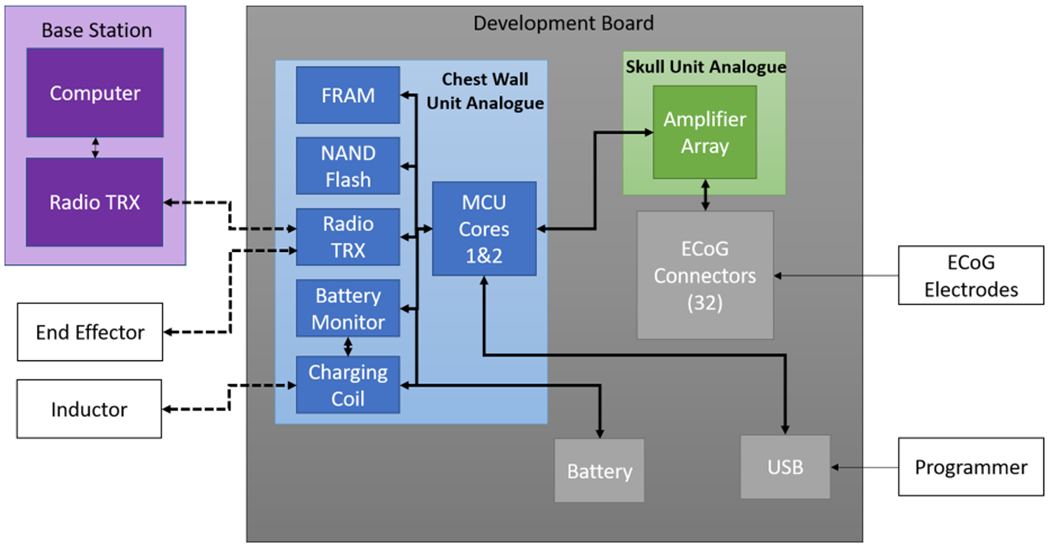
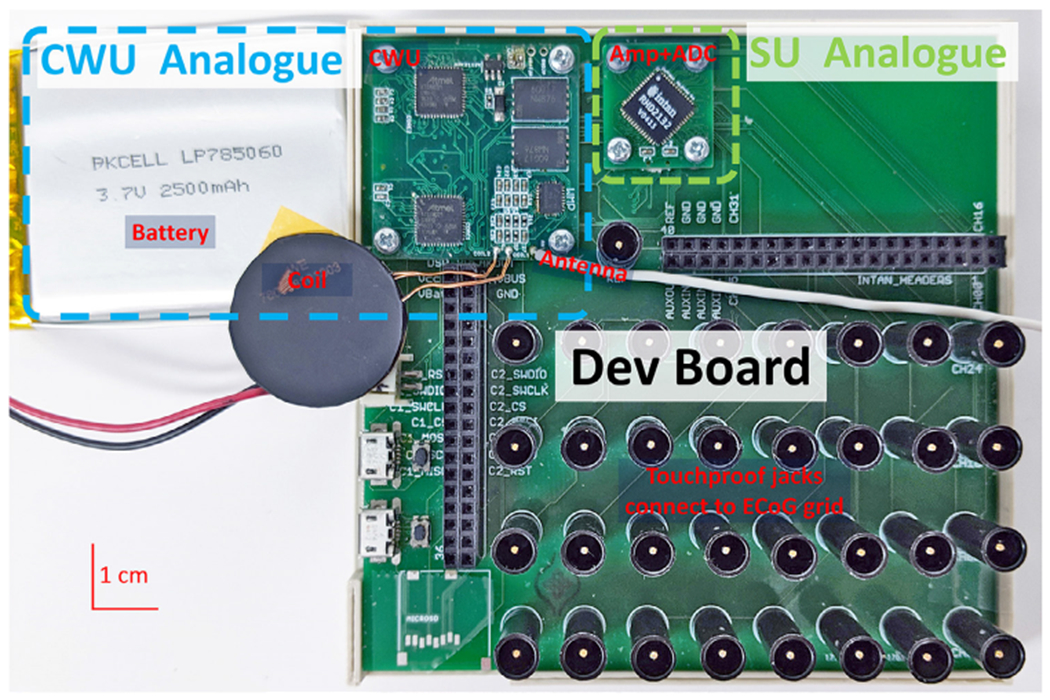
A prototype of a fully implantable BMI system was designed and implemented as a miniaturized embedded system. This benchtop analogue was tested in its ability to acquire signals, train a decoder, perform online decoding, wirelessly control external devices, and operate independently on battery. Furthermore, performance metrics such as power consumption were benchmarked.
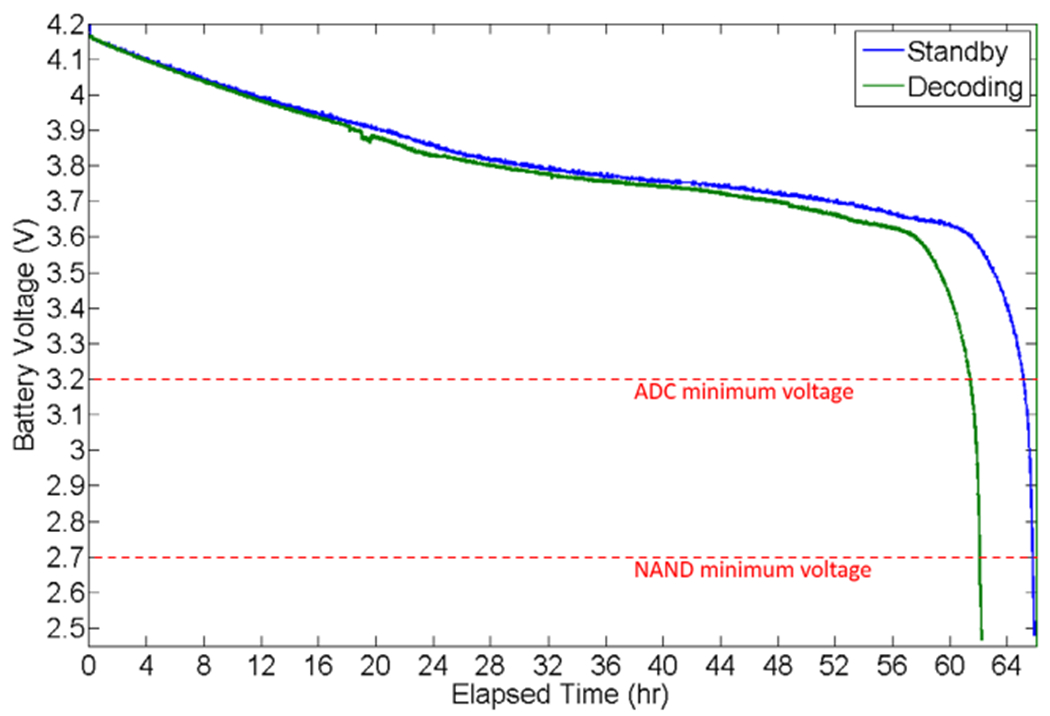
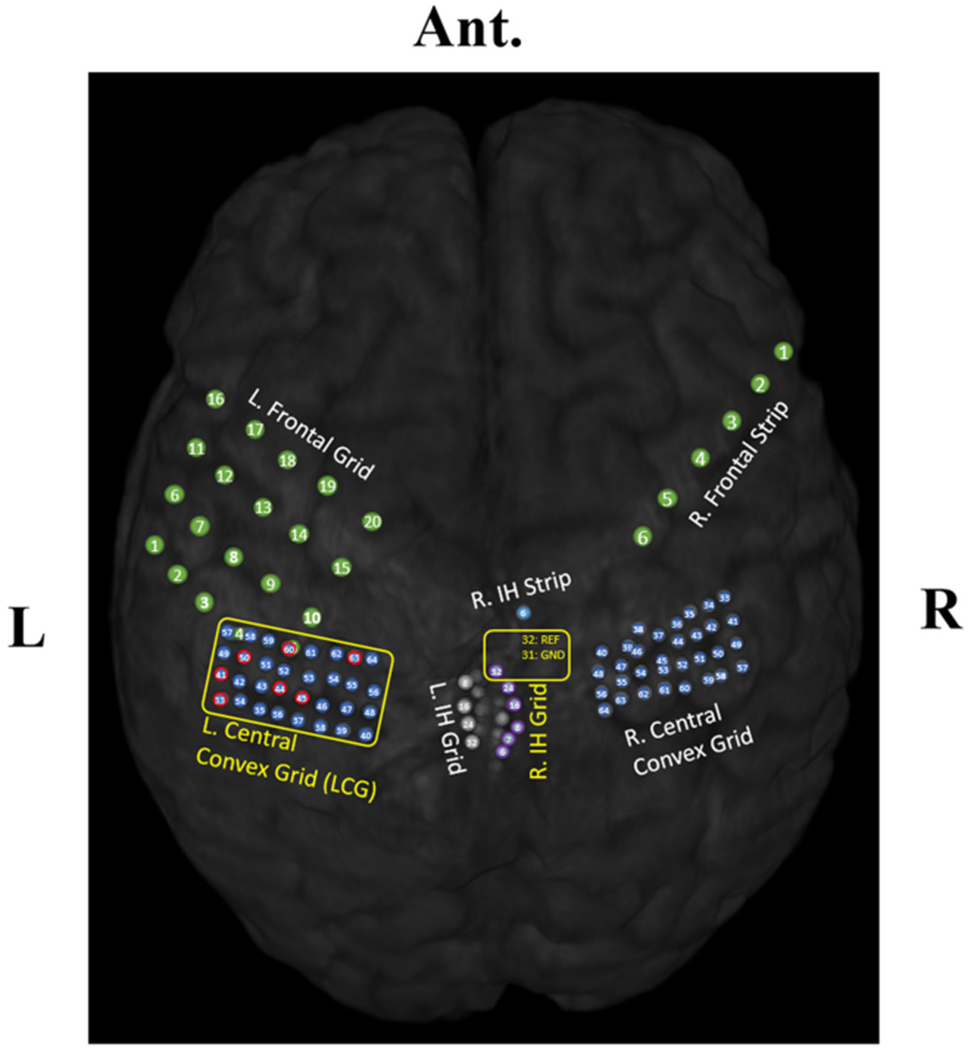
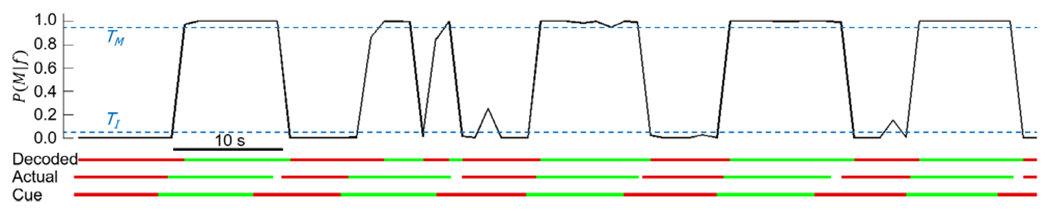
An analogue of a fully implantable BMI was fabricated with a miniaturized form factor. A patient undergoing epilepsy surgery evaluation with an electrocorticogram (ECoG) grid implanted over the primary motor cortex was recruited to operate the system. Seven online runs were performed with an average binary state decoding accuracy of 87.0% (lag optimized, or 85.0% at fixed latency). The system was powered by a wirelessly rechargeable battery, consumed ∼150 mW, and operated for >60 h on a single battery cycle.
The BMI analogue achieved immediate and accurate decoding of ECoG signals underlying hand movements. A wirelessly rechargeable battery and other supporting functions allowed the system to function independently. In addition to the small footprint and acceptable power and heat dissipation, these results suggest that fully implantable BMI systems are feasible.
最先进的侵入式脑机接口(BMI)显示出了巨大的潜力,但它们依赖于大脑和外部组件之间的外部电子设备和有线连接。这种配置存在健康风险,限制了实际应用。通过设计类似于现有 FDA 批准的可植入设备的完全可植入 BMI,可以解决这些限制。在这里,设计并实现了一种原型 BMI 系统,其尺寸和功耗与完全可植入医疗设备相当,并在台式机和床边对其性能进行了测试。
设计并实现了一种完全可植入 BMI 系统的原型,作为一个小型嵌入式系统。对该台式模拟系统进行了测试,以评估其获取信号、训练解码器、进行在线解码、无线控制外部设备以及独立电池运行的能力。此外,还对功耗等性能指标进行了基准测试。
制造了一种具有小型化外形尺寸的完全可植入 BMI 模拟系统。招募了一位正在接受癫痫手术评估并在主要运动皮层上植入脑电描记器(ECoG)网格的患者来操作该系统。进行了 7 次在线运行,平均二进制状态解码准确率为 87.0%(优化后的潜伏期,或固定潜伏期时为 85.0%)。该系统由无线可充电电池供电,消耗约 150 mW,单个电池循环可运行超过 60 小时。
BMI 模拟系统实现了对手部运动相关 ECoG 信号的即时和准确解码。无线可充电电池和其他支持功能使系统能够独立运行。除了小尺寸和可接受的功率和热耗散外,这些结果表明完全可植入 BMI 系统是可行的。