Department of Internal Medicine, Hospital Clinic, Institut d'Investigació Biomèdica August Pi i Sunyer (IDIBAPS), University of Barcelona, Villarroel, 170, Barcelona 08036, Spain.
CIBER 06/03: Fisiopatología de la Obesidad y la Nutrición, Instituto de Salud Carlos III, Madrid 28029, Spain.
Nutrients. 2019 Oct 6;11(10):2381. doi: 10.3390/nu11102381.
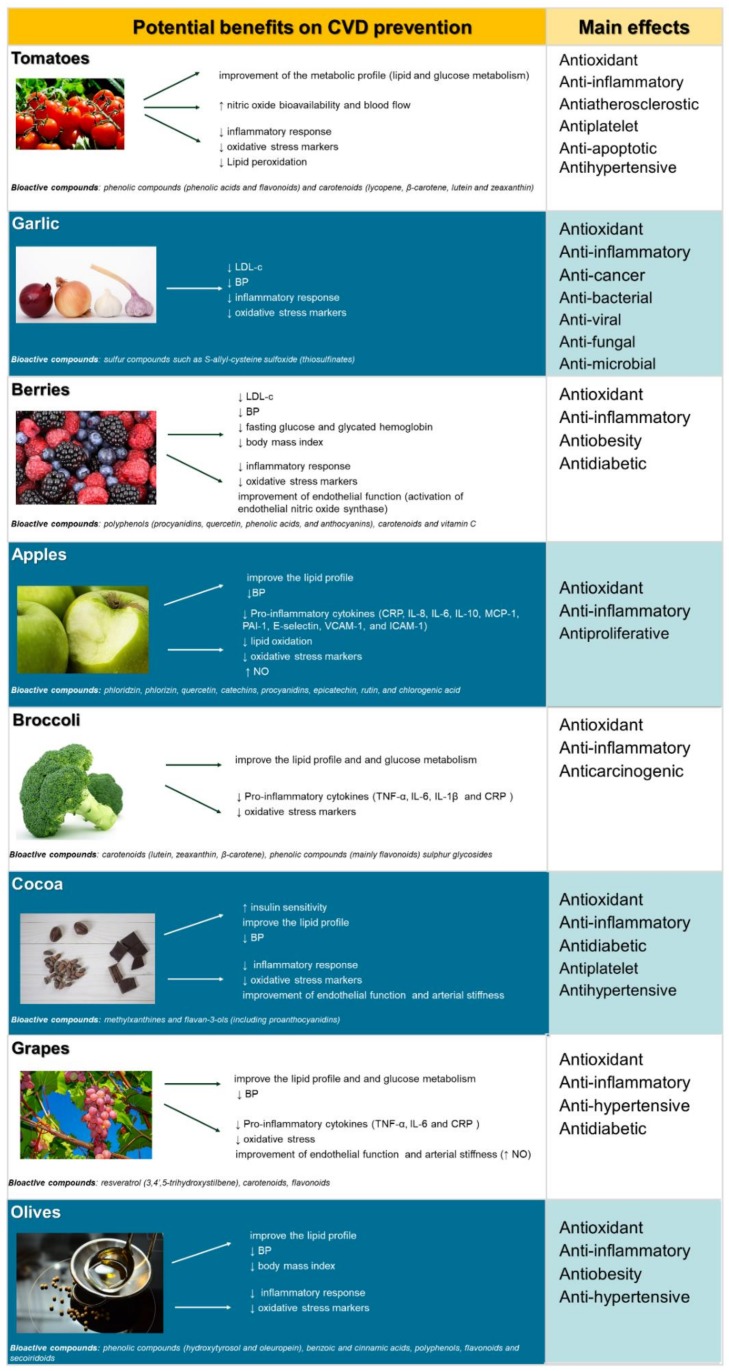
Noncommunicable diseases (NCDs) are considered to be the leading cause of death worldwide. Inadequate fruit and vegetable intake have been recognized as a risk factor for almost all NCDs (type 2 diabetes mellitus, cancer, and cardiovascular and neurodegenerative diseases). The main aim of this review is to examine the possible protective effect that fruit and vegetable consumption or their bioactive compounds may have on the development of NCDs such as atherosclerosis. The accumulated evidence on the protective effects of adequate consumption of fruits and vegetables in some cases, or the lack of evidence in others, are summarized in the present review. The main conclusion of this review is that well-designed, large-scale, long-term studies are needed to truly understand the role fruit and vegetable consumption or their bioactive compounds have in atherosclerosis.
非传染性疾病(NCDs)被认为是全球范围内的主要死因。水果和蔬菜摄入不足已被认为是几乎所有 NCDs(2 型糖尿病、癌症以及心血管和神经退行性疾病)的一个风险因素。本次综述的主要目的是研究水果和蔬菜的消费或其生物活性化合物可能对 NCDs 如动脉粥样硬化的发展的潜在保护作用。本综述总结了在某些情况下,充足摄入水果和蔬菜具有保护作用的累积证据,或在其他情况下缺乏证据的情况。本综述的主要结论是,需要进行精心设计、大规模、长期的研究,才能真正了解水果和蔬菜的消费或其生物活性化合物在动脉粥样硬化中的作用。