Kozior Tomasz, Trabelsi Marah, Mamun Al, Sabantina Lilia, Ehrmann Andrea
Faculty of Mechatronics and Mechanical Engineering, Kielce University of Technology, 25-314 Kielce, Poland.
Faculty of Engineering and Mathematics, Bielefeld University of Applied Sciences, 33619 Bielefeld, Germany.
Polymers (Basel). 2019 Oct 6;11(10):1618. doi: 10.3390/polym11101618.
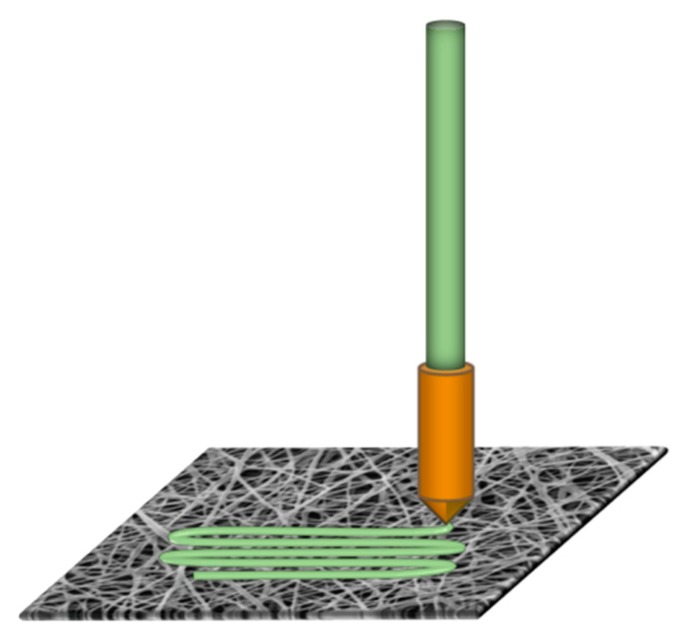
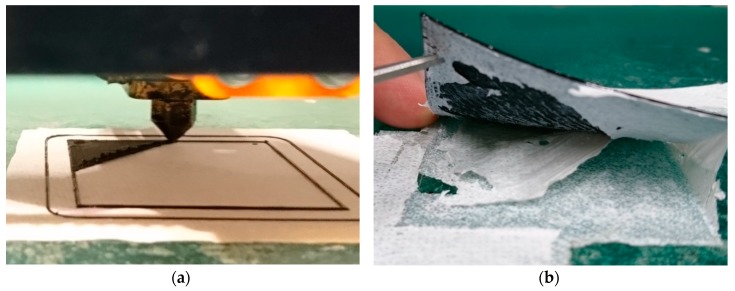
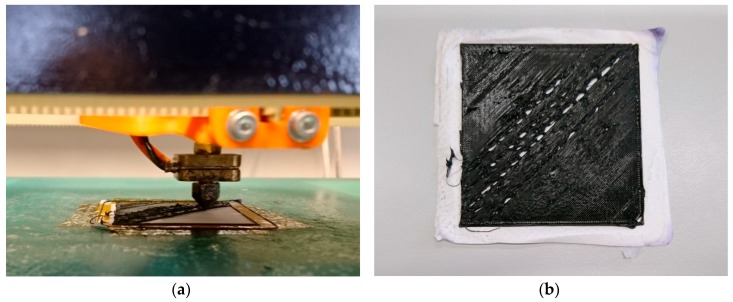
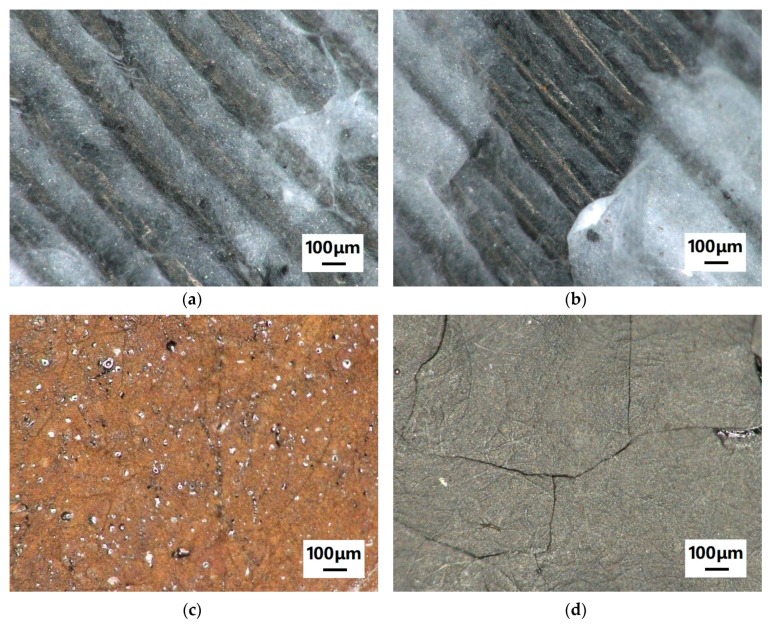
Electrospinning is a well-known technology used to create nanofiber mats from diverse polymers and other materials. Due to their large surface-to-volume ratio, such nanofiber mats are often applied as air or water filters. Especially the latter, however, have to be mechanically highly stable, which is challenging for common nanofiber mats. One of the approaches to overcome this problem is gluing them on top of more rigid objects, integrating them in composites, or reinforcing them using other technologies to avoid damage due to the water pressure. Here, we suggest another solution. While direct 3D printing with the fused deposition modeling (FDM) technique on macroscopic textile fabrics has been under examination by several research groups for years, here we report on direct FDM printing on nanofiber mats for the first time. We show that by choosing the proper height of the printing nozzle above the nanofiber mat, printing is possible for raw polyacrylonitrile (PAN) nanofiber mats, as well as for stabilized and even more brittle carbonized material. Under these conditions, the adhesion between both parts of the composite is high enough to prevent the nanofiber mat from being peeled off the 3D printed polymer. Abrasion tests emphasize the significantly increased mechanical properties, while contact angle examinations reveal a hydrophilicity between the original values of the electrospun and the 3D printed materials.
静电纺丝是一种众所周知的技术,用于由各种聚合物和其他材料制造纳米纤维垫。由于其大的表面积与体积比,这种纳米纤维垫常被用作空气或水过滤器。然而,尤其是后者,必须具有高度的机械稳定性,这对普通纳米纤维垫来说具有挑战性。克服这个问题的方法之一是将它们粘在更坚硬的物体上,将它们集成到复合材料中,或者使用其他技术对其进行加固,以避免因水压而损坏。在此,我们提出另一种解决方案。虽然多年来几个研究小组一直在研究使用熔融沉积建模(FDM)技术在宏观织物上进行直接3D打印,但在此我们首次报道在纳米纤维垫上进行直接FDM打印。我们表明,通过选择打印喷嘴在纳米纤维垫上方的适当高度,对于原始聚丙烯腈(PAN)纳米纤维垫以及稳定的甚至更脆的碳化材料都可以进行打印。在这些条件下,复合材料两部分之间的附着力足够高,以防止纳米纤维垫从3D打印聚合物上剥离。磨损测试强调了机械性能的显著提高,而接触角检查揭示了静电纺丝材料和3D打印材料原始值之间的亲水性。