Sacre Hala, Tawil Samah, Hallit Souheil, Sili Georges, Salameh Pascale
Drug Information Center. Lebanese Pharmacists Association; & Clinic for Epidemiology and Toxicology, National Institute of Public Health (INSPECT-LB). Beirut (Lebanon).
Drug Information Center and Continuing Education Department. Lebanese Pharmacists Association. Beirut (Lebanon).
Pharm Pract (Granada). 2019 Jul-Sep;17(3):1545. doi: 10.18549/PharmPract.2019.3.1545. Epub 2019 Aug 24.
In Lebanon, mandatory continuing education (CE) for pharmacists was implemented in January 2014.
The objectives of this study are to assess 1) the overall adherence to the mandatory CE program, 2) pharmacists' preferences related to CE, and 3) barriers to adherence to CE.
By the end of October 2017, an evaluation of pharmacists' participation in the mandatory CE program was conducted using electronic reports available in the Learning Management System (LMS). Descriptive results were presented as frequencies and percentages. In addition, a cross-sectional survey was conducted among pharmacists to better understand their preferences and barriers to their participation to the CE program. Finally, a focus group was organized with pharmacists who did not start their CE.
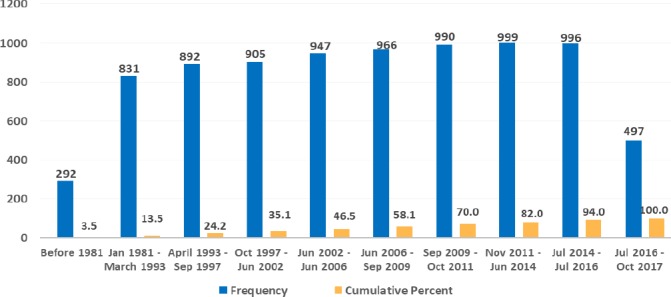
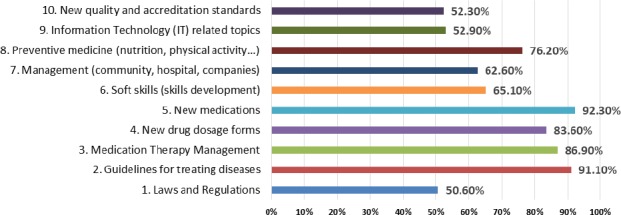
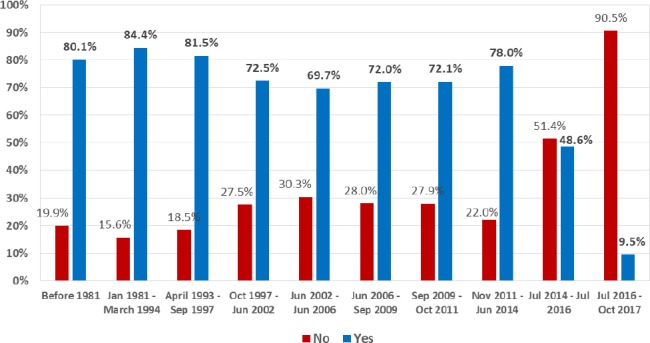
Out of all registered pharmacists in Lebanon, 68.30% started their CE and 25.6% already achieved their required credits. Among pharmacists enrolled in the CE system, the majority (69%) used the online courses at least once. Moreover, CE enrolment was similar among old and young pharmacists except for those newly registered. The majority of pharmacists preferred clinical and pharmacological topics, followed by preventive medicine and transferable skills. Barriers to engaging in CE were mainly work and family obligations, lack of interest, lack of time, and difficulties in commuting and technology use.
Although results of the present study are similar to those in developing countries, the resistance to change is higher. The Lebanese Pharmacists Association [Ordre des Pharmaciens du Liban] should develop strategies to motivate and enroll more pharmacists in the CE system, based on the barriers and preferences cited in the results, while continuing to offer high quality and cost-favorable CE programs to Lebanese pharmacists.
在黎巴嫩,2014年1月开始实施药剂师强制继续教育(CE)。
本研究的目的是评估:1)对强制继续教育计划的总体遵守情况;2)药剂师对继续教育的偏好;3)继续教育的遵守障碍。
截至2017年10月底,利用学习管理系统(LMS)中的电子报告对药剂师参与强制继续教育计划的情况进行了评估。描述性结果以频率和百分比表示。此外,还对药剂师进行了横断面调查,以更好地了解他们对继续教育计划的偏好和参与障碍。最后,组织了一个焦点小组,成员为尚未开始继续教育的药剂师。
在黎巴嫩所有注册药剂师中,68.30%开始了继续教育,25.6%已获得所需学分。在参加继续教育系统的药剂师中,大多数(69%)至少使用过一次在线课程。此外,除新注册的药剂师外,老年和年轻药剂师的继续教育注册情况相似。大多数药剂师更喜欢临床和药理学主题,其次是预防医学和可转移技能。参与继续教育的障碍主要是工作和家庭义务、缺乏兴趣、缺乏时间以及通勤和技术使用方面的困难。
尽管本研究的结果与发展中国家的结果相似,但对变革的抵触情绪更高。黎巴嫩药剂师协会应根据研究结果中提到的障碍和偏好,制定策略来激励更多药剂师参与继续教育系统,同时继续为黎巴嫩药剂师提供高质量且成本优惠的继续教育项目。