Department of Digestive Oncology, the First Affiliated Hospital of Wenzhou Medical University; the First Provincial Wenzhou Hospital of Zhejiang, Wenzhou 325000.
Zhejiang Cancer Institute, Institute of Cancer Research and Basic Medical Sciences of Chinese Academy of Sciences, Cancer Hospital of University of Chinese Academy of Sciences, Zhejiang Cancer Hospital, Hangzhou 310022, China.
Int J Biol Sci. 2019 Aug 6;15(10):2075-2086. doi: 10.7150/ijbs.23802. eCollection 2019.
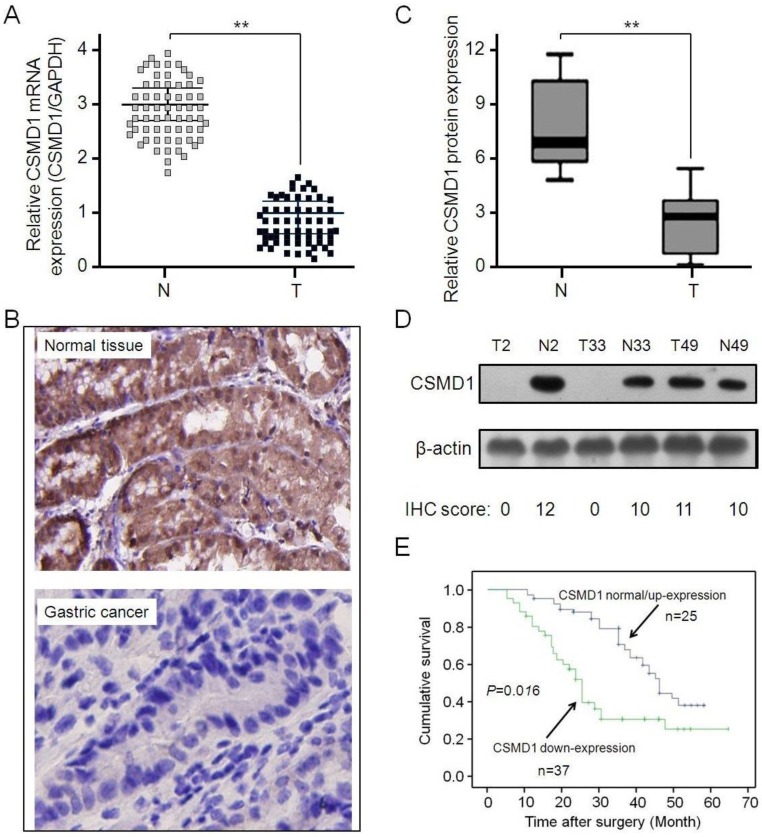
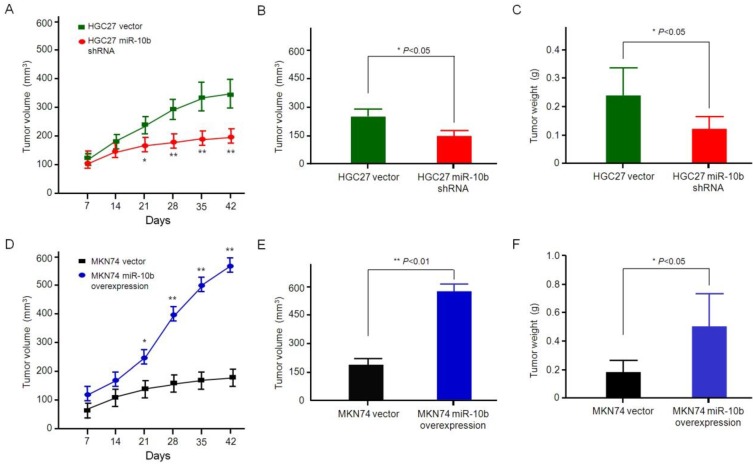
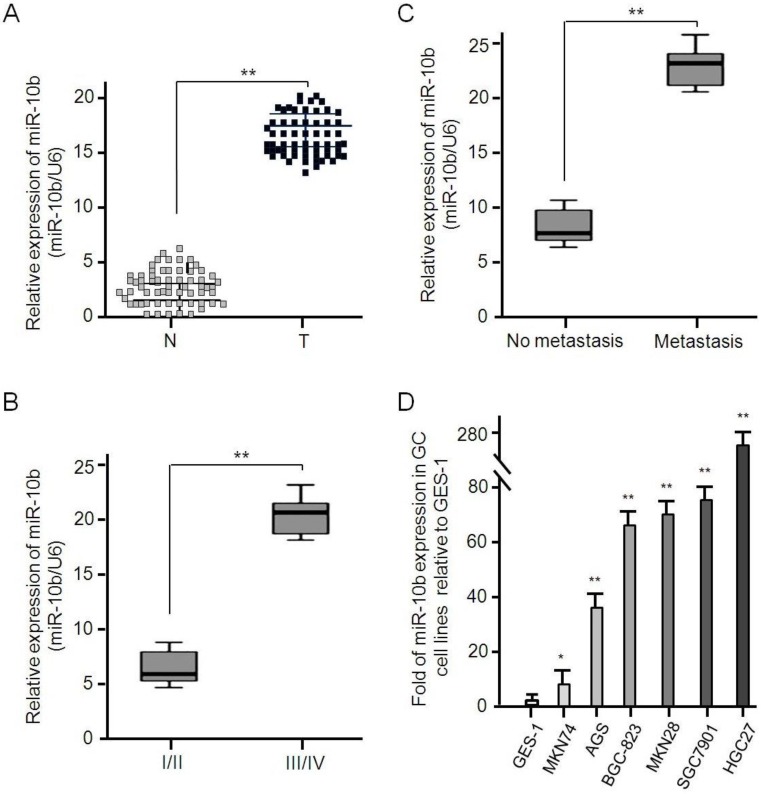
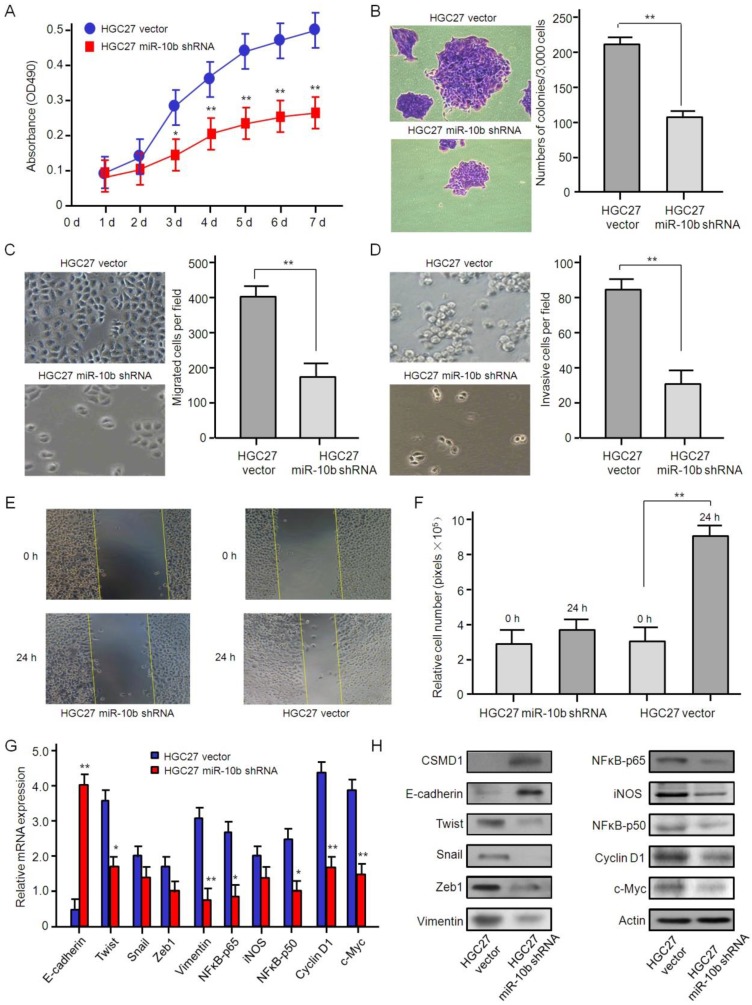
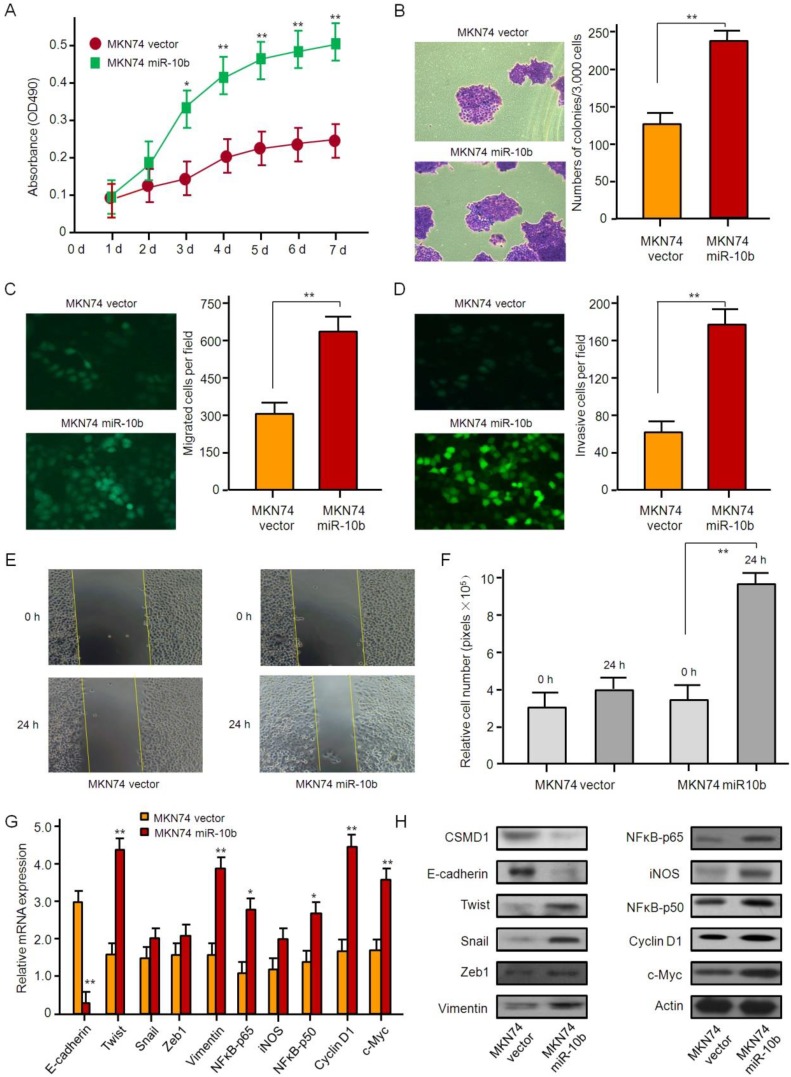
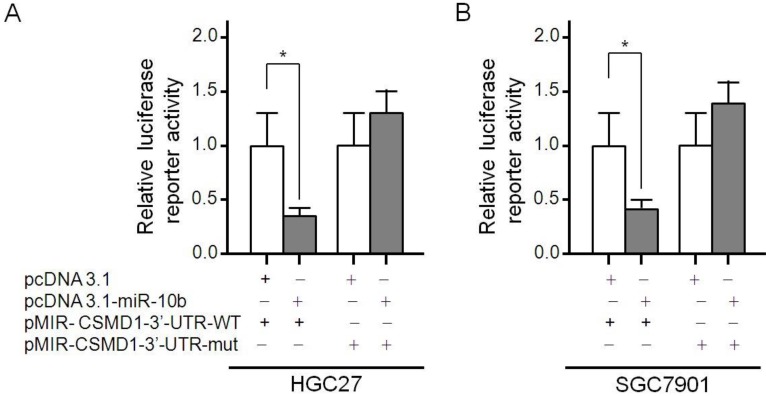
This study aimed to investigate the oncogenic activity of microRNA-10b by targeting CUB and sushi multiple domains protein 1 (CSMD1) in human gastric cancer (GC) and the underlying mechanisms. The expression of CSMD1 in human GC tissues was evaluated by real-time reverse transcription polymerase chain reaction (RT-PCR), immunoblotting, and immunohistochemical analysis. The expressive abundance of microRNA-10b was detected by stem-loop RT-PCR. Molecular and cellular techniques, including lentiviral vector-mediated knockdown or overexpression, were used to elucidate the effect of microRNA-10b on the expression of CSMD1. CSMD1 was targeted and downregulated by microRNA-10b in human GC tissues and cells, and the down-regulated expression of CSMD1 contributed to poor survival. The knockdown of microRNA-10b expression inhibited cell proliferation in GC cells and tumor growth The inhibition of microRNA-10b expression repressed invasion and migration of HGC27 cells and retarded GC cells metastasis to the liver in Balb/c nude mice. The up-regulated expression of microRNA-10b promoted the proliferation and metastasis of MKN74 cell Intratumoral injection of microRNA-10b mimic also promoted the growth and metastasis of tumor xenografts in Balb/c nude mice. Mechanistically, microRNA-10b promoted the invasion and metastasis of human GC cells through inhibiting the expression of CSMD1, leading to the activation of the nuclear factor-κB (NF-κB) pathway that links inflammation to carcinogenesis, subsequently resulting in the upregulation of c-Myc, cyclin D1 (CCND1), and epithelial-mesenchymal transition (EMT) markers. The findings established that microRNA-10b is an oncomiR that drives metastasis. Moreover, a set of critical tumor suppressor mechanisms was defined that microRNA-10b overcame to drive human GC progression.
本研究旨在探讨 microRNA-10b 通过靶向 CUB 和 sushi 多结构域蛋白 1 (CSMD1) 在人胃癌 (GC) 中的致癌活性及其潜在机制。通过实时逆转录聚合酶链反应 (RT-PCR)、免疫印迹和免疫组织化学分析评估 CSMD1 在人 GC 组织中的表达。采用茎环 RT-PCR 检测 microRNA-10b 的表达丰度。采用慢病毒载体介导的敲低或过表达等分子和细胞技术,阐明 microRNA-10b 对 CSMD1 表达的影响。microRNA-10b 靶向并下调人 GC 组织和细胞中的 CSMD1,下调的 CSMD1 表达与不良生存相关。抑制 microRNA-10b 表达可抑制 GC 细胞的增殖和肿瘤生长。抑制 microRNA-10b 表达可抑制 HGC27 细胞的侵袭和迁移,并延缓 GC 细胞在 Balb/c 裸鼠中的肝转移。上调 microRNA-10b 的表达可促进 MKN74 细胞的增殖和转移。在 Balb/c 裸鼠中,瘤内注射 microRNA-10b 模拟物也可促进肿瘤异种移植物的生长和转移。机制上,microRNA-10b 通过抑制 CSMD1 的表达促进人 GC 细胞的侵袭和转移,导致核因子-κB (NF-κB) 通路的激活,将炎症与致癌作用联系起来,进而导致 c-Myc、细胞周期蛋白 D1 (CCND1) 和上皮间质转化 (EMT) 标志物的上调。研究结果证实 microRNA-10b 是一种促进转移的致癌 miRNA。此外,还定义了一组关键的肿瘤抑制机制,microRNA-10b 克服这些机制以促进人 GC 的进展。