
类黄酮抗氧化剂桑色素在改善丙卡巴肼诱导的大鼠睾丸功能氧化应激中的作用。
The role of flavonoid antioxidant, morin in improving procarbazine-induced oxidative stress on testicular function in rat.
作者信息
Olayinka Ebenezer Tunde, Ore Ayokanmi, Adeyemo Oluwatobi Adewumi, Ola Olaniyi Solomon
机构信息
Biochemistry Division, Department of Chemical Sciences, Faculty of Natural Sciences, Ajayi Crowther University, Oyo, Nigeria.
出版信息
Porto Biomed J. 2018 Aug 3;4(1):e28. doi: 10.1016/j.pbj.0000000000000028. eCollection 2019 Jan-Feb.
BACKGROUND
Procarbazine (PCZ) is an effective chemotherapeutic drug used in the treatment of lymphoma; however, oxidative stress-mediated testicular toxicity is a major side effect. Recently, therapeutic intervention using flavonoids against oxidative stress-related pathologies is gaining more attention. Morin (MOR) is a natural flavonoid with proven antioxidant activity. This study was designed therefore to evaluate the potential role of MOR in ameliorating PCZ-induced testicular oxidative stress and altered sperm quality in rat model.
METHODS
A total of 24 male Wistar rats (170-180 g) were randomly assigned into 4 treatment groups: I, control; II, PCZ (2 mg/kg b.w.); III, PCZ (2 mg/kg b.w.) + MOR (100 mg/kg b.w.) simultaneously administered and IV, MOR (100 mg/kg b.w.), and all treatments lasted 14 days.
RESULTS
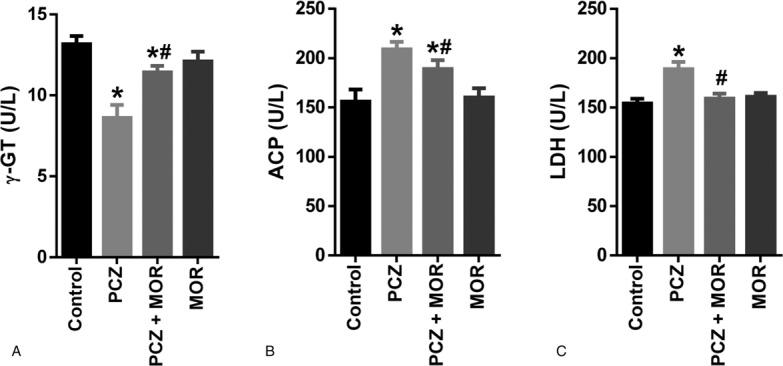
PCZ treatment displayed significant reduction in sperm number, sperm motility, percentage normal sperm cells, and daily sperm production rate. Meanwhile the activities of testicular enzymes: gamma-glutamyl transferase, acid phosphatase, and lactate dehydrogenase were significantly altered in the PCZ group compared to control. Furthermore, PCZ caused a significant reduction in levels of glutathione and ascorbic acid as well as activities superoxide dismutase, catalase, glutathione peroxidase, and glutathione S-transferase in the testes of PCZ-treated rats. A significant increase in testicular malondialdehyde level was also observed in the PCZ group. MOR treatment, however, significantly restored the altered sperm parameters and biochemical markers in the testis.
CONCLUSIONS
Our data suggest that MOR administration protected against PCZ-induced testicular and spermatotoxicity in rat, by improving testicular antioxidant system.
背景
丙卡巴肼(PCZ)是一种用于治疗淋巴瘤的有效化疗药物;然而,氧化应激介导的睾丸毒性是其主要副作用。最近,使用黄酮类化合物对氧化应激相关病症进行治疗干预受到了更多关注。桑色素(MOR)是一种具有已证实抗氧化活性的天然黄酮类化合物。因此,本研究旨在评估MOR在改善PCZ诱导的大鼠睾丸氧化应激和精子质量改变方面的潜在作用。
方法
总共24只雄性Wistar大鼠(170 - 180克)被随机分为4个治疗组:I组,对照组;II组,PCZ(2毫克/千克体重);III组,同时给予PCZ(2毫克/千克体重) + MOR(100毫克/千克体重);IV组,MOR(100毫克/千克体重),所有治疗持续14天。
结果
PCZ治疗使精子数量、精子活力、正常精子细胞百分比和每日精子产生率显著降低。同时,与对照组相比,PCZ组睾丸酶γ-谷氨酰转移酶、酸性磷酸酶和乳酸脱氢酶的活性发生了显著改变。此外,PCZ导致PCZ处理大鼠睾丸中的谷胱甘肽和抗坏血酸水平以及超氧化物歧化酶、过氧化氢酶、谷胱甘肽过氧化物酶和谷胱甘肽S-转移酶的活性显著降低。在PCZ组中还观察到睾丸丙二醛水平显著升高。然而,MOR治疗显著恢复了睾丸中改变的精子参数和生化标志物。
结论
我们的数据表明,通过改善睾丸抗氧化系统,给予MOR可保护大鼠免受PCZ诱导的睾丸和精子毒性。


 Zotero 插件