Western Norway University of Applied Sciences, 7030, 5020 Bergen, Norway.
Int J Environ Res Public Health. 2019 Oct 8;16(19):3778. doi: 10.3390/ijerph16193778.
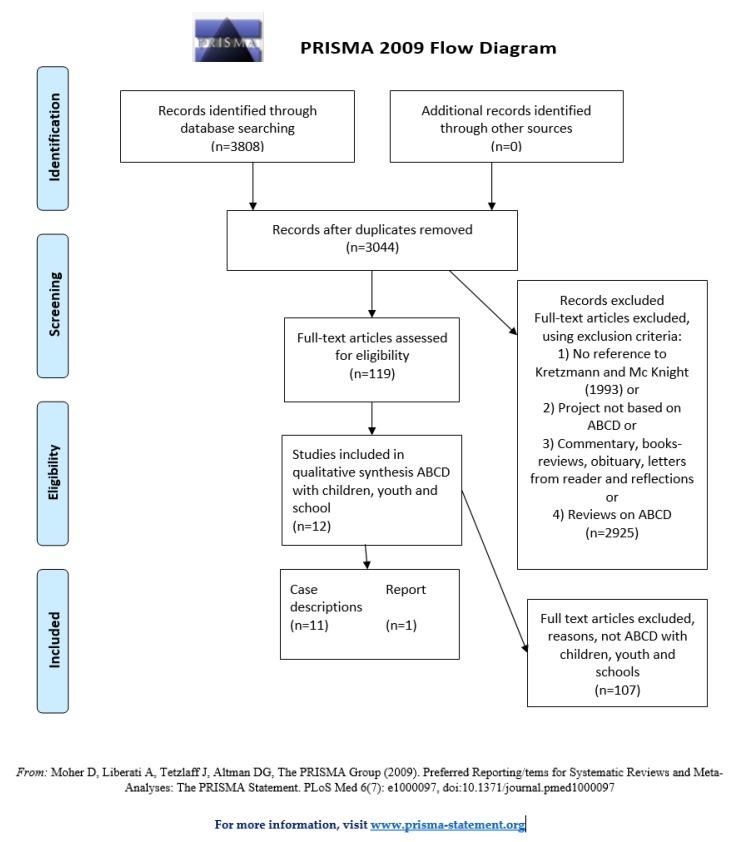
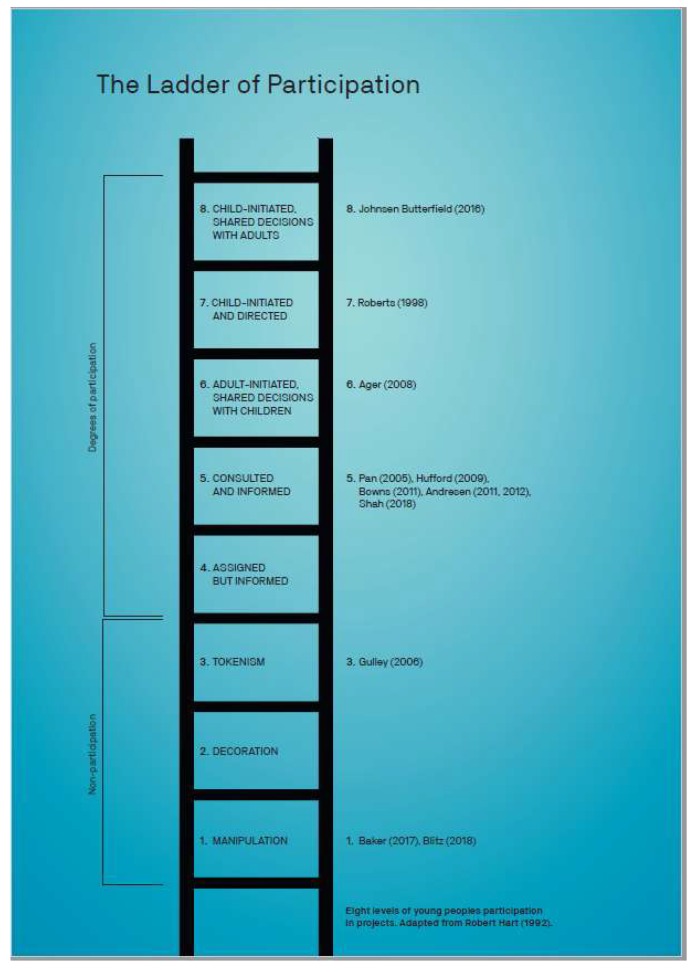
The asset-based community development (ABCD) approach have been widely used to map local assets and to ensure participation of local communities in public health promotion strategies. Participatory practices, such as ABCD, have been applied to shift public health strategies towards addressing health inequities. In this meta-synthesis, we ask if, and how, ABCD enhance the level of participation for children, youth and schools. Three thousand eight hundred eight titles and abstracts were identified in ten databases and transferred to the online program Rayyan. Through a blinded process we excluded texts that did not meet the inclusion criteria. The twelve included texts on ABCD for children, youth and schools are of varying quality. The research on ABCD for children, youth and schools have not been cumulative. Nevertheless, the texts show that ABCD provides strategies that enhance the participation of children, youth, and schools, in health promotion projects. The projects were categorized according to Robert Hart's classical participation ladder, and we found that the projects with the highest level of adherence to ABCD principles also had the highest level of participation. The projects with high levels of participation were supported by adult facilitators that created learning environments where children and youth developed their participatory skills.
资产为本的社区发展(ABCD)方法已被广泛用于绘制当地资产图,并确保当地社区参与公共卫生促进策略。参与式实践,如 ABCD,已被应用于将公共卫生策略转向解决健康不平等问题。在本次元分析中,我们询问 ABCD 是否以及如何增强儿童、青少年和学校的参与度。在十个数据库中确定了 3808 个标题和摘要,并将其转移到在线程序 Rayyan 中。通过盲法过程,我们排除了不符合纳入标准的文本。这 12 篇关于儿童、青少年和学校的 ABCD 的文章质量参差不齐。关于儿童、青少年和学校的 ABCD 的研究尚未累积。然而,这些文章表明,ABCD 提供了增强儿童、青少年和学校参与健康促进项目的策略。根据罗伯特·哈特的经典参与阶梯对项目进行了分类,我们发现,最符合 ABCD 原则的项目的参与度也最高。高参与度的项目得到了成人促进者的支持,他们创造了学习环境,使儿童和青少年发展了他们的参与技能。