Naderi Dastjerdi Mojgan, Darooneh Tayebeh, Nasiri Malihe, Moatar Fariborz, Esmaeili Somayeh, Ozgoli Giti
Student Research Committee, Department of Midwifery and Reproductive Health, Faculty of Nursing and Midwifery, Shahid Beheshti University of Medical Sciences, Tehran, Iran.
Department of Biostatistics, Faculty of Paramedical Sciences, Shahid Beheshti University of Medical Sciences, Tehran, Iran.
J Caring Sci. 2019 Sep 1;8(3):129-138. doi: 10.15171/jcs.2019.019. eCollection 2019 Sep.
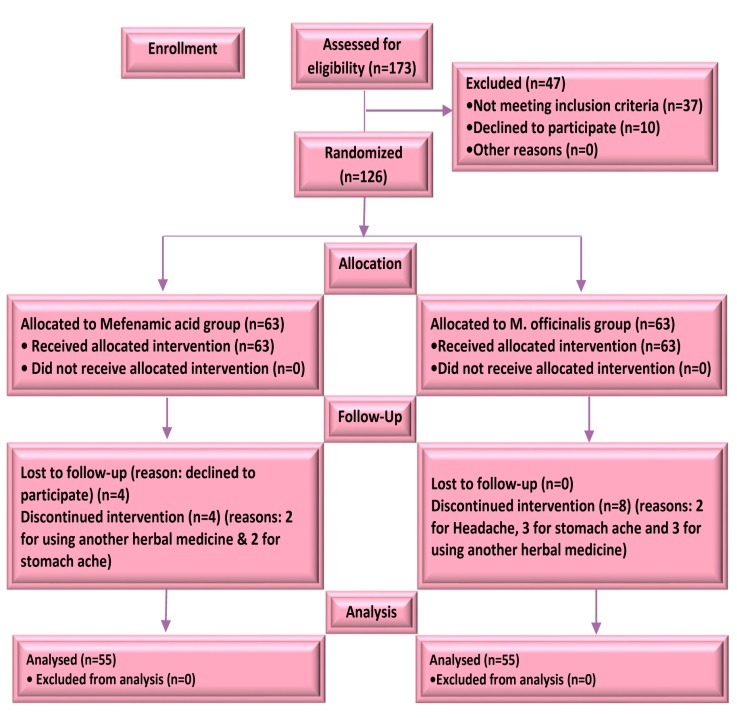
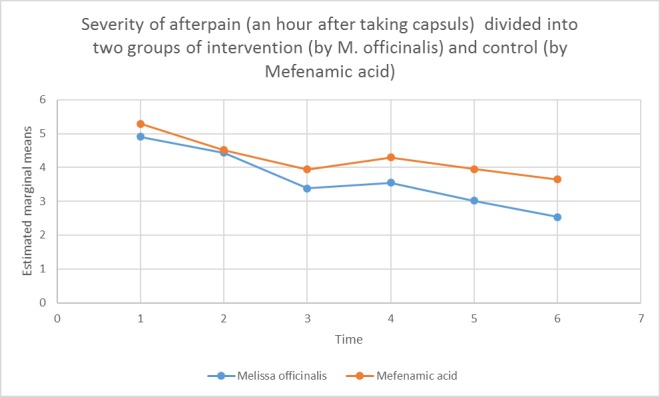
Regarding high prevalence of postpartum pain and side-effects of pharmaceutical analgesics on maternal and neonatal health, the present study aimed to explore the effect of Melissa officinalis on after-pain among mothers hospitalized in Asgariyeh Hospital, Isfahan, 2016. In this single-blind clinical trial, 110 women with moderate to severe after-pain were divided into two M.officinalis and mefenamic acid groups by random allocation. Samples in the first group received 250mg of mefenamic acid and the second group received 395mg of M.officinalis oral capsules every 6hours for 24hours following childbirth. The primary outcome (After-pain) was assessed using a numeric 10-point scale before intervention, 1,2 and 3hours after the first intervention and every 6hours to 24hours after delivery for each of second, third and fourth interventions. Data were analyzed, using SPSS by independent t-test, Mann-Whitney and chi-square test. The demographic and obstetric variables and after-pain severity before the intervention in both groups were homogenous. Pain intensity wasn't significantly different between the two groups during first and second hours after the first intervention, but there was a significant difference in the third hour, The severity of pain was significantly different between the two groups in different assessments including: an hour after the second, third and fourth intervention (P<0.05). A significant difference was found between mefenamic acid and M.officinalis in pain relief. M.officinalis can reduce the severity of after-pain, because it eliminates the need for pharmaceutical analgesics and works much better than mefenamic acid.
鉴于产后疼痛的高发生率以及药物镇痛对母婴健康的副作用,本研究旨在探讨香蜂草对2016年在伊斯法罕阿斯加里耶医院住院的母亲产后疼痛的影响。在这项单盲临床试验中,110名有中度至重度产后疼痛的女性通过随机分配被分为香蜂草组和甲芬那酸组。第一组样本在分娩后每6小时服用250毫克甲芬那酸,第二组样本每6小时服用395毫克香蜂草口服胶囊,共服用24小时。主要结局(产后疼痛)在干预前、首次干预后1、2和3小时以及每次第二次、第三次和第四次干预后每6小时至24小时使用数字10分制进行评估。使用SPSS通过独立t检验、曼-惠特尼检验和卡方检验对数据进行分析。两组干预前的人口统计学和产科变量以及产后疼痛严重程度是同质的。在首次干预后的第一和第二小时,两组之间的疼痛强度没有显著差异,但在第三小时有显著差异。在包括第二次、第三次和第四次干预后一小时在内的不同评估中,两组之间的疼痛严重程度有显著差异(P<0.05)。在疼痛缓解方面,甲芬那酸和香蜂草之间存在显著差异。香蜂草可以降低产后疼痛的严重程度,因为它消除了对药物镇痛的需求,并且比甲芬那酸效果更好。