Vogel M M, Zscheischler J, Wartenburger R, Dee D, Seneviratne S I
Institute for Atmospheric and Climate Science ETH Zurich Zurich Switzerland.
Climate and Environmental Physics University of Bern Bern Switzerland.
Earths Future. 2019 Jul;7(7):692-703. doi: 10.1029/2019EF001189. Epub 2019 Jul 3.
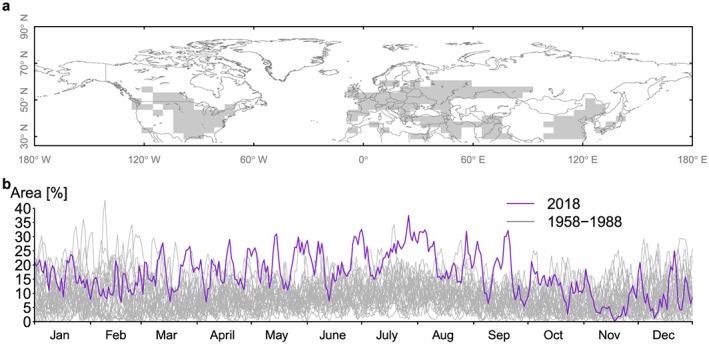
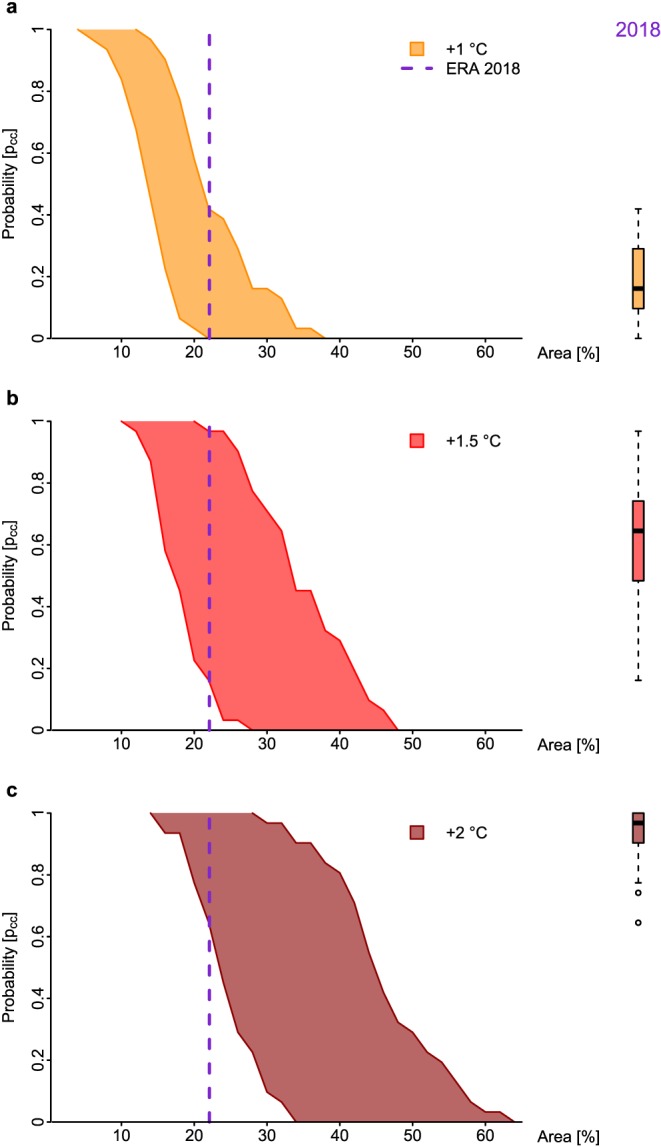
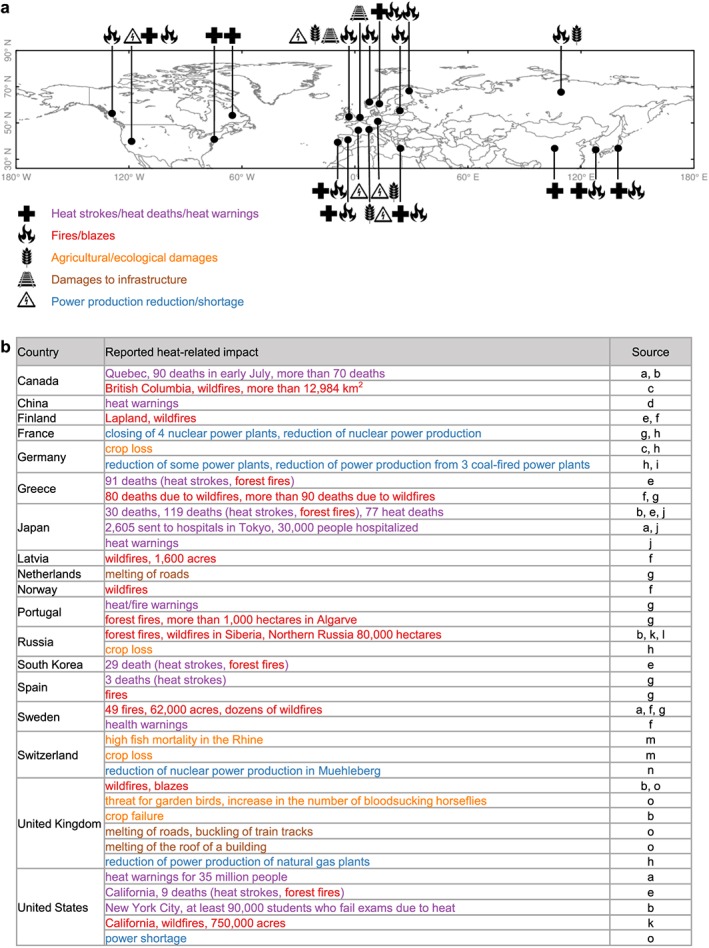
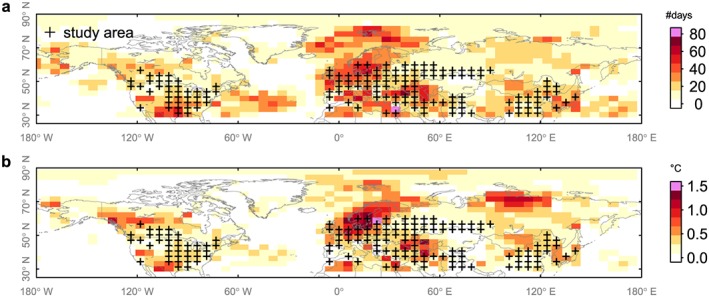
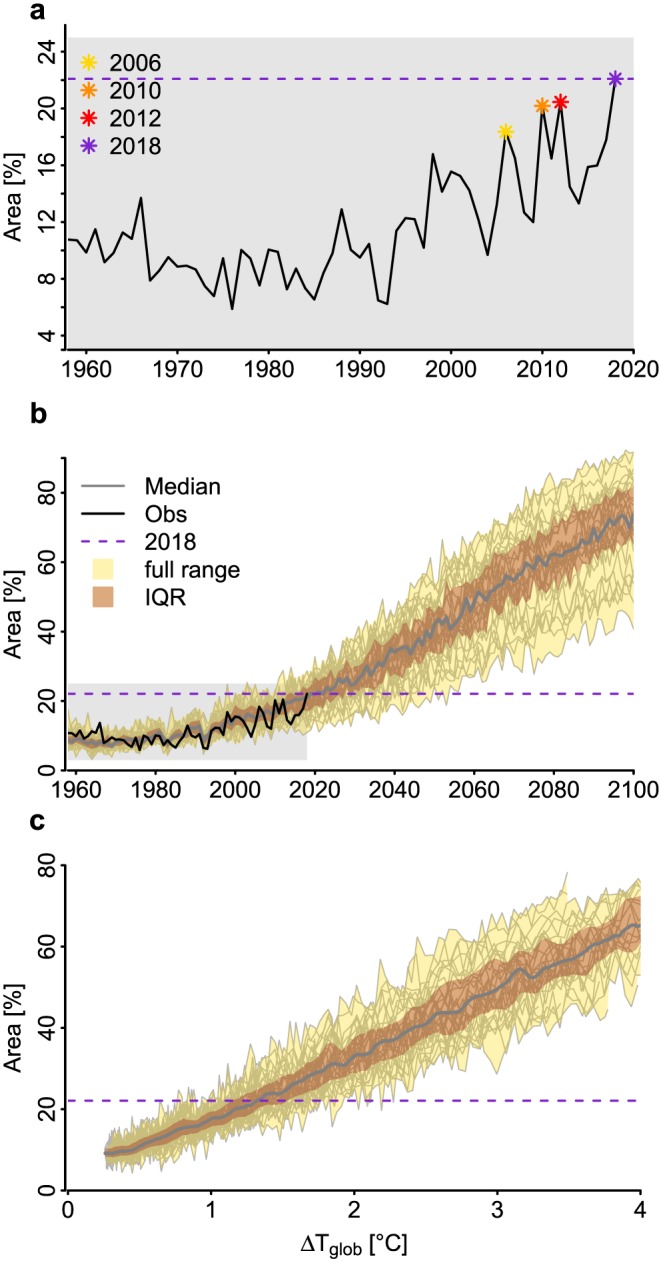
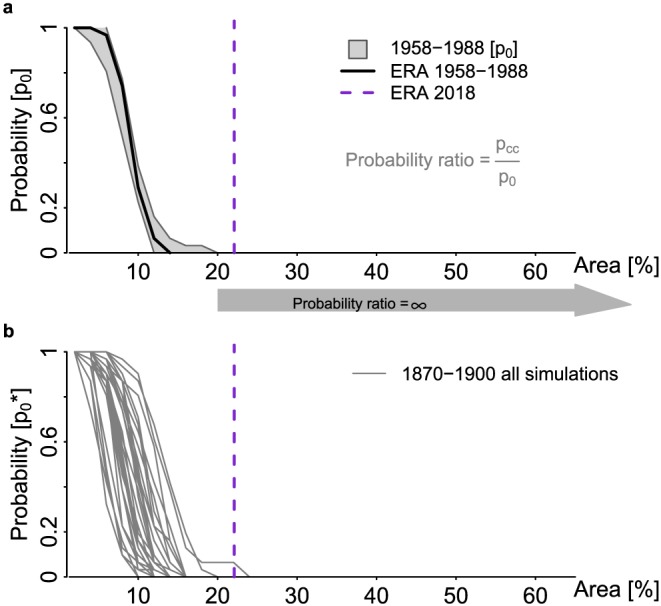
Extremely high temperatures pose an immediate threat to humans and ecosystems. In recent years, many regions on land and in the ocean experienced heat waves with devastating impacts that would have been highly unlikely without human-induced climate change. Impacts are particularly severe when heat waves occur in regions with high exposure of people or crops. The recent 2018 spring-to-summer season was characterized by several major heat and dry extremes. On daily average between May and July 2018 about 22% of the populated and agricultural areas north of 30° latitude experienced concurrent hot temperature extremes. Events of this type were unprecedented prior to 2010, while similar conditions were experienced in the 2010 and 2012 boreal summers. Earth System Model simulations of present-day climate, that is, at around +1 °C global warming, also display an increase of concurrent heat extremes. Based on Earth System Model simulations, we show that it is virtually certain (using Intergovernmental Panel on Climate Change calibrated uncertainty language) that the 2018 north hemispheric concurrent heat events would not have occurred without human-induced climate change. Our results further reveal that the average high-exposure area projected to experience concurrent warm and hot spells in the Northern Hemisphere increases by about 16% per additional +1 °C of global warming. A strong reduction in fossil fuel emissions is paramount to reduce the risks of unprecedented global-scale heat wave impacts.
极高的温度对人类和生态系统构成了直接威胁。近年来,陆地和海洋的许多地区都经历了热浪,其造成的破坏性影响在没有人为引起的气候变化的情况下极不可能发生。当热浪发生在人口或农作物高度暴露的地区时,影响尤为严重。2018年春夏季节的特点是出现了几次重大的高温和干旱极端事件。在2018年5月至7月期间,北纬30°以北约22%的人口聚居和农业区域平均每天都同时经历高温极端天气。此类事件在2010年之前是前所未有的,而在2010年和2012年的北半球夏季也出现过类似情况。对当前气候(即全球变暖约1°C时)的地球系统模型模拟也显示,同时出现的极端高温天气有所增加。基于地球系统模型模拟,我们表明(使用政府间气候变化专门委员会校准的不确定性语言),如果没有人为引起的气候变化,2018年北半球同时出现的高温事件几乎肯定不会发生。我们的结果进一步表明,预计北半球每额外升温1°C,预计将同时经历暖热期的高暴露区域平均增加约16%。大幅减少化石燃料排放对于降低前所未有的全球规模热浪影响的风险至关重要。