Department of Plant Production and Forestry Science, University of Lleida-Agrotecnio Center, Av. Alcalde Rovira Roure, 191, 25198, Lleida, Spain.
Centre for Plant Biotechnology and Genomics, Universidad Politécnica de Madrid (UPM) - Instituto Nacional de Investigación y Tecnología Agraria y Alimentaria (INIA), Campus Montegancedo UPM, 28223, Pozuelo de Alarcón, Madrid, Spain.
Transgenic Res. 2020 Feb;29(1):37-52. doi: 10.1007/s11248-019-00176-9. Epub 2019 Oct 10.
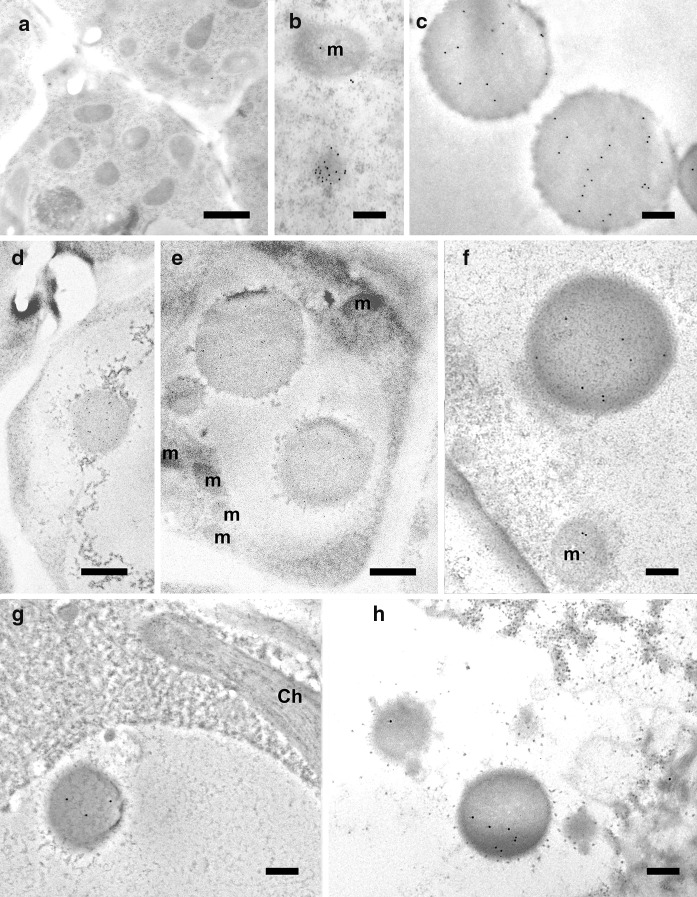
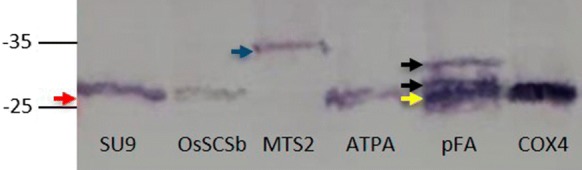
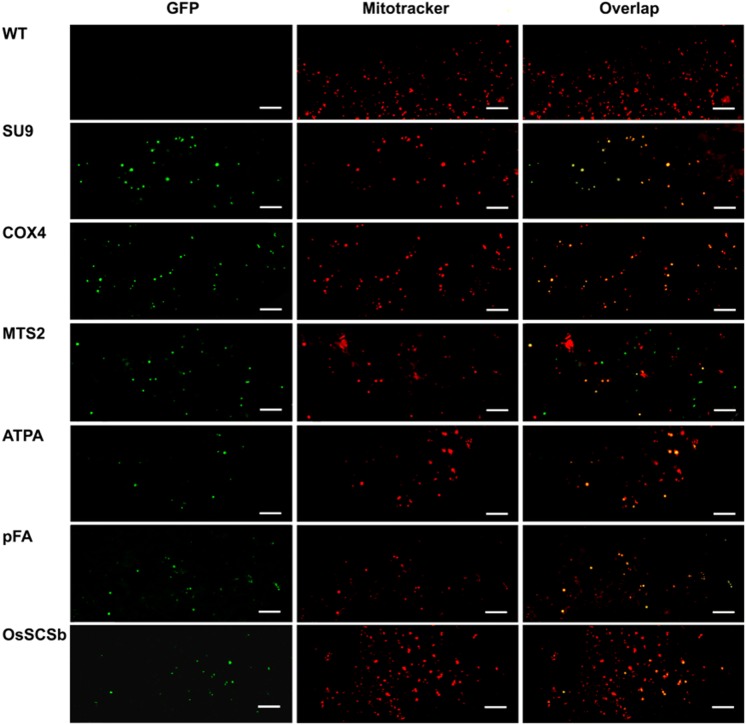
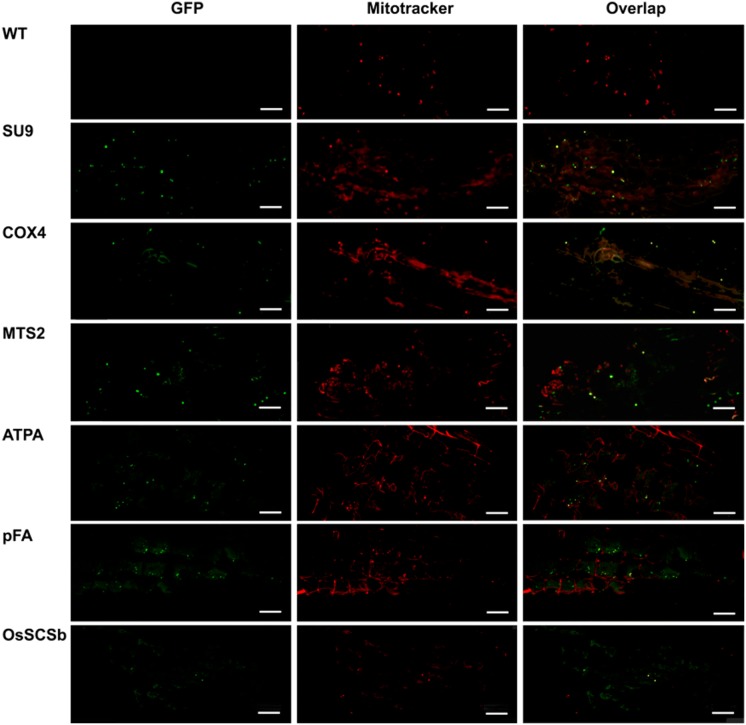
Mitochondria fulfil essential functions in respiration and metabolism as well as regulating stress responses and apoptosis. Most native mitochondrial proteins are encoded by nuclear genes and are imported into mitochondria via one of several receptors that recognize N-terminal signal peptides. The targeting of recombinant proteins to mitochondria therefore requires the presence of an appropriate N-terminal peptide, but little is known about mitochondrial import in monocotyledonous plants such as rice (Oryza sativa). To gain insight into this phenomenon, we targeted nuclear-encoded enhanced green fluorescent protein (eGFP) to rice mitochondria using six mitochondrial pre-sequences with diverse phylogenetic origins, and investigated their effectiveness by immunoblot analysis as well as confocal and electron microscopy. We found that the ATPA and COX4 (Saccharomyces cerevisiae), SU9 (Neurospora crassa), pFA (Arabidopsis thaliana) and OsSCSb (Oryza sativa) peptides successfully directed most of the eGFP to the mitochondria, whereas the MTS2 peptide (Nicotiana plumbaginifolia) showed little or no evidence of targeting ability even though it is a native plant sequence. Our data therefore indicate that the presence of particular recognition motifs may be required for mitochondrial targeting, whereas the phylogenetic origin of the pre-sequences probably does not play a key role in the success of mitochondrial targeting in dedifferentiated rice callus and plants.
线粒体在呼吸和代谢中发挥着重要作用,同时还调节应激反应和细胞凋亡。大多数天然的线粒体蛋白由核基因编码,并通过几种识别 N 端信号肽的受体之一导入线粒体。因此,重组蛋白靶向线粒体需要存在适当的 N 端肽,但对于单子叶植物如水稻(Oryza sativa)中的线粒体导入知之甚少。为了深入了解这一现象,我们使用来自不同进化起源的六种线粒体前导序列将核编码的增强型绿色荧光蛋白(eGFP)靶向水稻线粒体,并通过免疫印迹分析以及共聚焦和电子显微镜观察来研究它们的有效性。我们发现,ATPase 和 COX4(酿酒酵母)、SU9(粗糙脉孢菌)、pFA(拟南芥)和 OsSCSb(水稻)肽成功地将大部分 eGFP 导向线粒体,而 MTS2 肽(烟草)则几乎没有或没有靶向能力,尽管它是一种天然的植物序列。因此,我们的数据表明,可能需要特定的识别基序来进行线粒体靶向,而前导序列的进化起源在未分化的水稻愈伤组织和植物中成功靶向线粒体可能不起关键作用。