Department of Clinical Sciences, Swedish University of Agricultural Sciences, Uppsala, 750 07, Sweden.
Department of Medical Sciences, Uppsala University, Uppsala, 751 85, Sweden.
Sci Rep. 2019 Oct 10;9(1):14521. doi: 10.1038/s41598-019-51228-3.
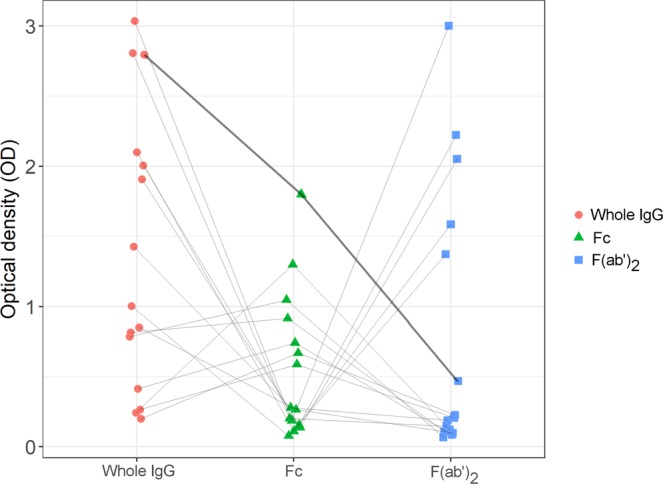
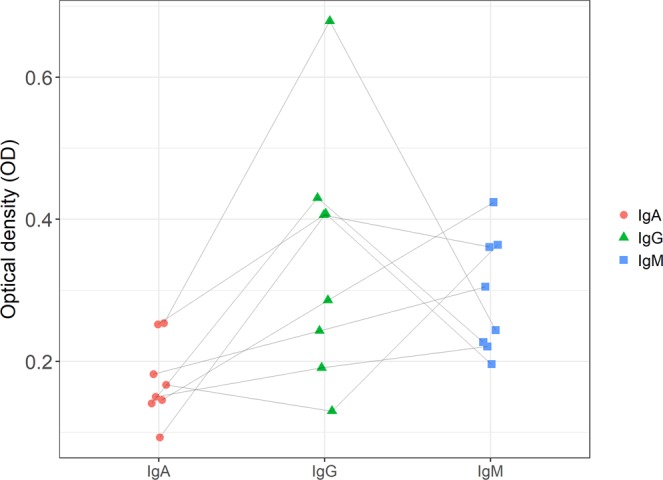
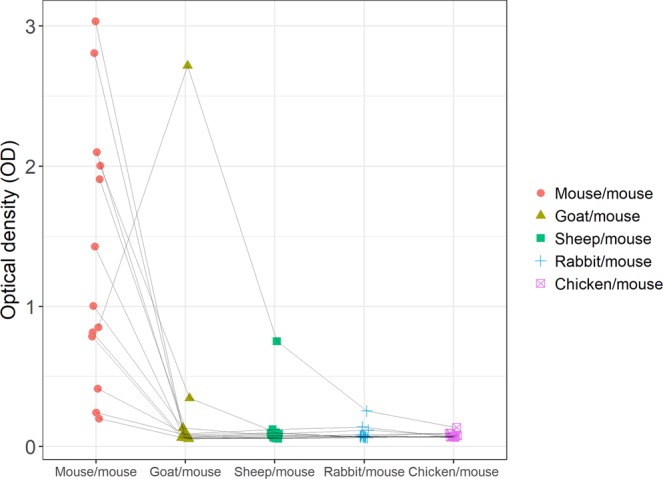
Immunoassays are widely used for detection and quantification of analytes in biological samples, but are vulnerable to analytical errors caused by interfering sample substances. Of particular interest are endogenous anti-animal antibodies that may bind to the immunoassay antibodies and cause erroneous test results. This phenomenon is a hazard to patient safety in both human and veterinary medicine. Here, we demonstrate that anti-mouse antibodies in dogs bind selectively to different regions of the murine IgG molecule, cross-react with IgG from different species, and consist of all major antibody classes present in canine serum (IgA, IgG and IgM). The antibody characteristics varied among individuals and their prevalence differed between two dog breeds. The selective binding to different IgG regions suggests that the antibodies might not originate from immunization through exposure to mice or other species. These findings show that canine anti-mouse antibodies are highly heterogeneous in nature and therefore require a combination of strategies to be counteracted.
免疫测定法广泛用于检测和定量生物样本中的分析物,但容易受到干扰样本物质引起的分析误差的影响。特别值得关注的是内源性抗动物抗体,它可能与免疫测定抗体结合,导致错误的测试结果。这种现象对人和兽医医学中的患者安全都是一种危害。在这里,我们证明狗体内的抗鼠抗体选择性地结合到鼠 IgG 分子的不同区域,与来自不同物种的 IgG 发生交叉反应,并包含存在于犬血清中的所有主要抗体类别(IgA、IgG 和 IgM)。抗体特征在个体之间有所不同,并且在两个犬种之间的流行程度也不同。对不同 IgG 区域的选择性结合表明,这些抗体可能不是通过接触小鼠或其他物种而产生免疫的结果。这些发现表明,犬抗鼠抗体在性质上高度异质,因此需要结合多种策略来对抗。