Mayo Clinic, Rochester, MN, USA.
Weill Cornell Medicine, New York, NY, USA.
J Appl Gerontol. 2020 Nov;39(11):1184-1194. doi: 10.1177/0733464819880449. Epub 2019 Oct 11.
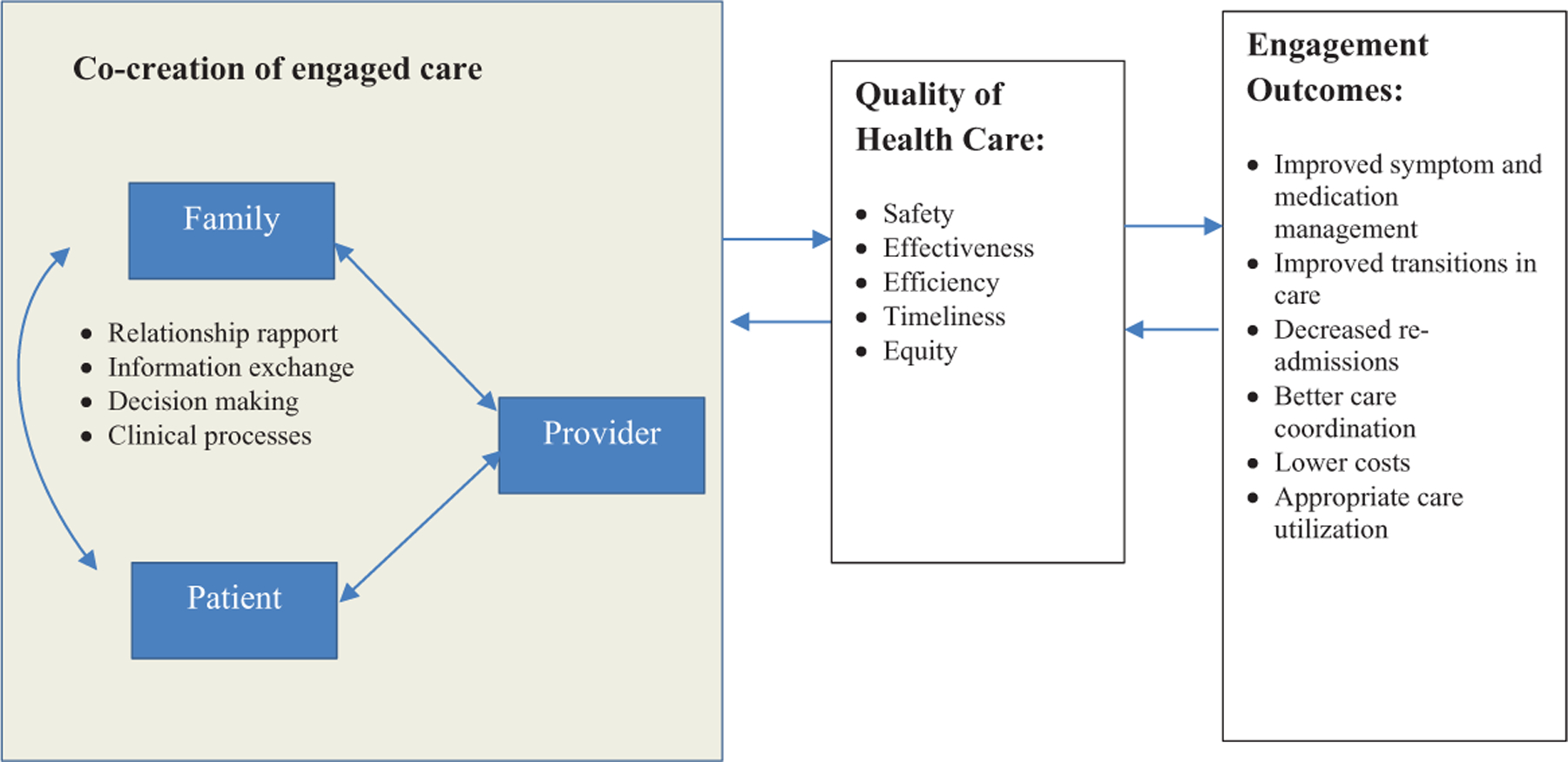
Family caregiver engagement in clinical encounters can promote relationship-centered care and optimize outcomes for people with Alzheimer's disease and related dementias (ADRD). Little is known, however, about effective ways for health care providers to engage family caregivers in clinical appointments to provide the highest quality care. We describe what caregivers of people with ADRD and people with mild cognitive impairment (MCI) consider potential best practices for engaging caregivers as partners in clinical appointments. Seven online focus groups were convened. Three groups included spousal caregivers ( = 42), three included non-spousal caregivers ( = 36), and one included people with MCI ( = 15). Seven potential best practices were identified, including the following: "acknowledge caregivers' role and assess unmet needs and capacity to care" and "communicate directly with person with ADRD yet provide opportunities for caregivers to have separate interactions with providers." Participants outlined concrete steps for providers and health care systems to improve care delivery quality for people with ADRD.
家庭护理人员参与临床诊疗可以促进以关系为中心的护理,并优化阿尔茨海默病和相关痴呆症(ADRD)患者的治疗效果。然而,对于医疗服务提供者来说,很少有关于有效方法的知识来让家庭护理人员参与临床预约,以提供最高质量的护理。我们描述了患有 ADRD 和轻度认知障碍(MCI)的人的护理人员认为的潜在最佳实践,以将护理人员作为临床预约的合作伙伴。我们组织了七次在线焦点小组。三个小组包括配偶护理人员(=42),三个小组包括非配偶护理人员(=36),一个小组包括 MCI 患者(=15)。确定了七种潜在的最佳实践,包括以下内容:“承认护理人员的角色,评估未满足的需求和照顾能力”和“与 ADRD 患者直接沟通,但为护理人员提供与提供者进行单独互动的机会。”参与者为提供者和医疗保健系统概述了改善 ADRD 患者护理服务质量的具体步骤。