National Institute of Animal Science, Rural Development Administration, Jeju, Republic of Korea.
Department of Animal Resources Science, College of Industrial Sciences, Kongju National University, Yesan, Republic of Korea.
PLoS Genet. 2019 Oct 11;15(10):e1008279. doi: 10.1371/journal.pgen.1008279. eCollection 2019 Oct.
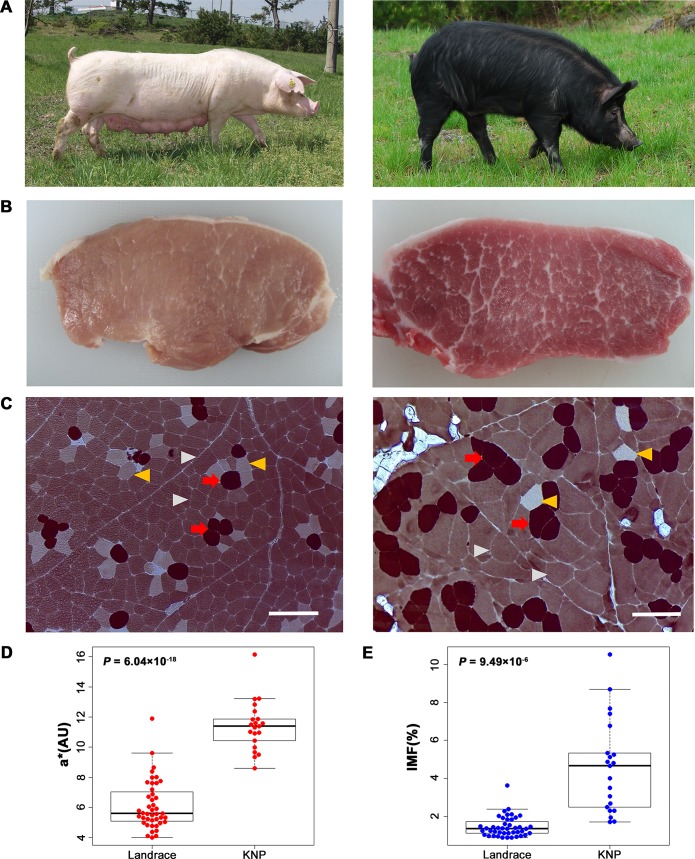
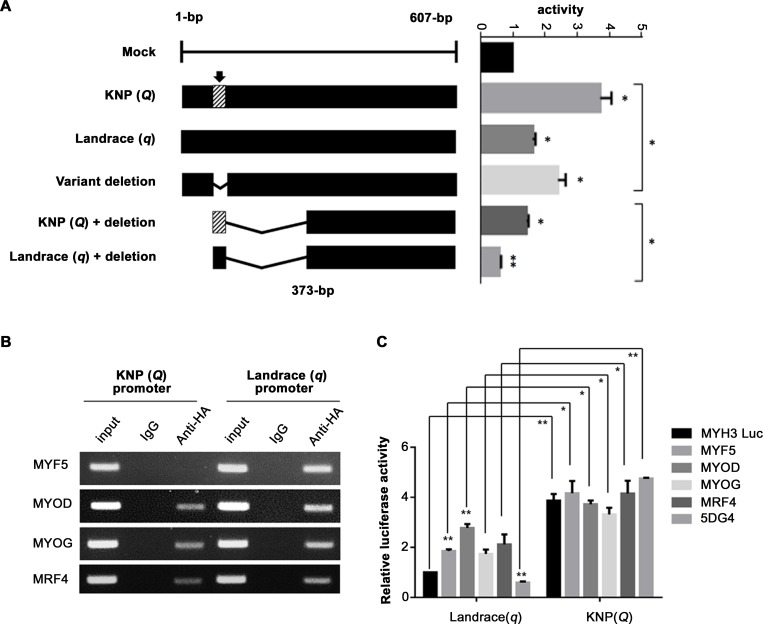
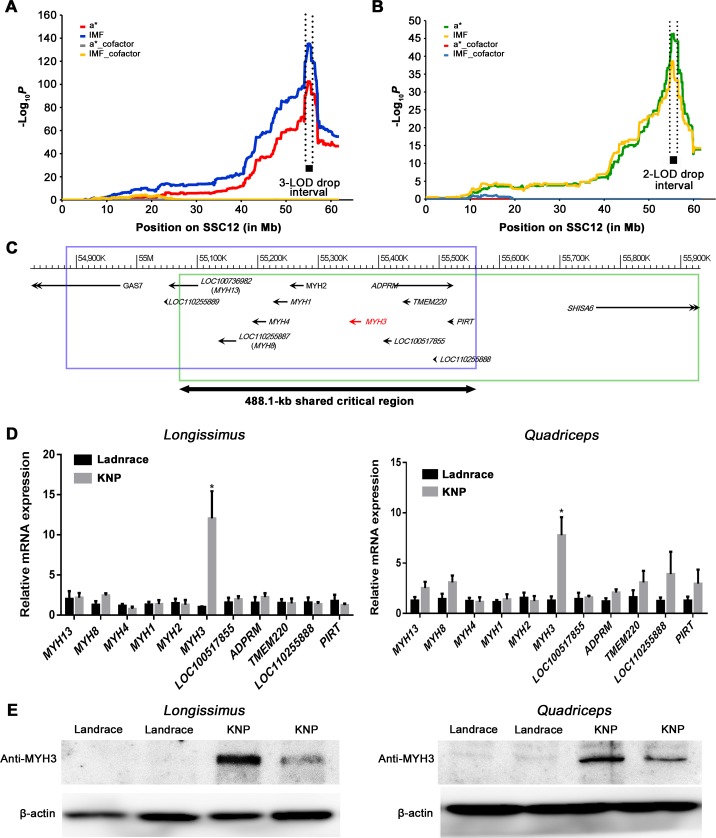
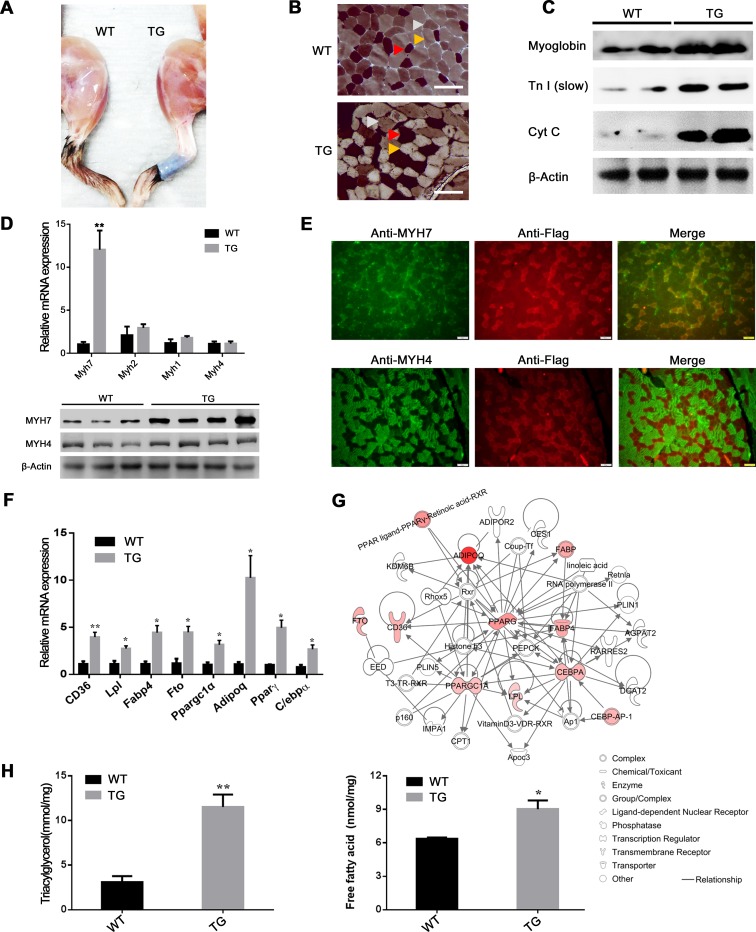
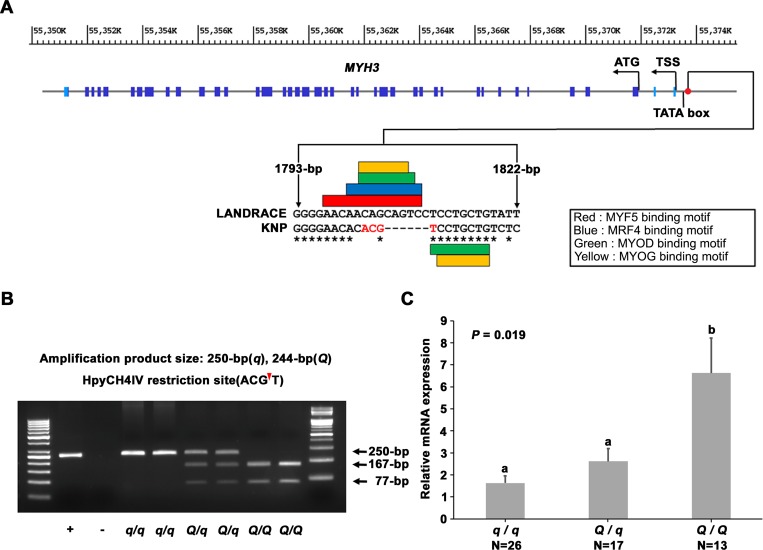
Muscle development and lipid accumulation in muscle critically affect meat quality of livestock. However, the genetic factors underlying myofiber-type specification and intramuscular fat (IMF) accumulation remain to be elucidated. Using two independent intercrosses between Western commercial breeds and Korean native pigs (KNPs) and a joint linkage-linkage disequilibrium analysis, we identified a 488.1-kb region on porcine chromosome 12 that affects both reddish meat color (a*) and IMF. In this critical region, only the MYH3 gene, encoding myosin heavy chain 3, was found to be preferentially overexpressed in the skeletal muscle of KNPs. Subsequently, MYH3-transgenic mice demonstrated that this gene controls both myofiber-type specification and adipogenesis in skeletal muscle. We discovered a structural variant in the promotor/regulatory region of MYH3 for which Q allele carriers exhibited significantly higher values of a* and IMF than q allele carriers. Furthermore, chromatin immunoprecipitation and cotransfection assays showed that the structural variant in the 5'-flanking region of MYH3 abrogated the binding of the myogenic regulatory factors (MYF5, MYOD, MYOG, and MRF4). The allele distribution of MYH3 among pig populations worldwide indicated that the MYH3 Q allele is of Asian origin and likely predates domestication. In conclusion, we identified a functional regulatory sequence variant in porcine MYH3 that provides novel insights into the genetic basis of the regulation of myofiber type ratios and associated changes in IMF in pigs. The MYH3 variant can play an important role in improving pork quality in current breeding programs.
肌肉发育和肌肉中的脂质积累对家畜的肉质有重要影响。然而,肌纤维类型特化和肌内脂肪(IMF)积累的遗传因素仍有待阐明。本研究利用西方商业品种与韩国本地猪(KNPs)之间的两个独立杂交群体,并进行联合连锁-连锁不平衡分析,鉴定了一个影响猪肉颜色(a*)和 IMF 的 488.1kb 大小的猪 12 号染色体区域。在这个关键区域,仅发现 MYH3 基因(编码肌球蛋白重链 3)在 KNPs 的骨骼肌中优先过表达。随后,MYH3 转基因小鼠表明该基因控制骨骼肌中的肌纤维类型特化和脂肪生成。我们发现了 MYH3 启动子/调控区的结构变异,其中 Q 等位基因携带者的 a*和 IMF 值明显高于 q 等位基因携带者。此外,染色质免疫沉淀和共转染实验表明,MYH3 5'侧翼区的结构变异破坏了肌源性调节因子(MYF5、MYOD、MYOG 和 MRF4)的结合。该研究在全世界猪群体中的 MYH3 等位基因分布表明,MYH3 的 Q 等位基因起源于亚洲,可能早于家猪的驯化。综上所述,本研究鉴定了猪 MYH3 中的一个功能性调控序列变异,为调节肌纤维类型比例和相关 IMF 变化的遗传基础提供了新的见解。该 MYH3 变异在当前的猪种选育计划中可发挥重要作用,提高猪肉品质。