Department of Biological Sciences, Tata Institute of Fundamental Research, Mumbai, India.
Department of Biology, Indian Institute of Science Education and Research, Pune, India.
J Cell Biol. 2019 Nov 4;218(11):3697-3713. doi: 10.1083/jcb.201903102. Epub 2019 Oct 11.
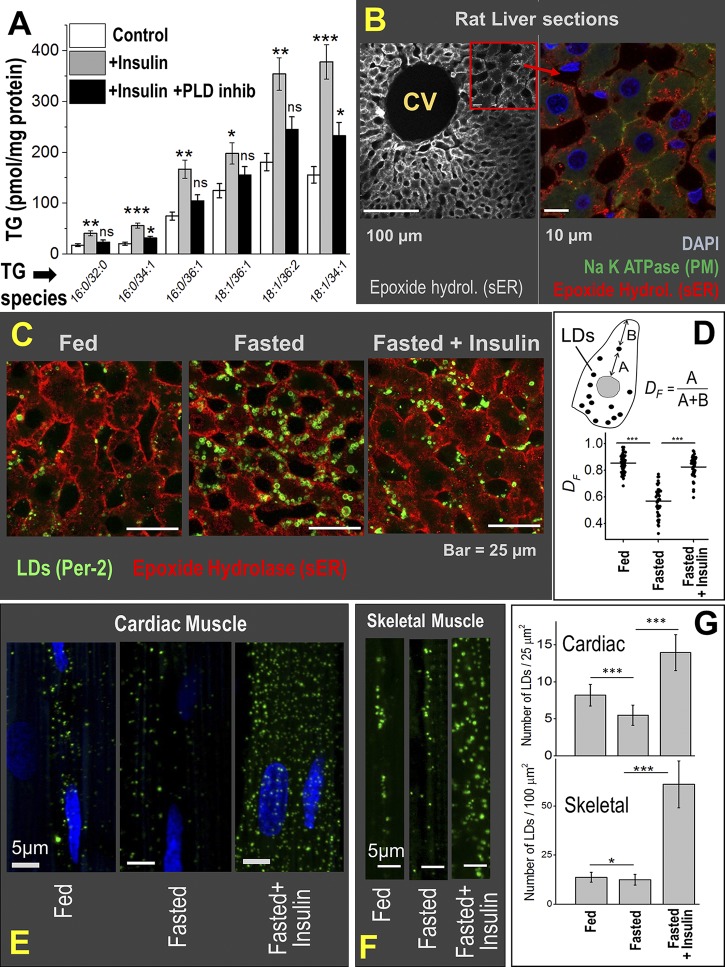
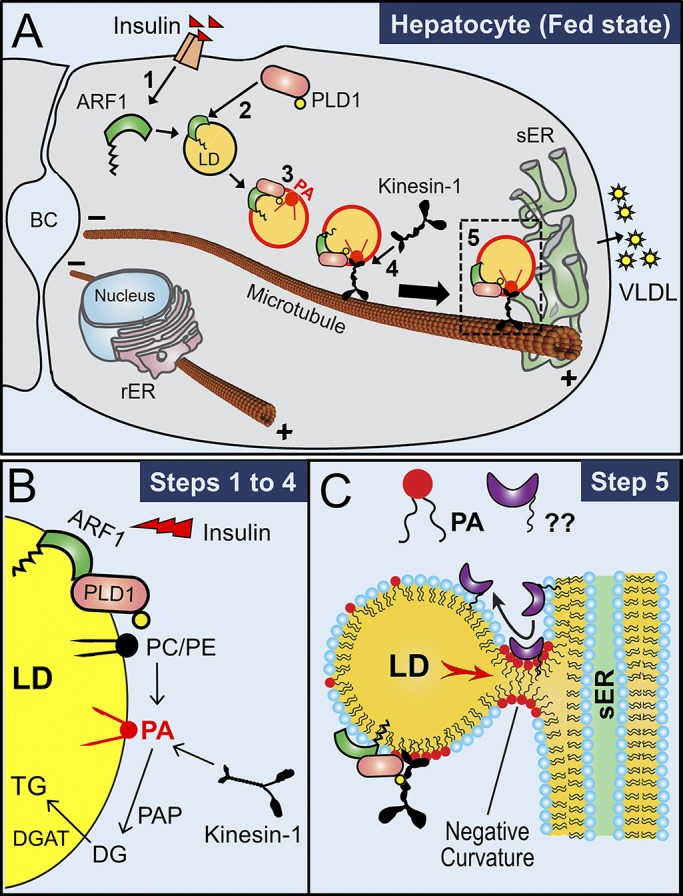
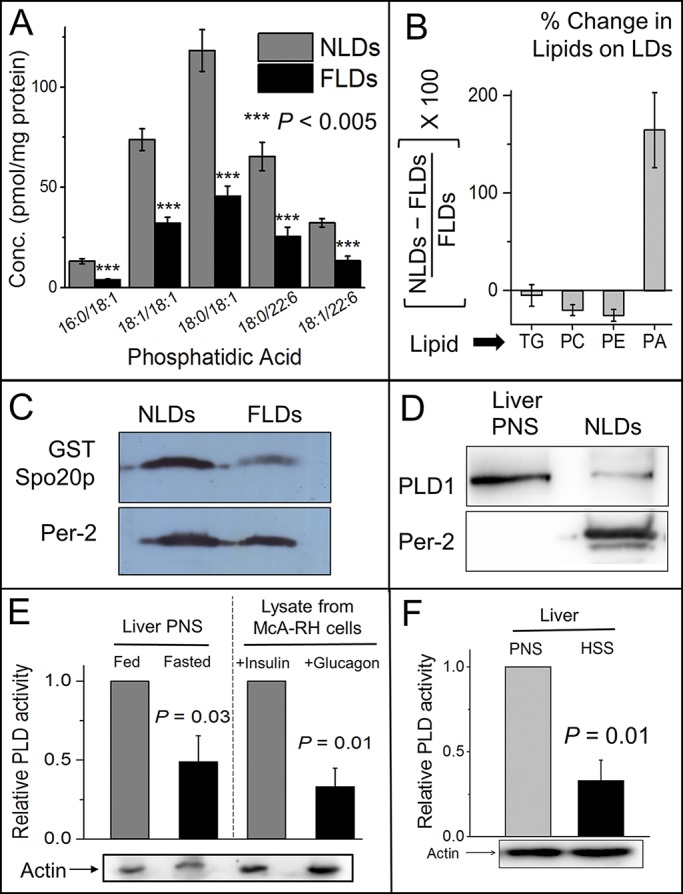
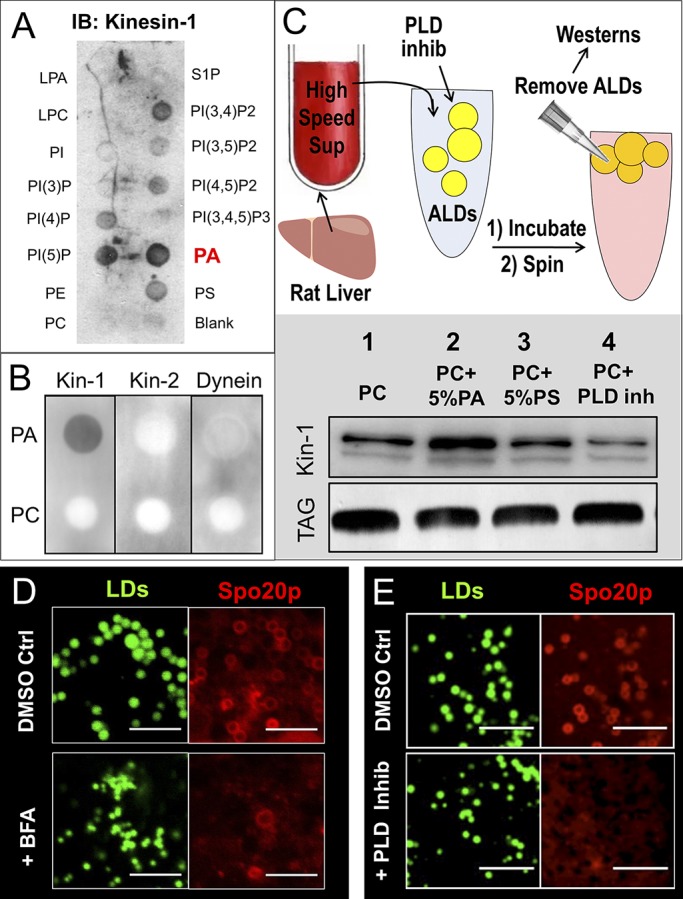
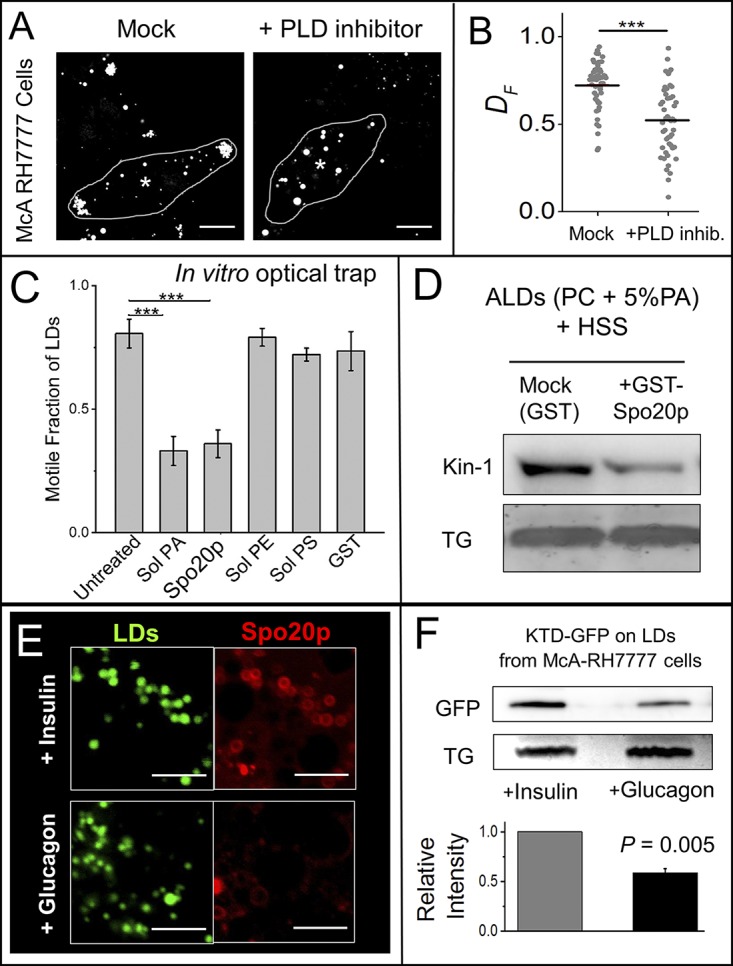
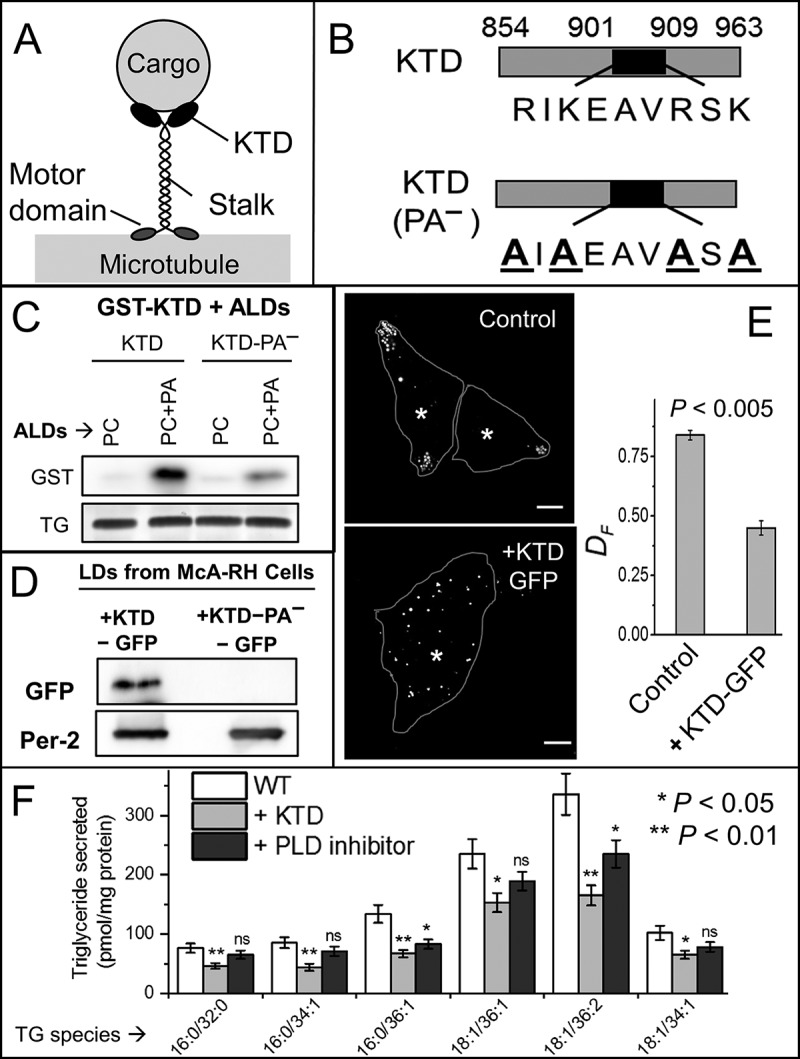
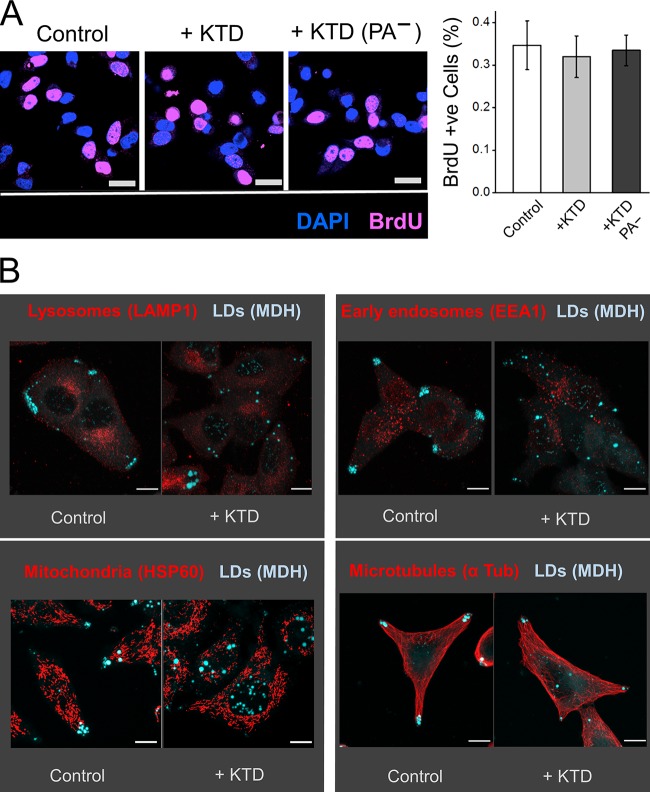
Triglyceride-rich lipid droplets (LDs) are catabolized with high efficiency in hepatocytes to supply fatty acids for producing lipoprotein particles. Fasting causes a massive influx of adipose-derived fatty acids into the liver. The liver in the fasted state is therefore bloated with LDs but, remarkably, still continues to secrete triglycerides at a constant rate. Here we show that insulin signaling elevates phosphatidic acid (PA) dramatically on LDs in the fed state. PA then signals to recruit kinesin-1 motors, which transport LDs to the peripherally located smooth ER inside hepatocytes, where LDs are catabolized to produce lipoproteins. This pathway is down-regulated homeostatically when fasting causes insulin levels to drop, thus preventing dangerous elevation of triglycerides in the blood. Further, we show that a specific peptide against kinesin-1 blocks triglyceride secretion without any apparent deleterious effects on cells. Our work therefore reveals fundamental mechanisms that maintain lipid homeostasis across metabolic states and leverages this knowledge to propose a molecular target against hyperlipidemia.
富含甘油三酯的脂滴(LDs)在肝细胞中被高效分解,为脂蛋白颗粒的生成提供脂肪酸。禁食会导致大量脂肪组织来源的脂肪酸涌入肝脏。因此,在禁食状态下,肝脏充满了 LD,但令人惊讶的是,它仍能以恒定的速度持续分泌甘油三酯。在这里,我们发现胰岛素信号在进食状态下显著提高了 LD 上的磷酸脂酰肌醇(PA)水平。PA 随后发出信号招募驱动蛋白-1 (kinesin-1) 马达,将 LD 运送到肝细胞中位于周边的光滑内质网,在那里 LD 被分解以产生脂蛋白。当禁食导致胰岛素水平下降时,这种途径会被体内平衡下调,从而防止血液中甘油三酯的危险升高。此外,我们还表明,一种针对 kinesin-1 的特定肽可以阻断甘油三酯的分泌,而对细胞没有明显的不良影响。因此,我们的工作揭示了维持跨代谢状态下脂质稳态的基本机制,并利用这一知识提出了针对高血脂的分子靶标。