di Fronso Selenia, Fiedler Patrique, Tamburro Gabriella, Haueisen Jens, Bertollo Maurizio, Comani Silvia
Behavioral Imaging and Neural Dynamics Center, University "G. d'Annunzio" of Chieti-Pescara, Chieti, Italy.
Department of Medicine and Aging Sciences, University "G. d'Annunzio" of Chieti-Pescara, Chieti, Italy.
Front Neurosci. 2019 Sep 20;13:982. doi: 10.3389/fnins.2019.00982. eCollection 2019.
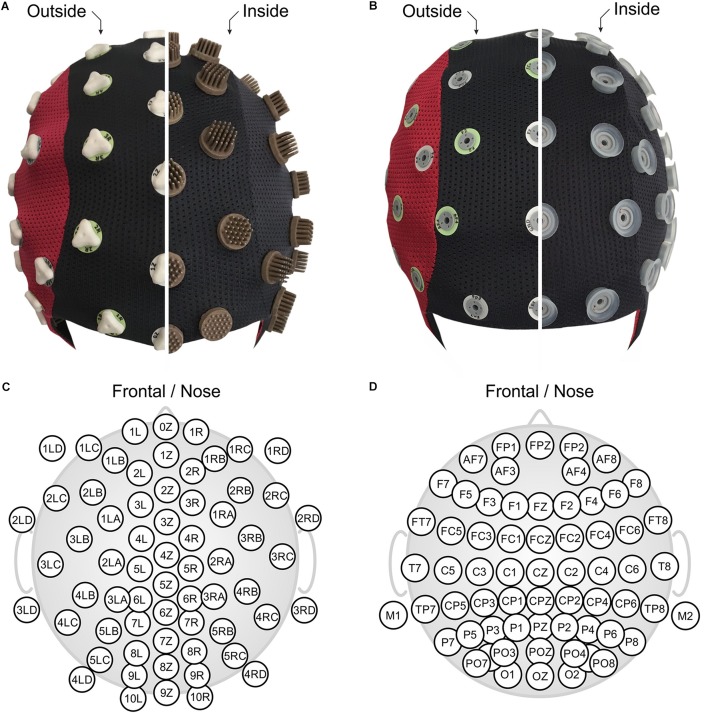
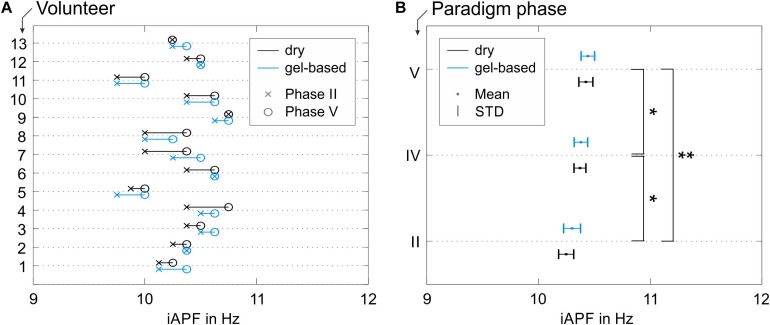
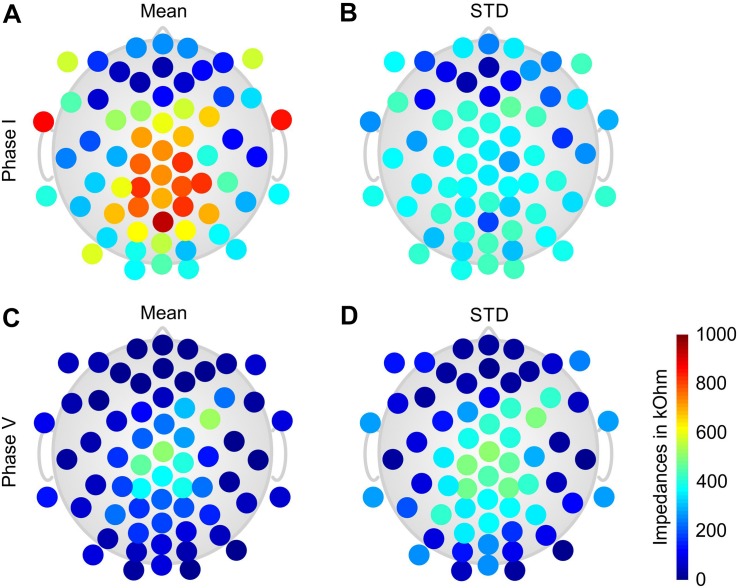
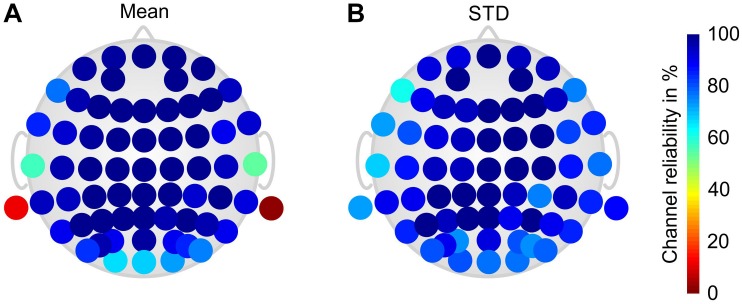
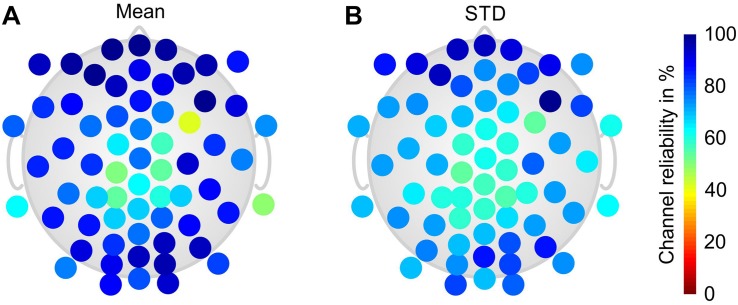
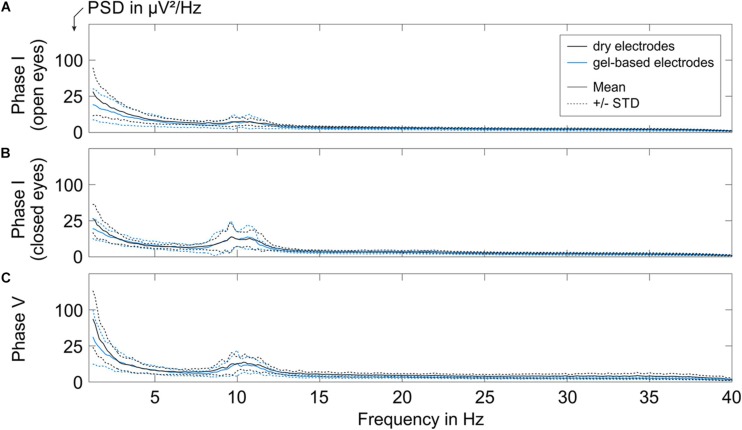
Novel state-of-the-art amplifier and cap systems enable Electroencephalography (EEG) recording outside of stationary lab systems during physical exercise and body motion. However, extensive preparation time, cleaning, and limited long-term stability of conventional gel-based electrode systems pose significant limitations in out-of-the-lab conditions. Dry electrode systems may contribute to rapid and repetitive mobile EEG acquisition with significantly reduced preparation time, reduced cleaning requirements, and possible self-application by the volunteer but are known for higher channel failure probability and increased sensitivity to movement artifacts. We performed a counterbalanced repeated measure endurance cycling study to objectively validate the performance and applicability of a novel commercially available 64-channel dry electrode cap for sport science. A total of 17 healthy volunteers participated in the study, performing an endurance cycling paradigm comprising five phases: (I) baseline EEG, (II) pre-cycling EEG, (III) endurance cycling, (IV) active recovery, and (V) passive recovery. We compared the performance of the 64-channel dry electrode cap with a commercial gel-based cap system in terms of usability metrics, reliability, and signal characteristics. Furthermore, we validated the performance of the dry cap during a realistic sport science investigation, verifying the hypothesis of a systematic, reproducible shift of the individual alpha peak frequency (iAPF) induced by physical effort. The average preparation time of the dry cap was one-third of the gel-based electrode caps. The average channel reliability of the dry cap varied between 80 ± 15% (Phase I), 66 ± 19% (Phase III), and 91 ± 10% (Phase V). In comparison, the channel reliability of the gel-based cap varied between 95 ± 3, 85 ± 9, and 82 ± 9%, respectively. No considerable differences were evident for the comfort evaluations nor the signal characteristics of both caps. A within-volunteers repeated measure analysis of variance (RM-ANOVA) did not show significant effects of the electrode type on the iAPF [(1,12) = 1.670, = 0.221, = 0.122, Power = 0.222]. However, a significant increase of the iAPF exists from Phase II to Phases IV and V due to exhaustive physical task. In conclusion, we demonstrated that dry electrode cap is equivalent to the gel-based electrode cap based on signal characteristics, comfort, and signal information content, thereby confirming the usefulness of dry electrodes in sports science and other mobile applications involving ample movement.
新型的先进放大器和帽式系统使人们能够在体育锻炼和身体运动期间,在固定实验室系统之外进行脑电图(EEG)记录。然而,传统的基于凝胶的电极系统准备时间长、需要清洁且长期稳定性有限,这在实验室外环境中构成了重大限制。干电极系统可能有助于快速且重复地进行移动EEG采集,其准备时间显著减少、清洁需求降低,志愿者还可能自行佩戴,但干电极系统存在通道故障概率较高以及对运动伪影敏感度增加的问题。我们进行了一项平衡重复测量耐力骑行研究,以客观验证一种新型商用64通道干电极帽在运动科学中的性能和适用性。共有17名健康志愿者参与了该研究,他们进行了一个包含五个阶段的耐力骑行范式:(I)基线EEG,(II)骑行前EEG,(III)耐力骑行,(IV)主动恢复,以及(V)被动恢复。我们在可用性指标、可靠性和信号特征方面,将64通道干电极帽的性能与一种商用基于凝胶的帽式系统进行了比较。此外,我们在一项实际的运动科学调查中验证了干电极帽的性能,验证了体力活动引起个体α峰频率(iAPF)系统性、可重复变化的假设。干电极帽的平均准备时间是基于凝胶的电极帽的三分之一。干电极帽的平均通道可靠性在第一阶段为80±15%,第三阶段为66±19%,第五阶段为91±10%。相比之下,基于凝胶的帽式系统的通道可靠性分别为95±3%、85±9%和82±9%。对于两种帽式系统的舒适度评估和信号特征,均未发现明显差异。志愿者内部重复测量方差分析(RM - ANOVA)未显示电极类型对iAPF有显著影响[F(1,12)=1.670,p = 0.221,η² = 0.122,检验效能 = 0.222]。然而,由于体力活动耗尽,从第二阶段到第四阶段和第五阶段,iAPF显著增加。总之,我们证明了干电极帽在信号特征、舒适度和信号信息含量方面与基于凝胶的电极帽相当,从而证实了干电极在运动科学和其他涉及大量运动的移动应用中的实用性。