Department of Molecular Medicine, Sapienza University of Rome, Piazzale Aldo Moro, 5, 00185 Rome, Italy.
BrainSigns srl, via Sesto Celere, 00152 Rome, Italy.
Sensors (Basel). 2019 Mar 19;19(6):1365. doi: 10.3390/s19061365.
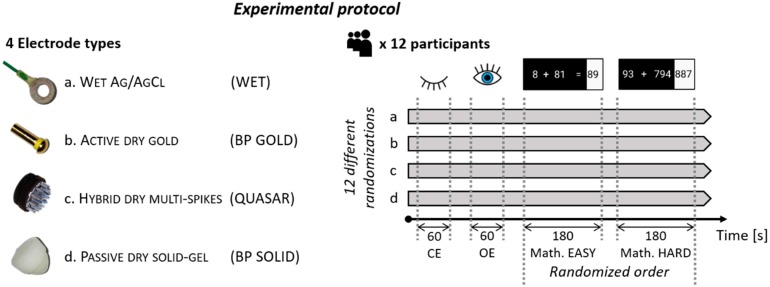
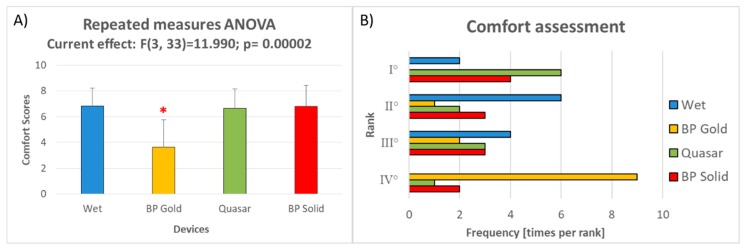
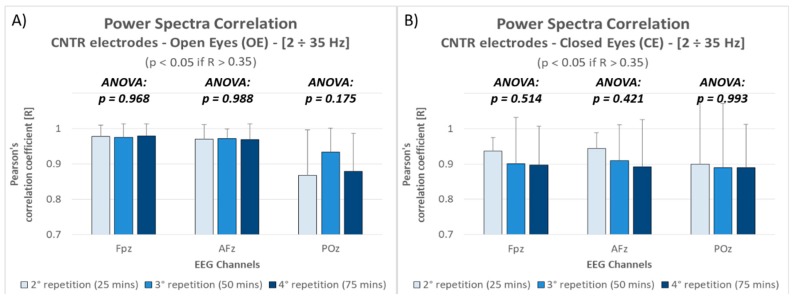
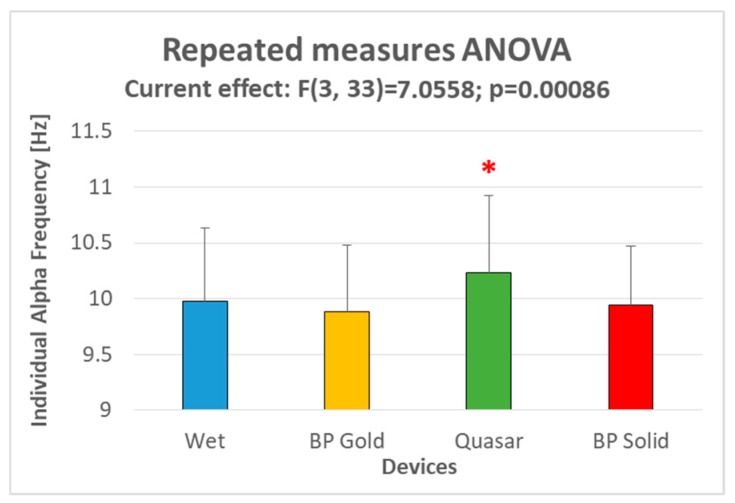
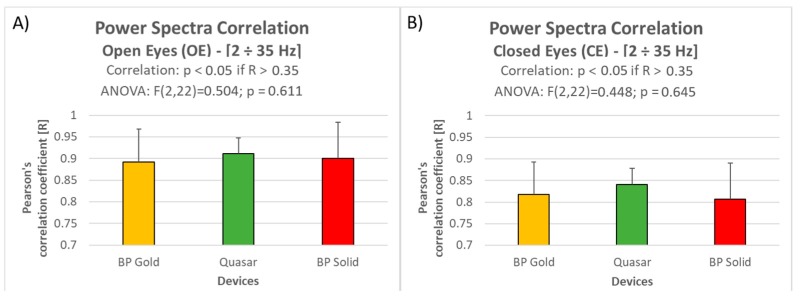
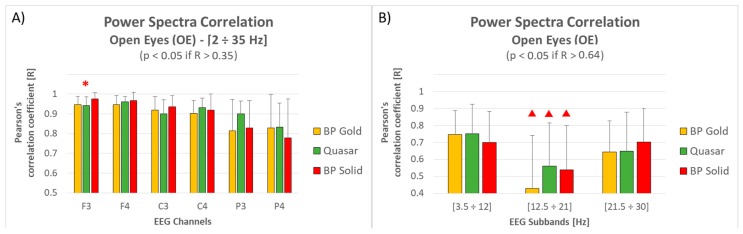
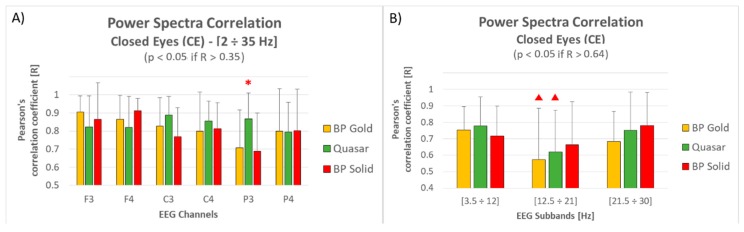
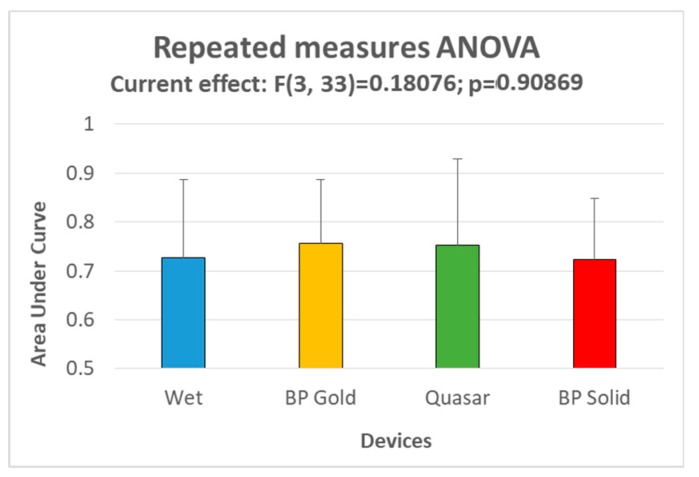
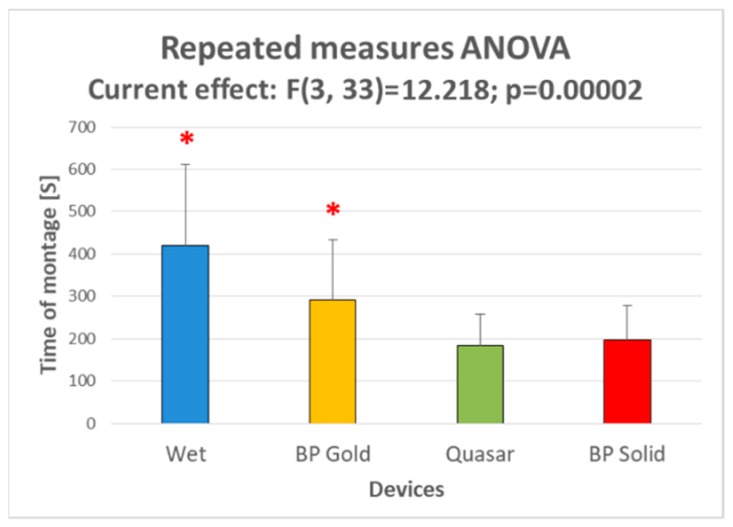
One century after the first recording of human electroencephalographic (EEG) signals, EEG has become one of the most used neuroimaging techniques. The medical devices industry is now able to produce small and reliable EEG systems, enabling a wide variety of applications also with no-clinical aims, providing a powerful tool to neuroscientific research. However, these systems still suffer from a critical limitation, consisting in the use of wet electrodes, that are uncomfortable and require expertise to install and time from the user. In this context, dozens of different concepts of EEG dry electrodes have been recently developed, and there is the common opinion that they are reaching traditional wet electrodes quality standards. However, although many papers have tried to validate them in terms of signal quality and usability, a comprehensive comparison of different dry electrode types from multiple points of view is still missing. The present work proposes a comparison of three different dry electrode types, selected among the main solutions at present, against wet electrodes, taking into account several aspects, both in terms of signal quality and usability. In particular, the three types consisted in gold-coated single pin, multiple pins and solid-gel electrodes. The results confirmed the great standards achieved by dry electrode industry, since it was possible to obtain results comparable to wet electrodes in terms of signals spectra and mental states classification, but at the same time drastically reducing the time of montage and enhancing the comfort. In particular, multiple-pins and solid-gel electrodes overcome gold-coated single-pin-based ones in terms of comfort.
一个世纪以来,人类脑电图(EEG)信号的首次记录,EEG 已经成为最常用的神经影像学技术之一。医疗器械行业现在能够生产出小型可靠的 EEG 系统,使得各种具有非临床目的的应用成为可能,为神经科学研究提供了强大的工具。然而,这些系统仍然存在一个关键的局限性,即使用湿电极,这些电极不仅不舒适,而且需要专业知识来安装,还需要用户花费时间。在这种情况下,最近已经开发出了几十种不同概念的 EEG 干电极,人们普遍认为它们已经达到了传统湿电极的质量标准。然而,尽管许多论文试图从信号质量和可用性方面对它们进行验证,但仍然缺乏对不同干电极类型的全面比较,从多个角度来看。本工作提出了对三种不同的干电极类型(目前主要解决方案中的三种)与湿电极的比较,从信号质量和可用性两个方面考虑了多个方面。特别是,这三种类型包括镀金单针、多针和固体凝胶电极。结果证实了干电极行业所达到的高标准,因为在信号频谱和精神状态分类方面,与湿电极相比,干电极可以获得相当的结果,但同时大大减少了安装时间,提高了舒适度。特别是,在舒适度方面,多针和固体凝胶电极优于镀金单针电极。