Chan Hayley, Bhide Ketaki P, Vaidyam Aditya, Hedrick Victoria, Sobreira Tiago Jose Paschoal, Sors Thomas G, Grant Ryan W, Aryal Uma K
Department of Computer Science, Purdue University, West Lafayette, IN 47907, USA.
College of Agriculture, Purdue University, West Lafayette, IN 47907, USA.
Proteomes. 2019 Oct 20;7(4):35. doi: 10.3390/proteomes7040035.
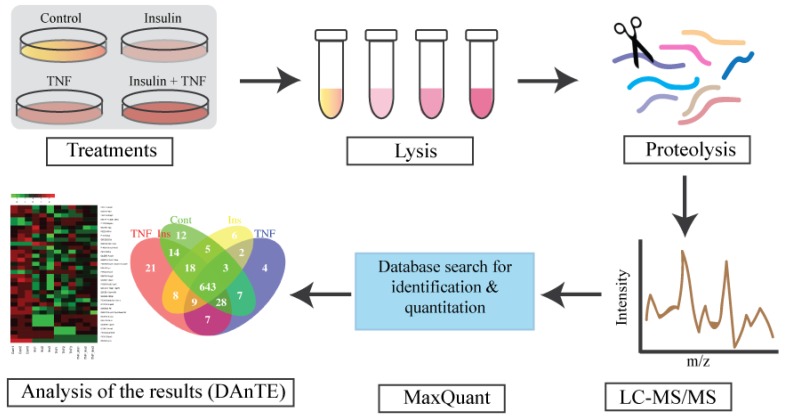
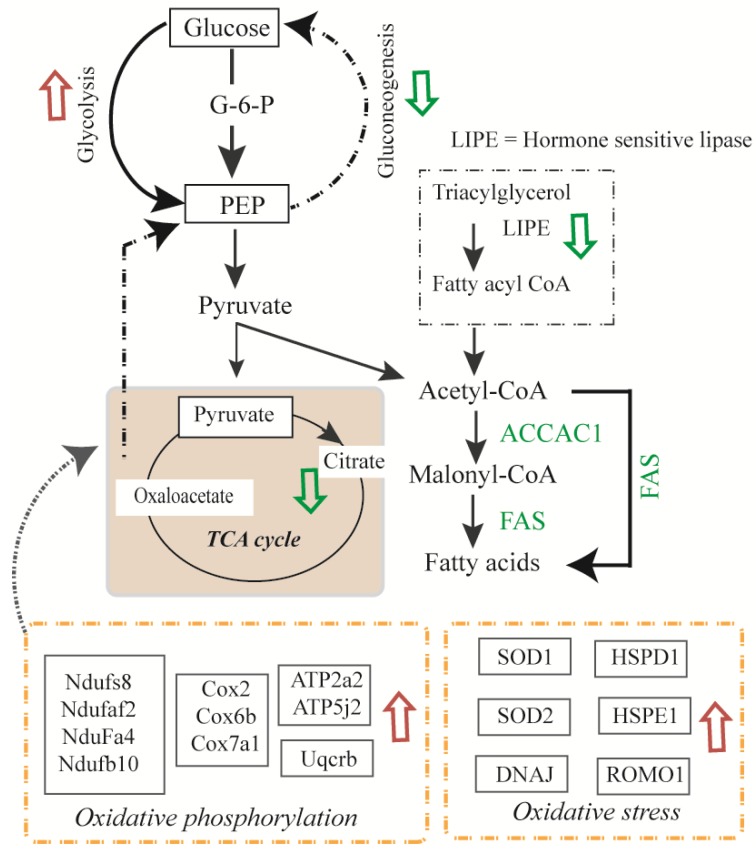
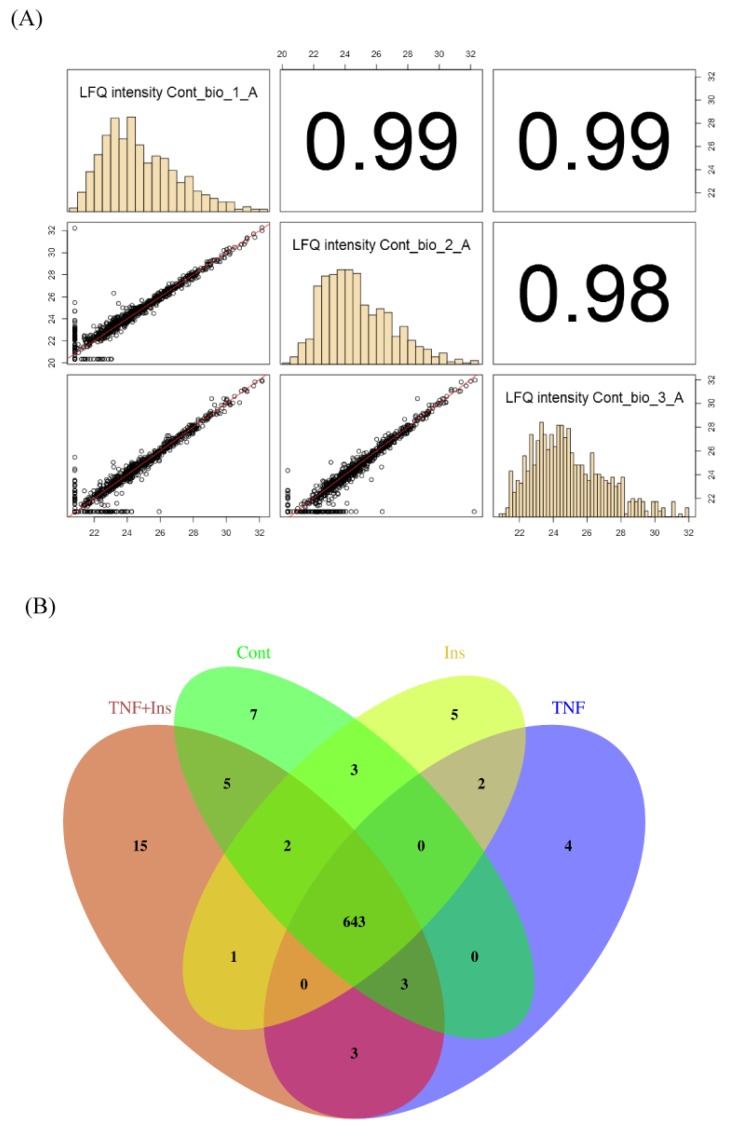
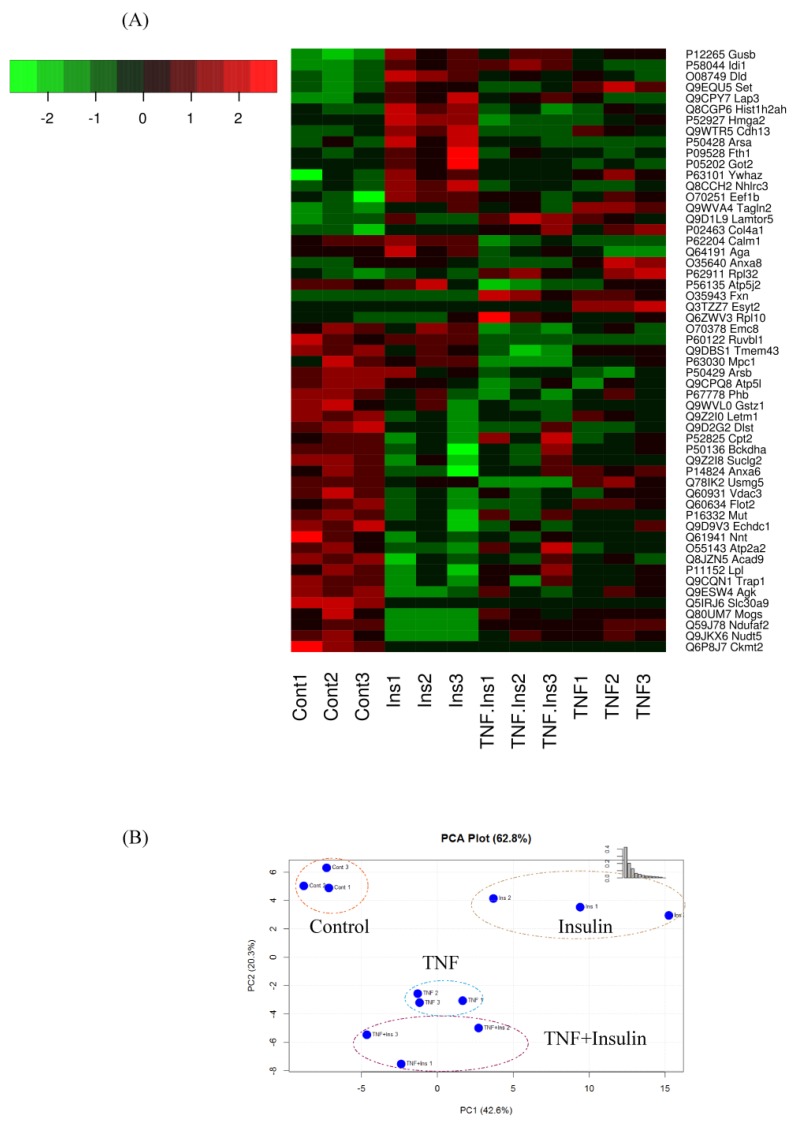
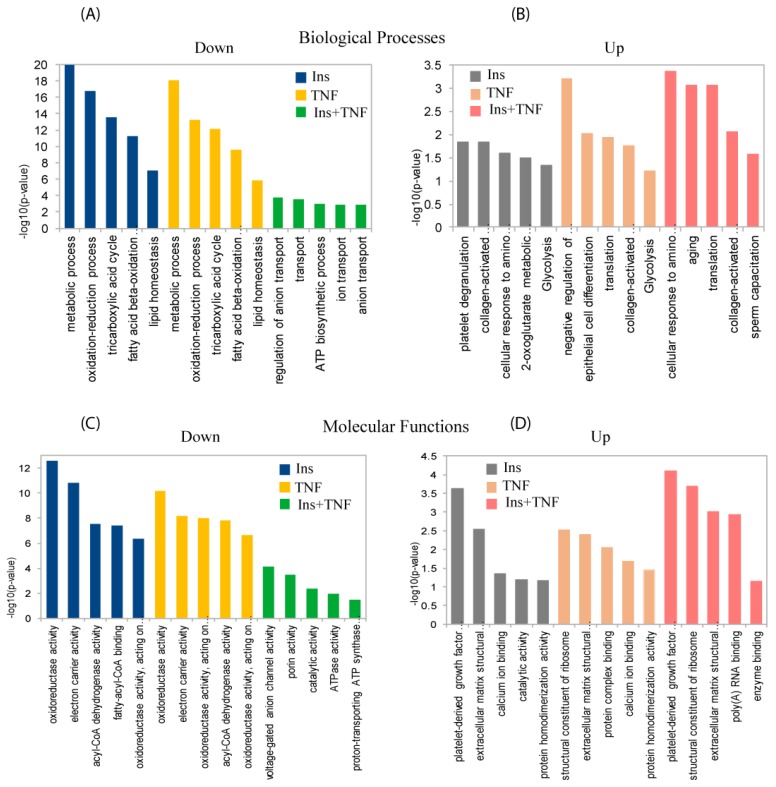
Insulin resistance is an indication of early stage Type 2 diabetes (T2D). Insulin resistant adipose tissues contain higher levels of insulin than the physiological level, as well as higher amounts of intracellular tumor necrosis factor-α (TNF-α) and other cytokines. However, the mechanism of insulin resistance remains poorly understood. To better understand the roles played by insulin and TNF-α in insulin resistance, we performed proteomic analysis of differentiated 3T3-L1 adipocytes treated with insulin (Ins), TNF-α (TNF), and both (Ins + TNF). Out of the 693 proteins identified, the abundances of 78 proteins were significantly different ( < 0.05). Carnitine parmitoyltransferase-2 (CPT2), acetyl CoA carboxylase 1 (ACCAC-1), ethylmalonyl CoA decarboxylase (ECHD1), and methylmalonyl CoA isomerase (MCEE), enzymes required for fatty acid β-oxidation and respiratory electron transport, and β-glucuronidase, an enzyme responsible for the breakdown of complex carbohydrates, were down-regulated in all the treatment groups, compared to the control group. In contrast, superoxide dismutase 2 (SOD2), protein disulfide isomerase (PDI), and glutathione reductase, which are the proteins responsible for cytoskeletal structure, protein folding, degradation, and oxidative stress responses, were up-regulated. This suggests higher oxidative stress in cells treated with Ins, TNF, or both. We proposed a conceptual metabolic pathway impacted by the treatments and their possible link to insulin resistance or T2D.
胰岛素抵抗是2型糖尿病(T2D)早期阶段的一个指标。胰岛素抵抗的脂肪组织中胰岛素水平高于生理水平,细胞内肿瘤坏死因子-α(TNF-α)和其他细胞因子的含量也更高。然而,胰岛素抵抗的机制仍知之甚少。为了更好地理解胰岛素和TNF-α在胰岛素抵抗中所起的作用,我们对用胰岛素(Ins)、TNF-α(TNF)以及两者(Ins + TNF)处理的分化3T3-L1脂肪细胞进行了蛋白质组学分析。在鉴定出的693种蛋白质中,78种蛋白质的丰度有显著差异(< 0.05)。与对照组相比,脂肪酸β氧化和呼吸电子传递所需的酶肉碱棕榈酰转移酶-2(CPT2)、乙酰辅酶A羧化酶1(ACCAC-1)、乙基丙二酰辅酶A脱羧酶(ECHD1)和甲基丙二酰辅酶A异构酶(MCEE),以及负责复杂碳水化合物分解的酶β-葡萄糖醛酸酶,在所有处理组中均下调。相反,负责细胞骨架结构、蛋白质折叠、降解和氧化应激反应的蛋白质超氧化物歧化酶2(SOD2)、蛋白质二硫键异构酶(PDI)和谷胱甘肽还原酶上调。这表明在用Ins、TNF或两者处理的细胞中存在更高的氧化应激。我们提出了一个受这些处理影响的概念性代谢途径及其与胰岛素抵抗或T2D的可能联系。