Manea Avram, Baciut Grigore, Baciut Mihaela, Pop Dumitru, Comsa Dan Sorin, Buiga Ovidiu, Trombitas Veronica, Colosi Horatiu, Mitre Ileana, Bordea Roxana, Manole Marius, Lenghel Manuela, Bran Simion, Onisor Florin
Department of Cranio-Maxillofacial Surgery and Radiology, Faculty of Dental Medicine, University of Medicine and Pharmacy 'Iuliu Hatieganu', 400012 Cluj-Napoca, Romania.
Department of Oral Rehabilitation, Faculty of Dental Medicine, University of Medicine and Pharmacy 'Iuliu Hatieganu', 400012 Cluj-Napoca, Romania.
Materials (Basel). 2019 Oct 21;12(20):3444. doi: 10.3390/ma12203444.
Once inserted and osseointegrated, dental implants become ankylosed, which makes them immobile with respect to the alveolar bone. The present paper describes the development of a new and original implant design which replicates the 3D physiological mobility of natural teeth. The first phase of the test followed the resistance of the implant to mechanical stress as well as the behavior of the surrounding bone. Modifications to the design were made after the first set of results. In the second stage, mechanical tests in conjunction with finite element analysis were performed to test the improved implant design.
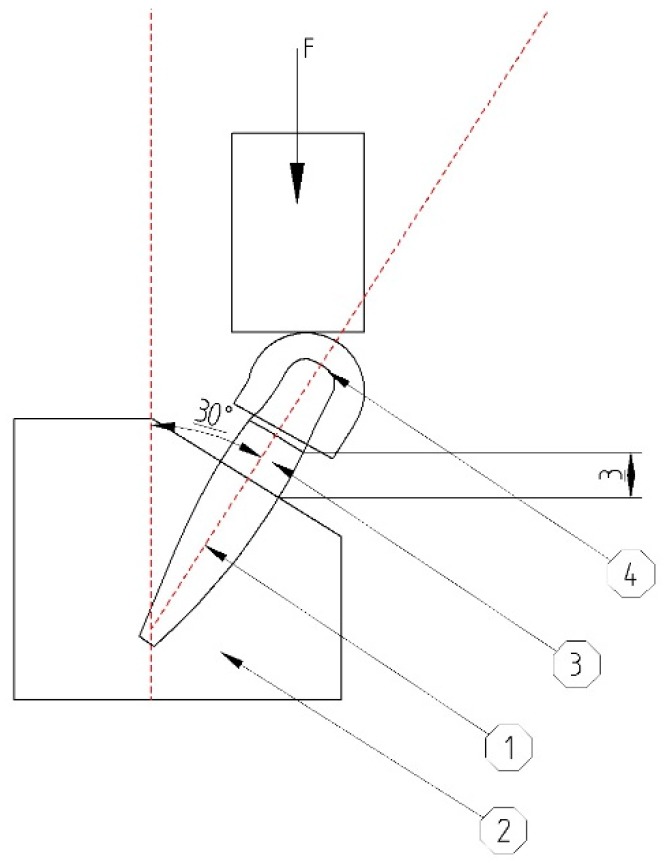
In order to test the new concept, 6 titanium alloy (Ti6Al4V) implants were produced (milling). The implants were fitted into the dynamic testing device. The initial mobility was measured for each implant as well as their mobility after several test cycles. In the second stage, 10 implants with the modified design were produced. The testing protocol included mechanical testing and finite element analysis.
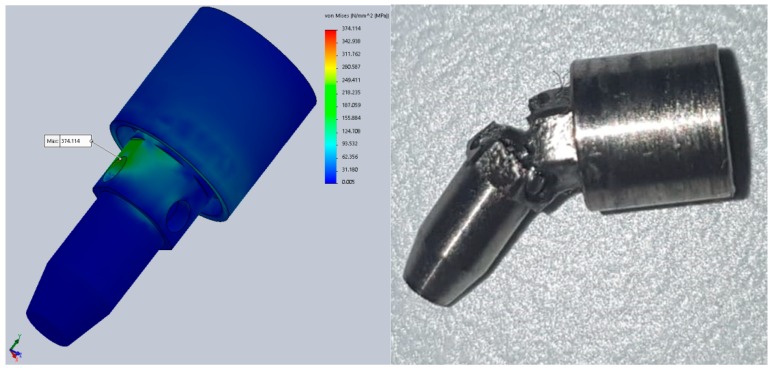
The initial testing protocol was applied almost entirely successfully. Premature fracturing of some implants and fitting blocks occurred and the testing protocol was readjusted. The issues in the initial test helped design the final testing protocol and the new implants with improved mechanical performance.
The new prototype proved the efficiency of the concept. The initial tests pointed out the need for design improvement and the following tests validated the concept.
牙科植入物一旦植入并实现骨整合,就会发生强直,这使得它们相对于牙槽骨无法移动。本文描述了一种新型原创植入物设计的开发,该设计复制了天然牙齿的三维生理移动性。测试的第一阶段跟踪了植入物对机械应力的抵抗力以及周围骨骼的行为。根据第一组结果对设计进行了修改。在第二阶段,结合有限元分析进行了机械测试,以测试改进后的植入物设计。
为了测试这个新概念,制作了6个钛合金(Ti6Al4V)植入物(通过铣削)。将植入物安装到动态测试装置中。测量每个植入物的初始移动性以及经过几个测试周期后的移动性。在第二阶段,制作了10个采用改进设计的植入物。测试方案包括机械测试和有限元分析。
初始测试方案几乎完全成功应用。一些植入物和固定块出现了过早断裂,测试方案进行了重新调整。初始测试中的问题有助于设计最终测试方案以及机械性能得到改进的新植入物。
新原型证明了该概念的有效性。初始测试指出了设计改进的必要性,随后的测试验证了该概念。