Department of Physiology and Pathophysiology, School of Basic Medical Sciences, Peking University, Key Laboratory of Molecular Cardiovascular Science, Ministry of Education, Beijing 100191, China.
Center for Reproductive Medicine, Department of Obstetrics and Gynecology, Peking University Third Hospital, Beijing 100191, China.
EBioMedicine. 2019 Nov;49:291-304. doi: 10.1016/j.ebiom.2019.09.041. Epub 2019 Oct 19.
Aortic dissection is a severe inflammatory vascular disease with high mortality and limited therapeutic options. The hallmarks of aortic dissection comprise aortic inflammatory cell infiltration and elastic fiber disruption, highlighting the involvement of macrophage. Here a role for macrophage hypoxia-inducible factor 1-alpha (HIF-1α) in aortic dissection was uncovered.
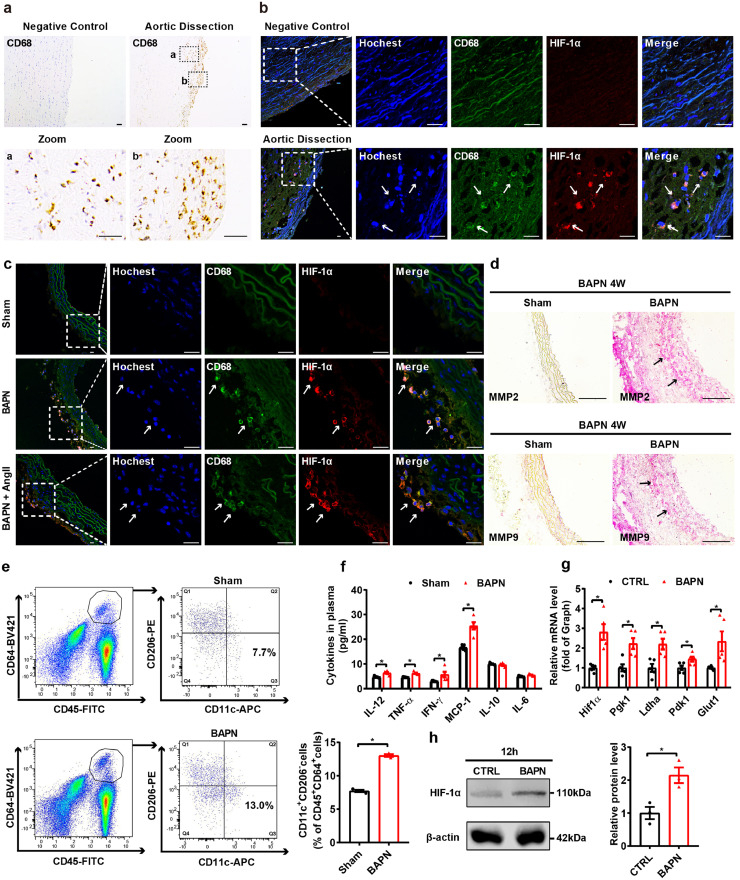
Immunochemistry, immunofluorescence, western blot and qPCR were performed to test the change of macrophage HIF-1α in two kinds of aortic dissection models and human tissues. Metabolomics and Seahorse extracellular flux analysis were used to detect the metabolic state of macrophages involved in the development of aortic dissection. Chromatin Immunoprecipitation (ChIP), enzyme-linked immunosorbent assay (ELISA) and cytometric bead array (CBA) were employed for mechanistic studies.
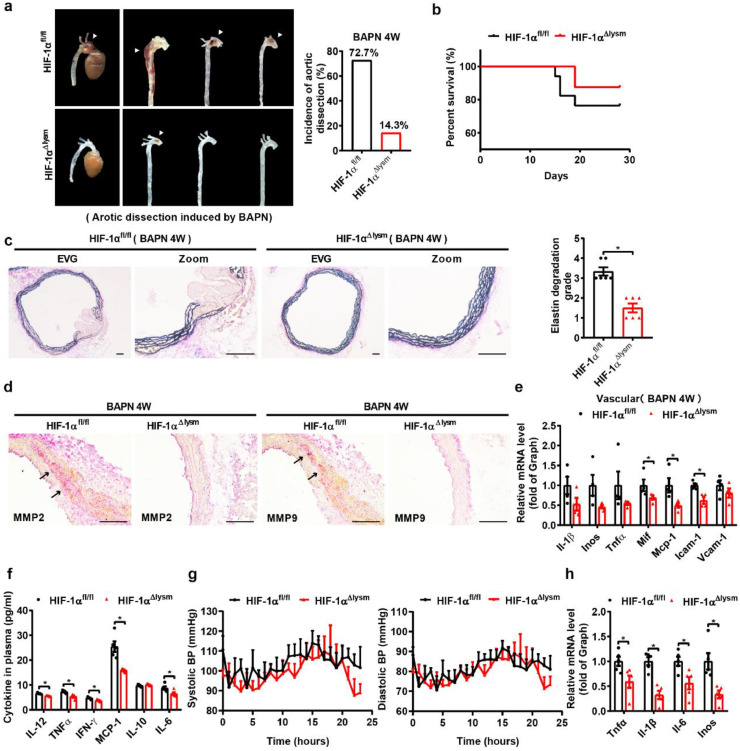
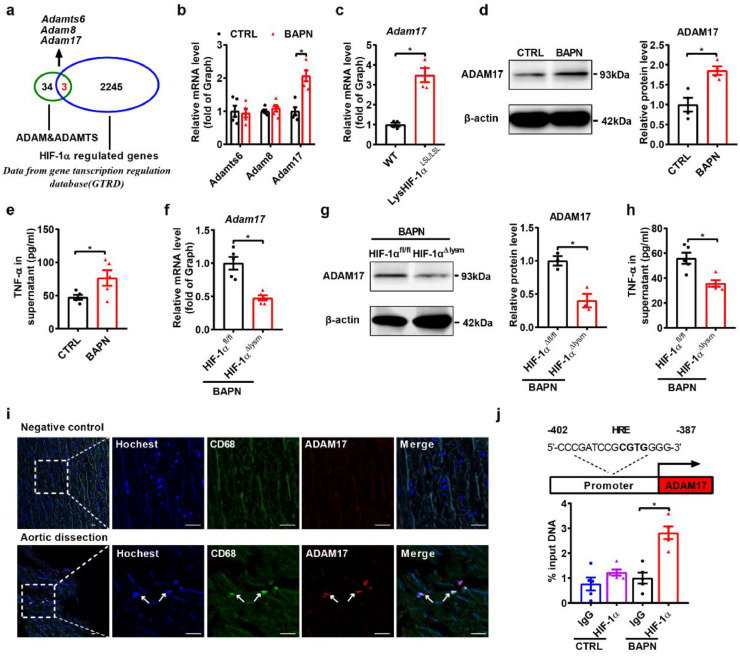
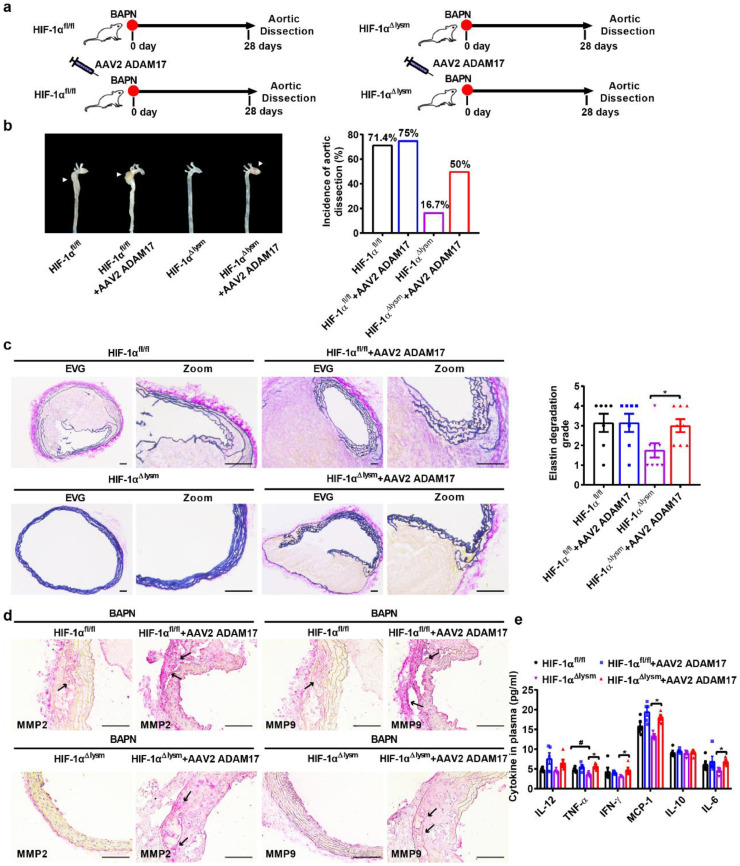
Macrophages involved underwent distinct metabolic reprogramming, especially fumarate accumulation, thus inducing HIF-1α activation in the development of aortic dissection in human and mouse models. Mechanistic studies revealed that macrophage HIF-1α activation triggered vascular inflammation, extracellular matrix degradation and elastic plate breakage through increased a disintegrin and metallopeptidase domain 17 (ADAM17), identified as a novel target gene of HIF-1α. A HIF-1α specific inhibitor acriflavine elicited protective effects on aortic dissection dependent on macrophage HIF-1α.
This study reveals that macrophage metabolic reprogramming activates HIF-1α and subsequently promotes aortic dissection progression, suggesting that macrophage HIF-1α inhibition might be a potential therapeutic target for treating aortic dissection.
主动脉夹层是一种严重的炎症性血管疾病,死亡率高,治疗选择有限。主动脉夹层的特征包括主动脉炎症细胞浸润和弹性纤维破裂,这突出了巨噬细胞的参与。本研究揭示了巨噬细胞缺氧诱导因子 1-α(HIF-1α)在主动脉夹层中的作用。
采用免疫化学、免疫荧光、western blot 和 qPCR 检测两种主动脉夹层模型和人组织中巨噬细胞 HIF-1α的变化。代谢组学和 Seahorse 细胞外通量分析用于检测参与主动脉夹层发展的巨噬细胞的代谢状态。染色质免疫沉淀(ChIP)、酶联免疫吸附测定(ELISA)和细胞因子珠阵列(CBA)用于机制研究。
参与的巨噬细胞经历了明显的代谢重编程,特别是富马酸积累,从而在人类和小鼠模型中诱导主动脉夹层的 HIF-1α 激活。机制研究表明,巨噬细胞 HIF-1α 激活通过增加 a 型整合素金属肽酶 17(ADAM17)触发血管炎症、细胞外基质降解和弹性板破裂,ADAM17 被确定为 HIF-1α 的一个新的靶基因。HIF-1α 特异性抑制剂 acriflavine 依赖于巨噬细胞 HIF-1α 对主动脉夹层产生保护作用。
本研究揭示了巨噬细胞代谢重编程激活 HIF-1α,进而促进主动脉夹层进展,提示抑制巨噬细胞 HIF-1α可能是治疗主动脉夹层的潜在治疗靶点。