Yasukawa Keiko, Sato Masaya, Nojiri Takahiro, Yoshikawa Naoyuki, Morita Kazuharu, Kai Miyoko, Oike Yumiko, Yamazaki Tsutomu, Ikeda Hitoshi, Yatomi Yutaka
Department of Clinical Laboratory, The University of Tokyo Hospital, Tokyo, Japan.
Department of Center for Epidemiology and Preventive, The University of Tokyo Hospital, Tokyo, Japan.
Pract Lab Med. 2019 Sep 12;17:e00132. doi: 10.1016/j.plabm.2019.e00132. eCollection 2019 Nov.
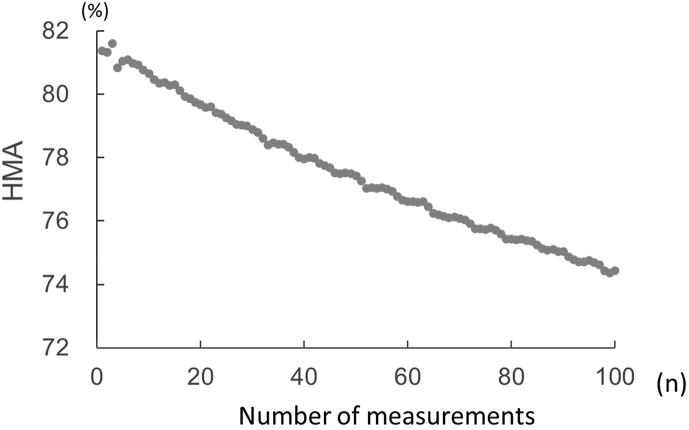
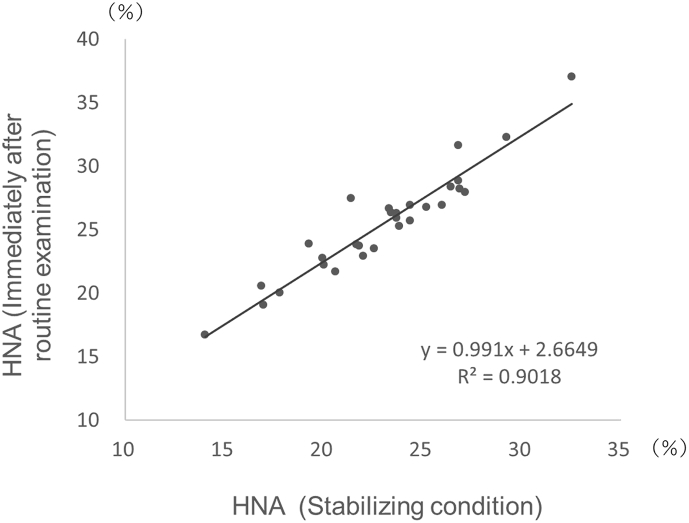
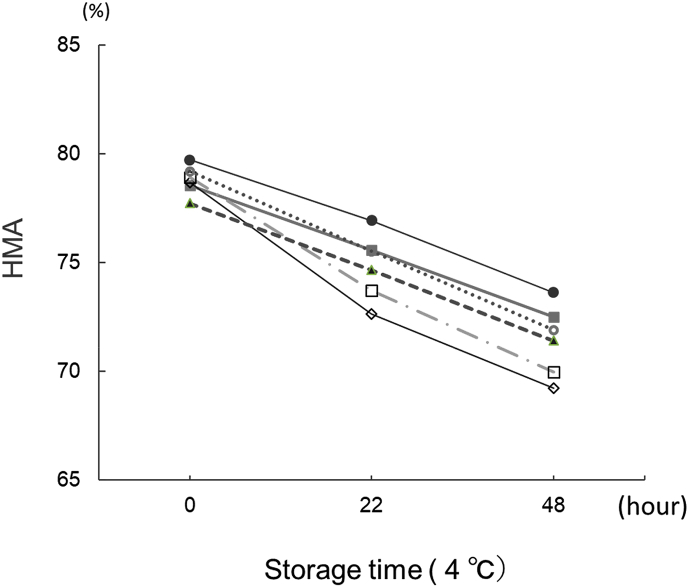
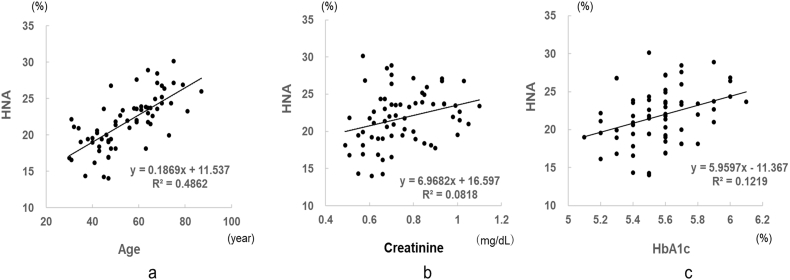
Oxidative stress is reportedly associated with many diseases such as cancer, arteriosclerosis, diabetes and aging, but no practical biomarkers are currently available in actual clinical practice. Human mercaptoalbumin (HMA) and human non-mercaptoalbumin (HNA) are expected to become markers of oxidative stress, but the stability of HMA/HNA has been problematic. We investigated the conditions for stabilizing HMA/HNA and found that HMA/HNA was stable at room temperature for 25 h if whole blood samples were mixed with a citrate buffer so that the citric acid concentration after mixing was 70 mM or higher and the pH of the added buffer was less than pH 6.0. Whole blood samples were then collected under the above conditions, and the reference range for HNA was set at 21.8% ± 7.4% (HMA, 78.2% ± 7.4%) based on samples from 65 volunteers (28 males and 37 females; average age, 55.0 ± 13.8 years). The clinical usefulness of HMA/HNA as an oxidative stress marker should be clarified for specific pathological conditions using the previously reported, highly accurate measurement method under the conditions required for HMA/HNA stability.
据报道,氧化应激与许多疾病相关,如癌症、动脉硬化、糖尿病和衰老,但目前在实际临床实践中尚无实用的生物标志物。人巯基白蛋白(HMA)和人非巯基白蛋白(HNA)有望成为氧化应激的标志物,但HMA/HNA的稳定性一直存在问题。我们研究了稳定HMA/HNA的条件,发现如果全血样本与柠檬酸盐缓冲液混合,使混合后柠檬酸浓度为70 mM或更高且添加缓冲液的pH值小于6.0,则HMA/HNA在室温下可稳定25小时。然后在上述条件下采集全血样本,并根据65名志愿者(28名男性和37名女性;平均年龄,55.0±13.8岁)的样本将HNA的参考范围设定为21.8%±7.4%(HMA,78.2%±7.4%)。应使用先前报道的、高度准确的测量方法,在HMA/HNA稳定性所需的条件下,针对特定病理状况阐明HMA/HNA作为氧化应激标志物的临床实用性。