Huang Lei, Huang Hao, Zhou Xiao-Ping, Liu Jin-Feng, Li Chun-Rong, Fang Min, Wu Jun-Rong
Department of Clinical Laboratory, The Affiliated Tumor Hospital of Guangxi Medical University.
Department of Clinical Laboratory, The First Affiliated Hospital of Guangxi University of Chinese Medicine, Nanning, Guangxi, China.
Medicine (Baltimore). 2019 Oct;98(43):e17705. doi: 10.1097/MD.0000000000017705.
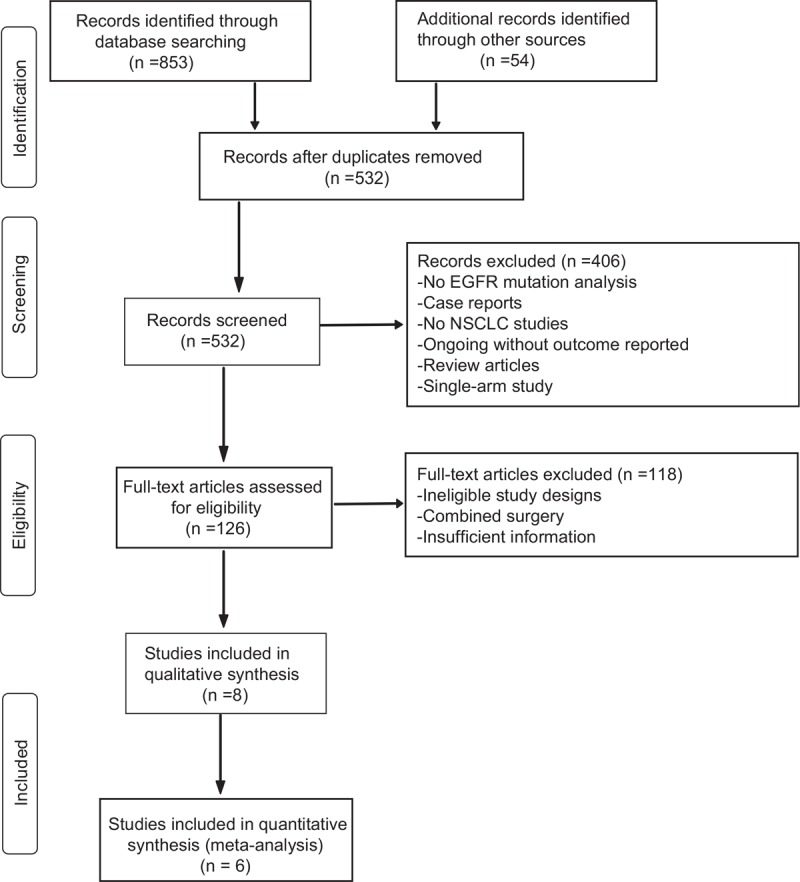
The aim of this meta-analysis is to investigate the impact of Osimertinib on treatment efficacy in advanced nonsmall cell lung cancer (NSCLC).
Trials comparing Osimertinib against epidermal growth factor receptor tyrosine kinase inhibitors (EGFR-TKIs)/chemotherapy in patients with NSCLC with an epidermal growth factor receptor (EGFR) mutation were included, and the pooled data for progression-free survival (PFS), overall survival (OS), overall response rate (ORR), disease control rate (DCR), and adverse events (AEs) were analyzed.
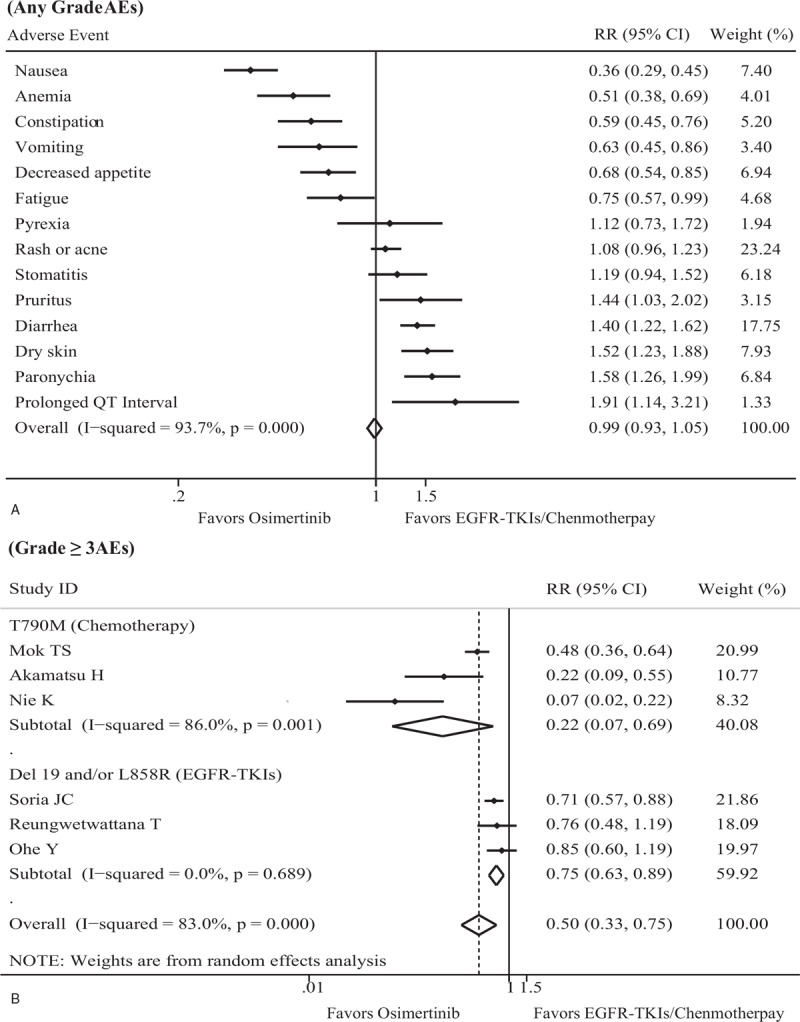
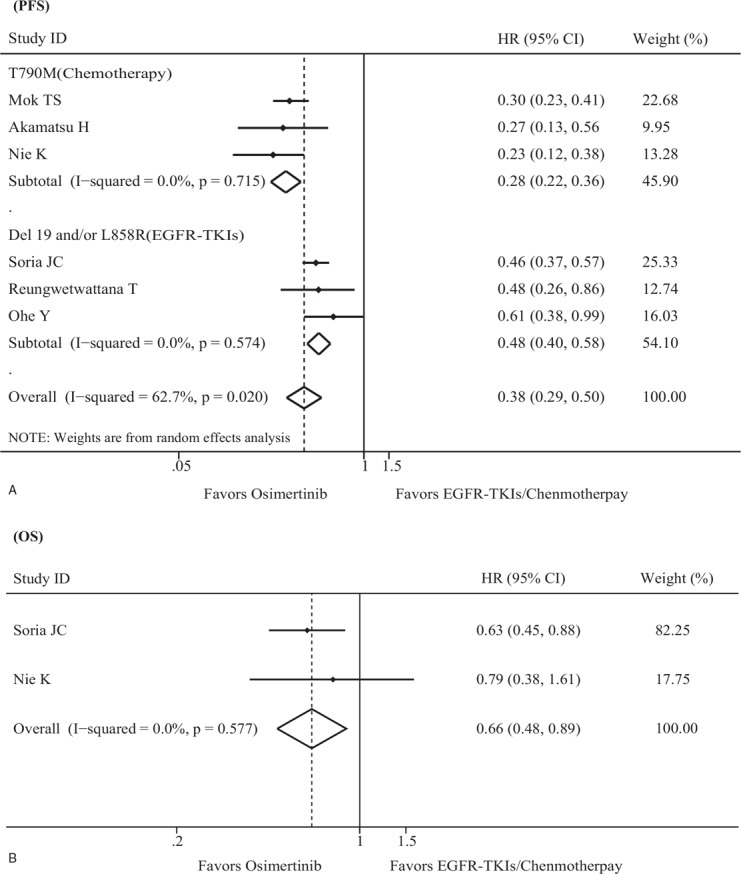
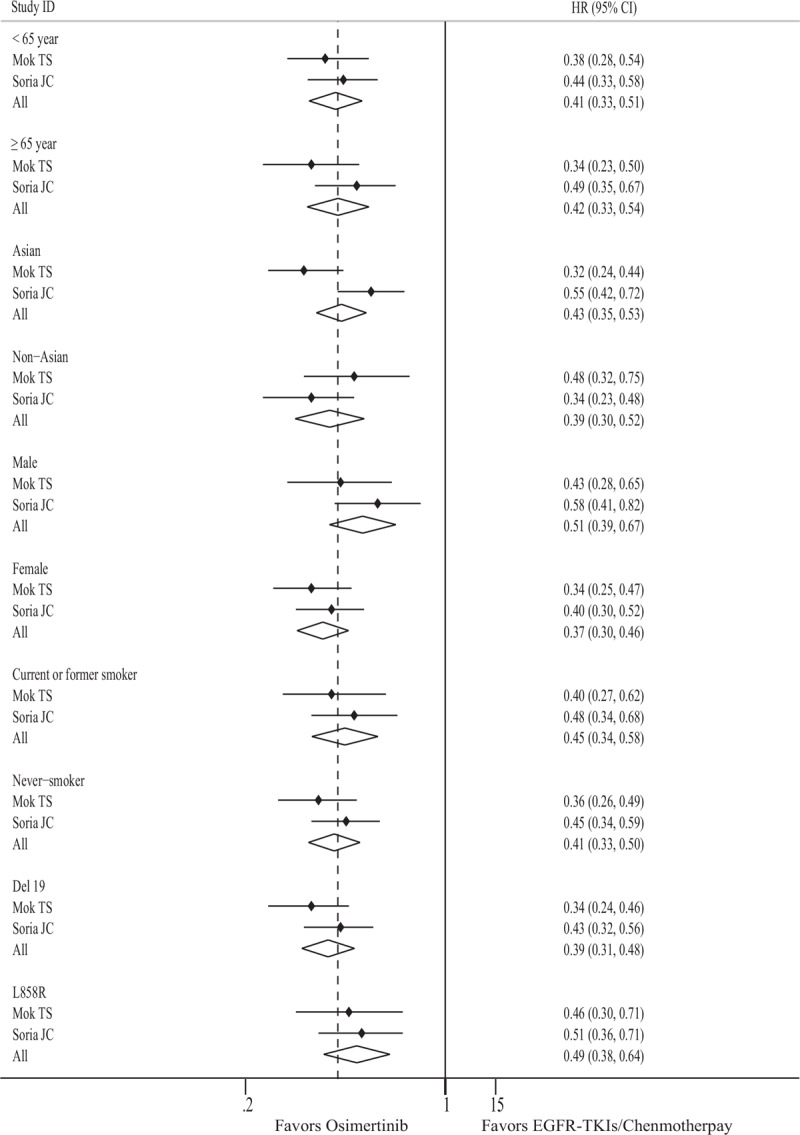
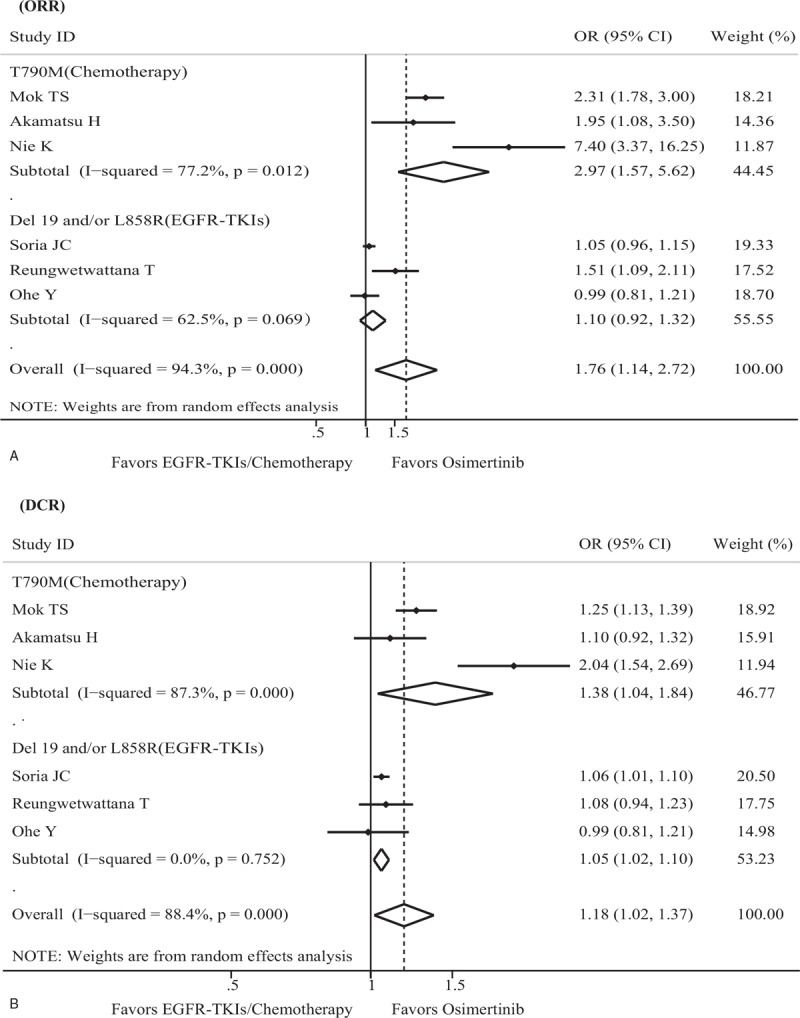
Analysis results based on 6 eligible trials showed that Osimertinib significantly improved the overall PFS (hazard ratio [HR] = 0.38, 95% confidence interval [CI] = 0.29-0.50), improved the OS (HR = 0.66, 95% CI = 0.48-0.89), increased the ORR (odds ratio [OR] = 1.76, 95% CI = 1.14-2.72), increased the overall DCR (OR = 1.18, 95% CI = 1.02-1.37), and reduced the grade 3 or greater AEs (relative ratio [RR] = 0.50, 95% CI = 0.33-0.75) in all subgroups except in the ORR in the Exon 19 deletion (Ex19del) and/or L858R subgroup. Compared to patients with Ex19del and/or L858R mutation, patients with the T790M mutation had the benefits of a greater PFS (41.7%), a greater ORR (80.0%), a greater DCR (71.2%), and fewer grade 3 or greater AEs (70.7%) (each P < .05). Race, sex, age, EGFR mutation, and smoking history may significantly predict additional benefits from Osimertinib, but there were no significant differences between subgroups stratified by these clinical characteristics.
Osimertinib showed greater treatment benefit for patients with NSCLC with EGFR mutation than EGFR-TKIs/chemotherapy, especially for T790M mutation-positive patients.
本荟萃分析旨在研究奥希替尼对晚期非小细胞肺癌(NSCLC)治疗疗效的影响。
纳入比较奥希替尼与表皮生长因子受体酪氨酸激酶抑制剂(EGFR-TKIs)/化疗治疗表皮生长因子受体(EGFR)突变的NSCLC患者的试验,并分析无进展生存期(PFS)、总生存期(OS)、总缓解率(ORR)、疾病控制率(DCR)和不良事件(AE)的汇总数据。
基于6项符合条件的试验的分析结果显示,奥希替尼显著改善了总体PFS(风险比[HR]=0.38,95%置信区间[CI]=0.29-0.50),改善了OS(HR=0.66,95%CI=0.48-0.89),提高了ORR(优势比[OR]=1.76,95%CI=1.14-2.72),提高了总体DCR(OR=1.18,95%CI=1.02-1.37),并降低了除外显子19缺失(Ex19del)和/或L858R亚组的ORR外所有亚组中3级或更高级别的AE(相对比[RR]=0.50,95%CI=0.33-0.75)。与Ex19del和/或L858R突变患者相比,T790M突变患者具有更高的PFS(41.7%)、更高的ORR(80.0%)、更高的DCR(71.2%)和更少的3级或更高级别AE(70.7%)(各P<0.05)。种族、性别、年龄、EGFR突变和吸烟史可能显著预测奥希替尼带来的额外益处,但按这些临床特征分层的亚组之间无显著差异。
奥希替尼对EGFR突变的NSCLC患者显示出比EGFR-TKIs/化疗更大的治疗益处,尤其是对T790M突变阳性患者。