Chen Jianan, Gu Xingsheng, Zhou Li, Wang Shuguang, Zhu Limei, Huang Yangneng, Cao Feng
Department of Emergency Intensive Care Unit, Ningbo 6th Hospital, Ningbo, Zhejiang 315040, P.R. China.
Department of Emergency, Ningbo 6th Hospital, Ningbo, Zhejiang 315040, P.R. China.
Exp Ther Med. 2019 Nov;18(5):3959-3967. doi: 10.3892/etm.2019.8063. Epub 2019 Sep 27.
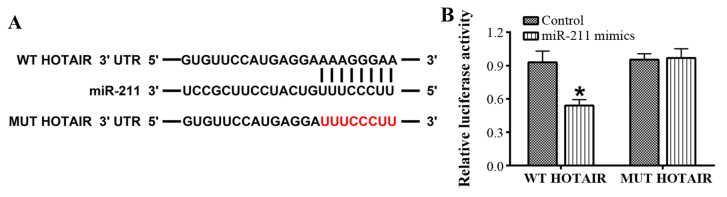
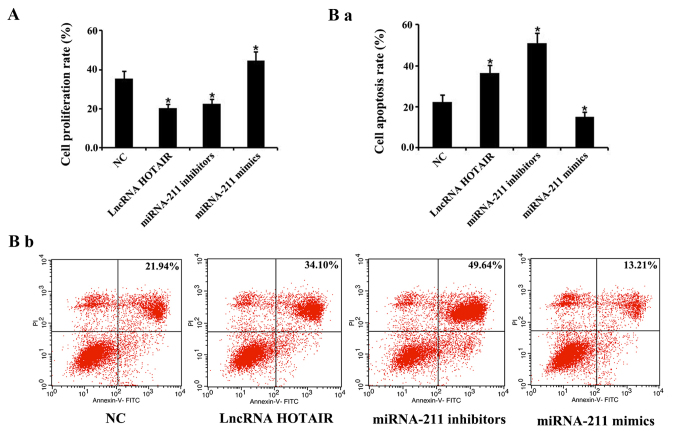
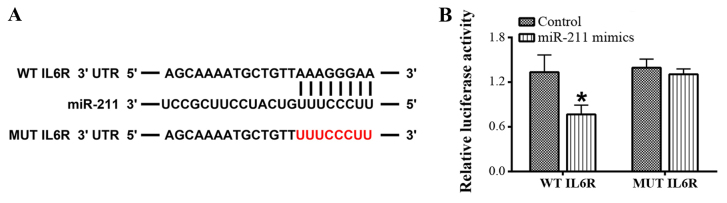
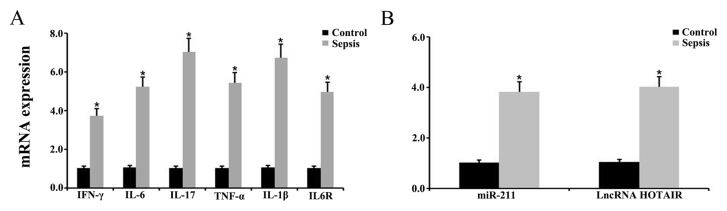
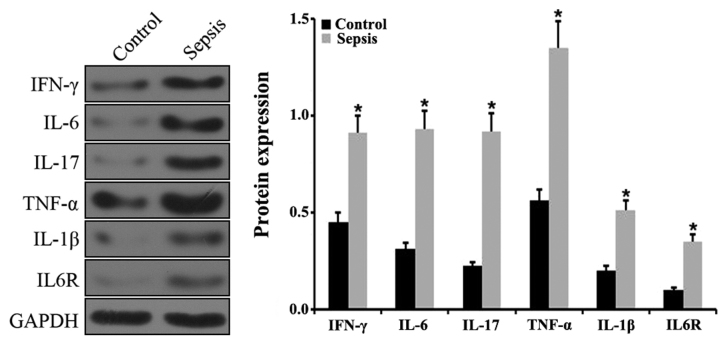
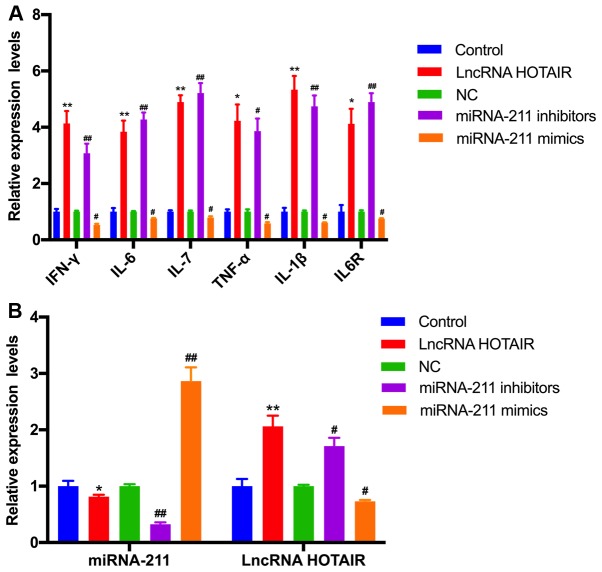
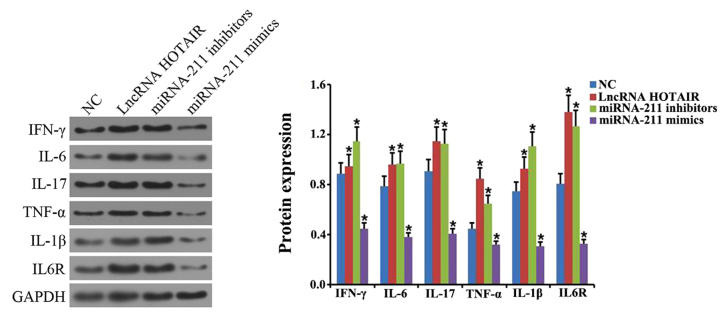
Sepsis remains the primary cause of death in intensive care units and multiple long non-coding RNAs (lncRNAs) have been demonstrated to be dysregulated in samples of patients with sepsis. However, whether lncRNA-HOTAIR is involved in the etiology of sepsis remains unclear. The aim of the present study was to investigate the role of HOTAIR in sepsis and to reveal the associated mechanisms. A bioinformatics analysis and dual-luciferase reporter assay was performed to evaluate the interaction between HOTAIR and miR-211, as well as miR-211 and IL-6R. An animal model of sepsis was established in mice via cecal ligation and puncture. Interferon (IFN)-γ, interleukin (IL)-6, IL-17, tumor necrosis factor (TNF)-α, IL-1β, IL-6 receptor (R), microRNA (miR)-211 and HOTAIR expression was measured using reverse transcription-quantitative PCR. Cellular proliferation and apoptosis of monocytes were assessed using cell counting kit-8 assay and flow cytometry, respectively. miR-211 was revealed to be targeted by HOTAIR and IL-6R. The expression of IFN-γ, IL-6, IL-17, TNF-α, IL-1β, IL-6R and HOTAIR was significantly upregulated in the septic mice, whereas miR-211 expression was downregulated. The overexpression of hox transcript antisense RNA (HOTAIR) and knockdown of miR-211 were associated with an increased expression of IFN-γ, IL-6, IL-17, TNF-α, IL-1β and IL-6R in monocytes, while the overexpression of miR-211 exhibited the opposite effect. HOTAIR overexpression and miR-211 knockdown significantly inhibited cellular proliferation and promoted monocyte apoptosis, whereas the overexpression of miR-211 exhibited the opposite effects in monocytes. Therefore, HOTAIR may promote the progression of sepsis by indirectly regulating the expression of IL-6R via miR-211.
脓毒症仍然是重症监护病房患者死亡的主要原因,并且已证实在脓毒症患者样本中多种长链非编码RNA(lncRNA)表达失调。然而,lncRNA-HOTAIR是否参与脓毒症的发病机制仍不清楚。本研究的目的是探讨HOTAIR在脓毒症中的作用并揭示相关机制。进行了生物信息学分析和双荧光素酶报告基因检测,以评估HOTAIR与miR-211以及miR-211与IL-6R之间的相互作用。通过盲肠结扎和穿刺在小鼠中建立脓毒症动物模型。使用逆转录定量PCR检测干扰素(IFN)-γ、白细胞介素(IL)-6、IL-17、肿瘤坏死因子(TNF)-α、IL-1β、IL-6受体(R)、微小RNA(miR)-211和HOTAIR的表达。分别使用细胞计数试剂盒-8检测法和流式细胞术评估单核细胞的细胞增殖和凋亡。结果显示miR-211是HOTAIR和IL-6R的靶标。脓毒症小鼠中IFN-γ、IL-6、IL-17、TNF-α、IL-1β、IL-6R和HOTAIR的表达显著上调,而miR-211表达下调。HOTAIR的过表达和miR-211的敲低与单核细胞中IFN-γ、IL-6、IL-17、TNF-α、IL-1β和IL-6R表达增加有关,而miR-211的过表达则表现出相反的作用。HOTAIR过表达和miR-211敲低显著抑制细胞增殖并促进单核细胞凋亡,而miR-211的过表达在单核细胞中表现出相反的作用。因此,HOTAIR可能通过miR-211间接调节IL-6R的表达来促进脓毒症的进展。