Area of Toxicology, Faculty of Pharmacy, Universidad de Sevilla, Profesor García González n°2, 41012 Seville, Spain.
CIIMAR/CIMAR, Interdisciplinary Centre of Marine and Environmental Research, University of Porto, Terminal de Cruzeiros do Porto de Leixões, Av. General Norton de Matos, s/n, 4450-208 Porto, Portugal.
Toxins (Basel). 2019 Oct 28;11(11):624. doi: 10.3390/toxins11110624.
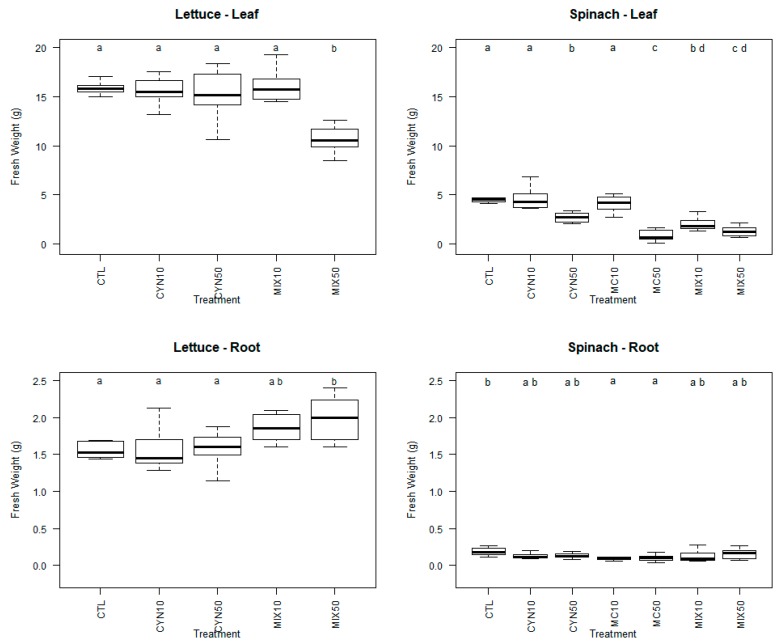
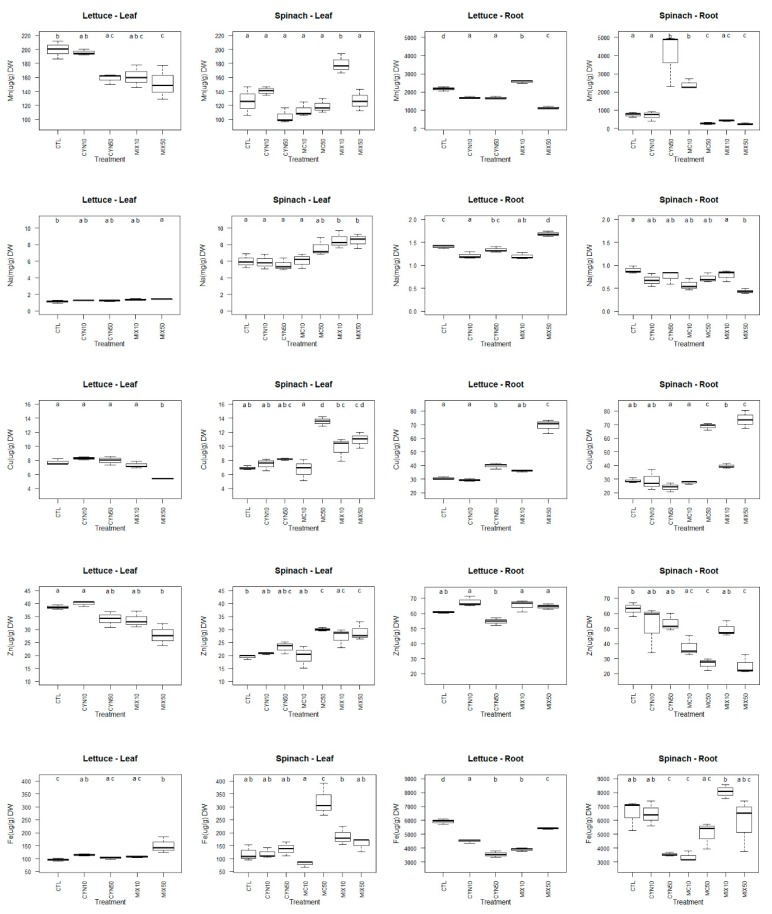
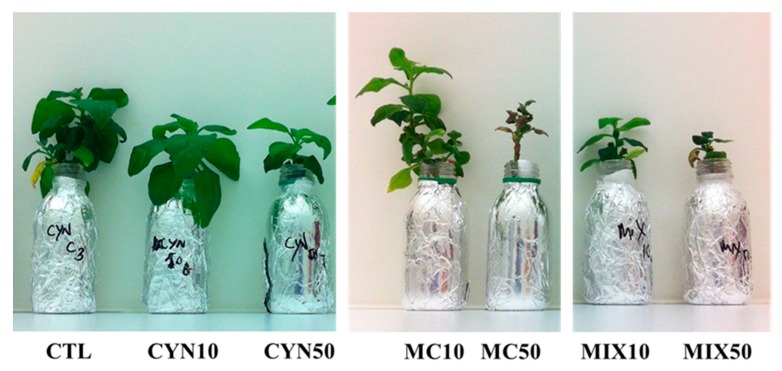
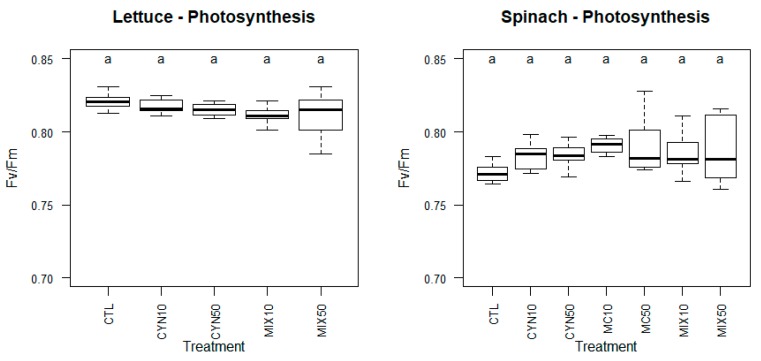
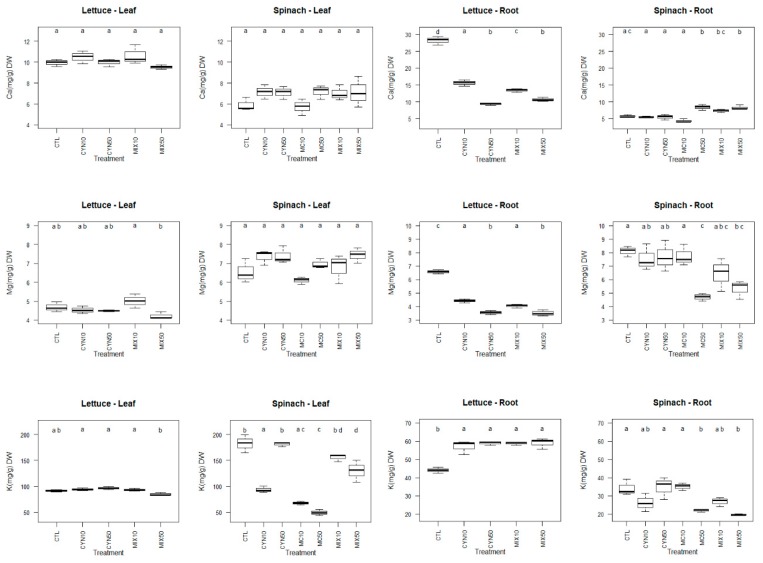
Cyanobacteria and cyanotoxins constitute a serious environmental and human health problem. Moreover, concerns are raised with the use of contaminated water in agriculture and vegetable production as this can lead to food contamination and human exposure to toxins as well as impairment in crop development and productivity. The objective of this work was to assess the susceptibility of two green vegetables, spinach and lettuce, to the cyanotoxins microcystin (MC) and cylindrospermopsin (CYN), individually and in mixture. The study consisted of growing both vegetables in hydroponics, under controlled conditions, for 21 days in nutrient medium doped with MC or CYN at 10 μg/L and 50 μg/L, or CYN/MC mixture at 5 + 5 μg/L and 25 + 25 μg/L. Extracts from and were used as sources of toxins. The study revealed growth inhibition of the aerial part (Leaves) in both species when treated with 50µg/L of MC, CYN and CYN/MC mixture. MC showed to be more harmful to plant growth than CYN. Moreover spinach leaves growth was inhibited by both 5 + 5 and 25 + 25 µg/L CYN/MC mixtures, whereas lettuce leaves growth was inhibited only by 25 + 25 µg/L CYN/MC mixture. Overall, growth data evidence increased sensitivity of spinach to cyanotoxins in comparison to lettuce. On the other hand, plants exposed to CYN/MC mixture showed differential accumulation of CYN and MC. In addition, CYN, but not MC, was translocated from the roots to the leaves. CYN and MC affected the levels of minerals particularly in plant roots. The elements most affected were Ca, K and Mg. However, in leaves K was the mineral that was affected by exposure to cyanotoxins.
蓝藻和蓝藻毒素是一个严重的环境和人类健康问题。此外,人们还担心在农业和蔬菜生产中使用受污染的水,因为这可能导致食物污染和人类接触毒素,以及作物发育和生产力受损。本工作的目的是评估两种绿叶蔬菜(菠菜和生菜)对微囊藻毒素(MC)和柱孢藻毒素(CYN)单独和混合的敏感性。该研究包括在水培条件下,用 MC 或 CYN 以 10μg/L 和 50μg/L 或 CYN/MC 混合物以 5+5μg/L 和 25+25μg/L 的浓度在营养培养基中培养两种蔬菜 21 天。和 是毒素的来源。研究表明,当用 50μg/L 的 MC、CYN 和 CYN/MC 混合物处理时,两种物种的地上部分(叶片)生长受到抑制。MC 对植物生长的危害大于 CYN。此外,5+5μg/L 和 25+25μg/L 的 CYN/MC 混合物均抑制了菠菜叶片的生长,而只有 25+25μg/L 的 CYN/MC 混合物抑制了生菜叶片的生长。总的来说,与生菜相比,菠菜对蓝藻毒素的敏感性增加。另一方面,暴露于 CYN/MC 混合物的植物显示出 CYN 和 MC 的差异积累。此外,CYN 而不是 MC 从根部转移到叶片。CYN 和 MC 影响特别是植物根部的矿物质水平。受影响最大的元素是 Ca、K 和 Mg。然而,在叶片中,暴露于蓝藻毒素会影响 K 矿质元素。