Zhang Guang-Lin, Zhou Wei
Department of Abdominal and Pelvic Medical Oncology II ward, Huangshi Central Hospital (Pu Ai Hospital), Affiliated Hospital of Hubei Polytechnic University, Edong Healthcare Group, Huangshi, Hubei, People's Republic of China.
Department of Urology, Huangshi Central Hospital (Pu Ai Hospital), Affiliated Hospital of Hubei Polytechnic University, Edong Healthcare Group, Huangshi, Hubei, People's Republic of China.
Dose Response. 2019 Oct 14;17(4):1559325819882872. doi: 10.1177/1559325819882872. eCollection 2019 Oct-Dec.
We aimed to formulate and validate prognostic nomograms that can be used to predict the prognosis of patients with upper tract urothelial carcinoma (UTUC).
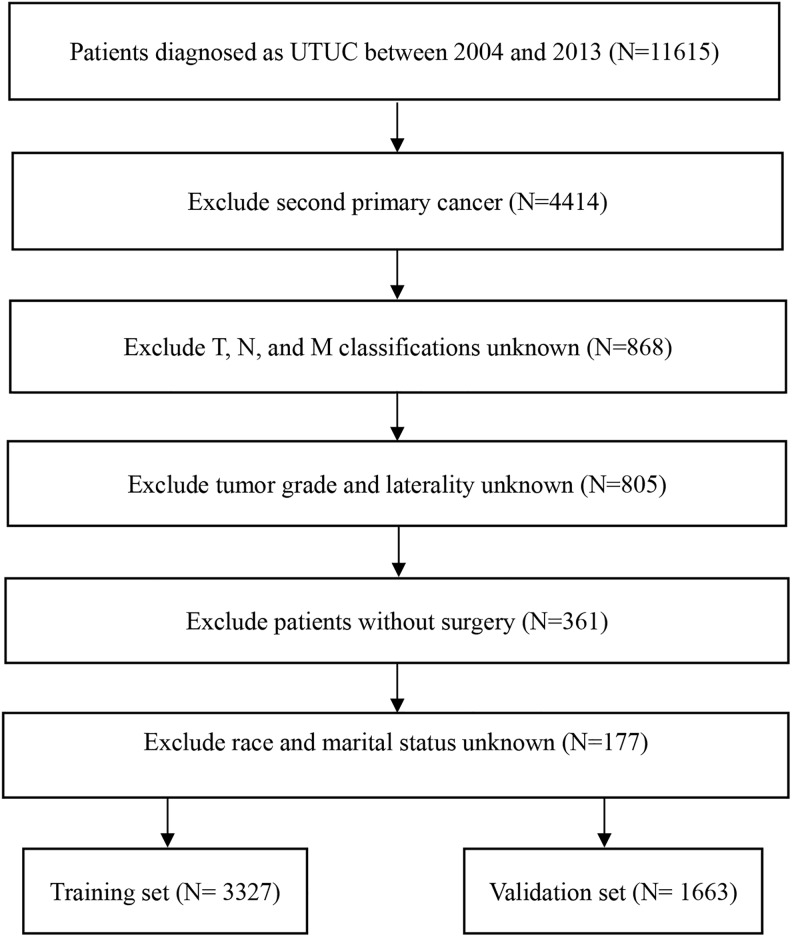
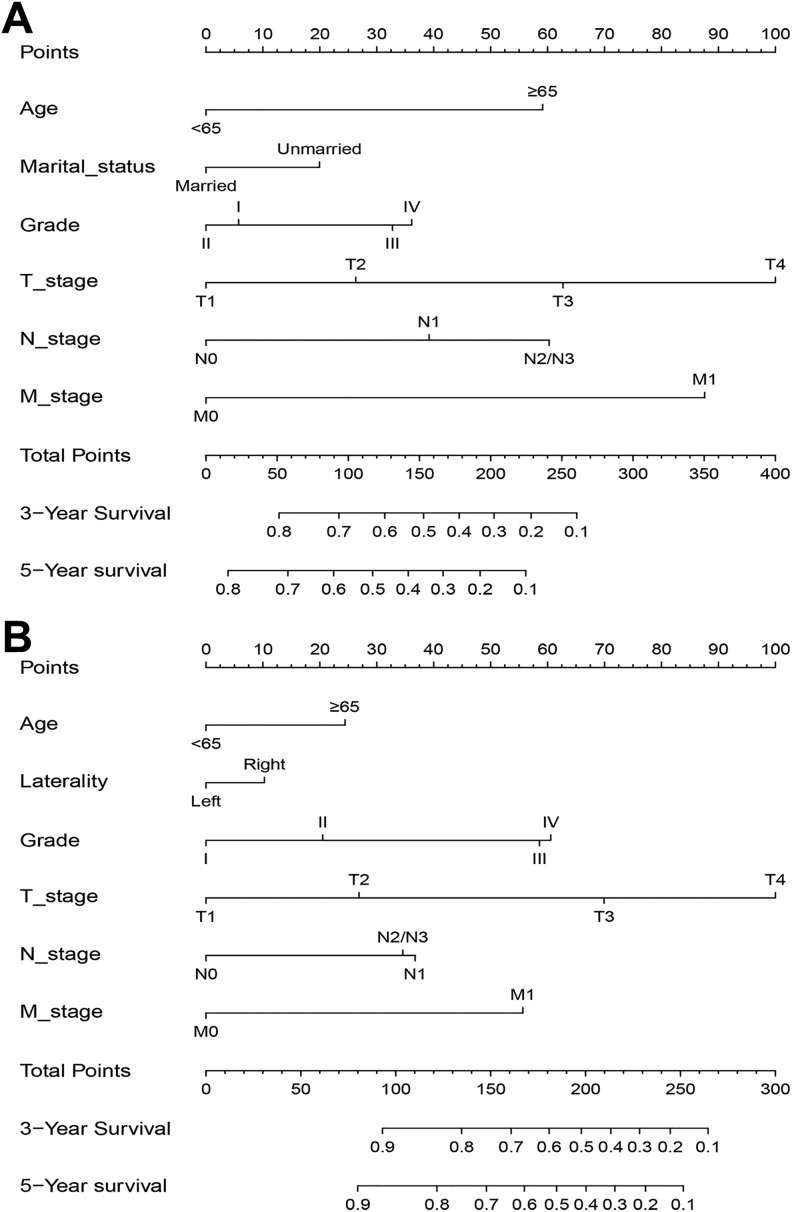
By consulting the Surveillance, Epidemiology, and End Results (SEER) database, we identified patients who were surgically treated for UTUC between 2004 and 2013. Variables were analyzed in both univariate and multivariate analyses. Nomograms were constructed based on independent prognostic factors. The prognostic nomogram models were established and validated internally and externally to determine their ability to predict the survival of patients with UTUC.
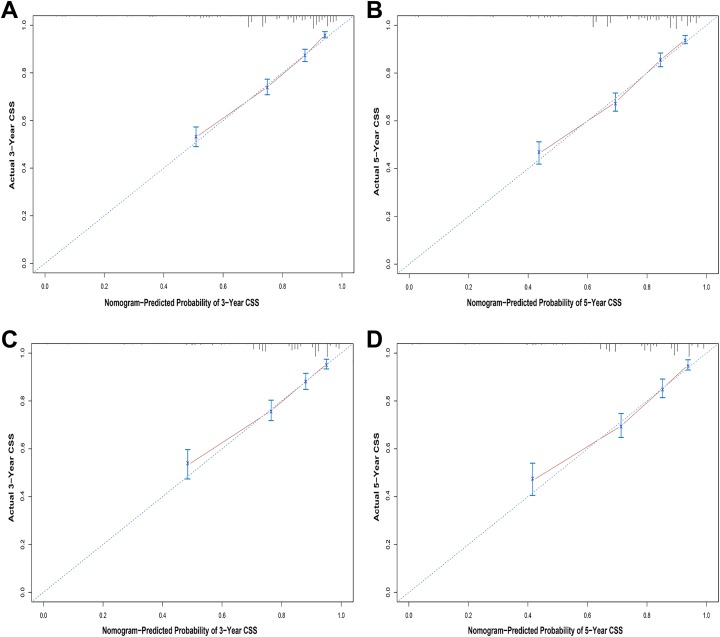
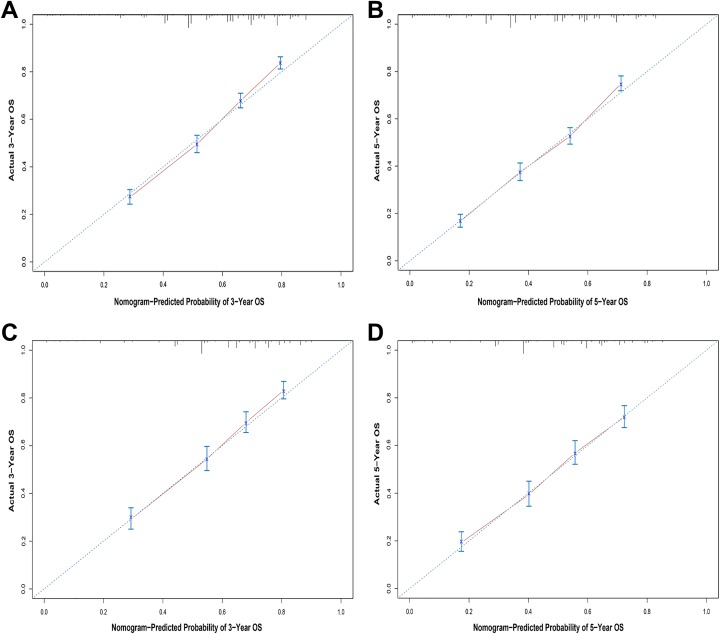
A total of 4990 patients were collected and enrolled in our analyses. Of these, 3327 patients were assigned to the training set and 1663 to the validation set. Nomograms were effectively applied to predict the 3- and 5-year survivals of patients with UTUC after surgery. The nomograms exhibited better accuracy for predicting overall survival (OS) and cancer-specific survival (CSS) than the tumor-node-metastasis (TNM) staging system and the SEER stage in both the training and validation sets. Calibration curves indicated that the nomograms exhibited high correlation to actual observed results for both OS and CSS.
The nomogram models showed stronger predictive ability than the TNM staging system and the SEER stage. Precise estimates of the prognosis of UTUC might help doctors to make better treatment decisions.
我们旨在制定并验证可用于预测上尿路尿路上皮癌(UTUC)患者预后的预后列线图。
通过查阅监测、流行病学和最终结果(SEER)数据库,我们确定了2004年至2013年间接受UTUC手术治疗的患者。对变量进行单因素和多因素分析。基于独立预后因素构建列线图。建立并在内部和外部验证预后列线图模型,以确定其预测UTUC患者生存的能力。
共收集4990例患者纳入我们的分析。其中,3327例患者被分配到训练集,1663例被分配到验证集。列线图有效地应用于预测UTUC患者术后3年和5年生存率。在训练集和验证集中,列线图在预测总生存(OS)和癌症特异性生存(CSS)方面比肿瘤-淋巴结-转移(TNM)分期系统和SEER分期表现出更好的准确性。校准曲线表明,列线图在OS和CSS方面与实际观察结果具有高度相关性。
列线图模型显示出比TNM分期系统和SEER分期更强的预测能力。对UTUC预后的精确估计可能有助于医生做出更好的治疗决策。