Survey Research Center.
Department of Psychiatry.
Psychol Aging. 2020 Jun;35(4):578-590. doi: 10.1037/pag0000416. Epub 2019 Oct 31.
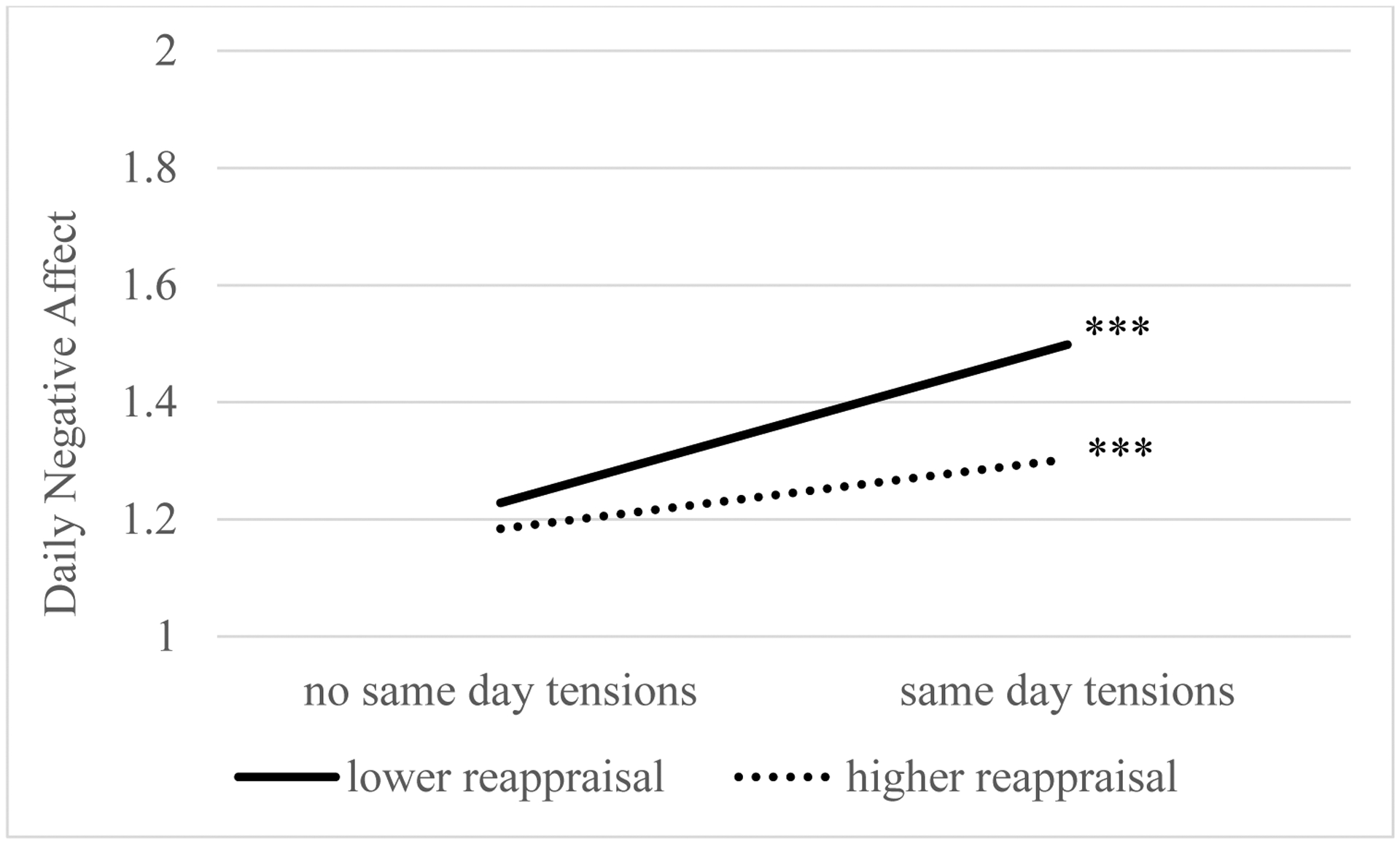
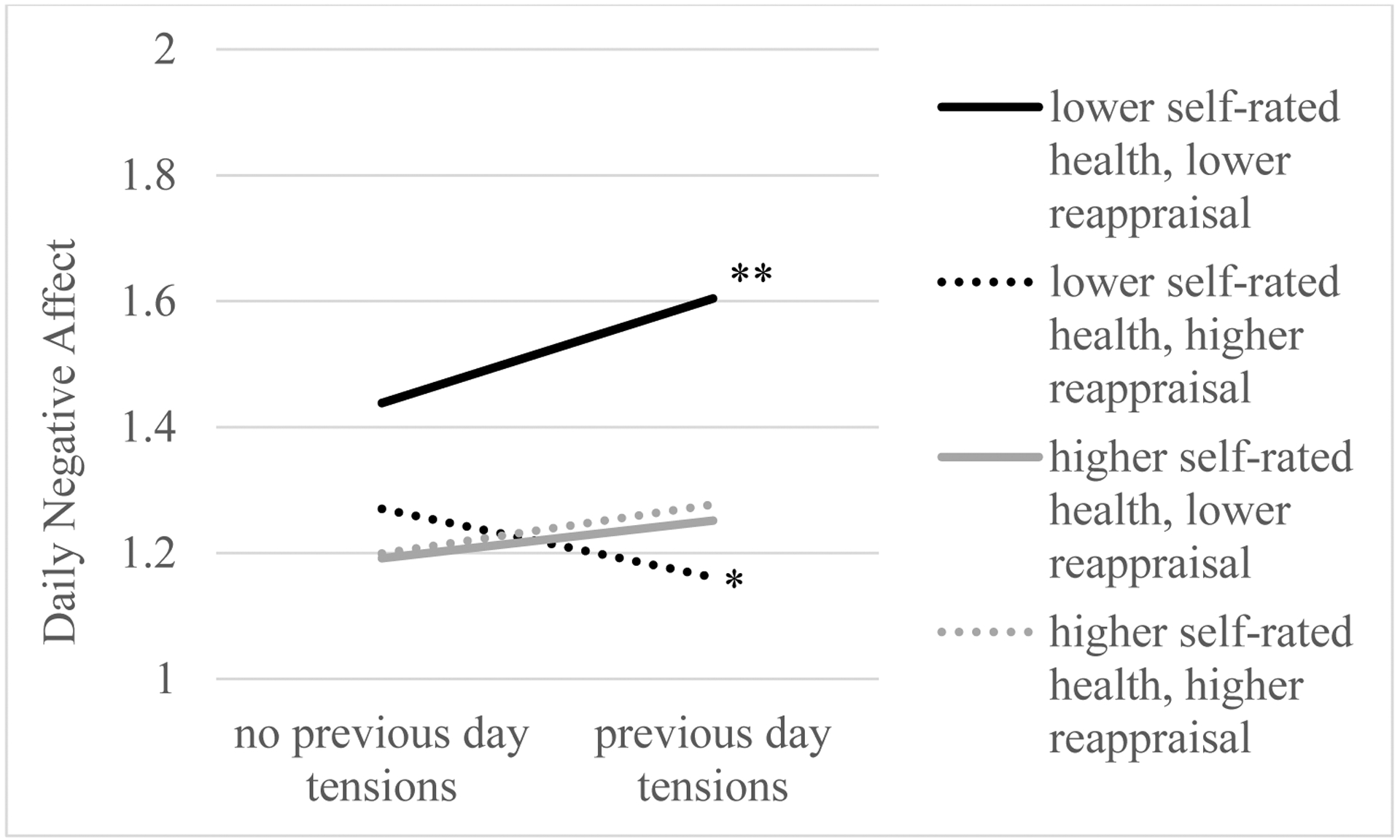
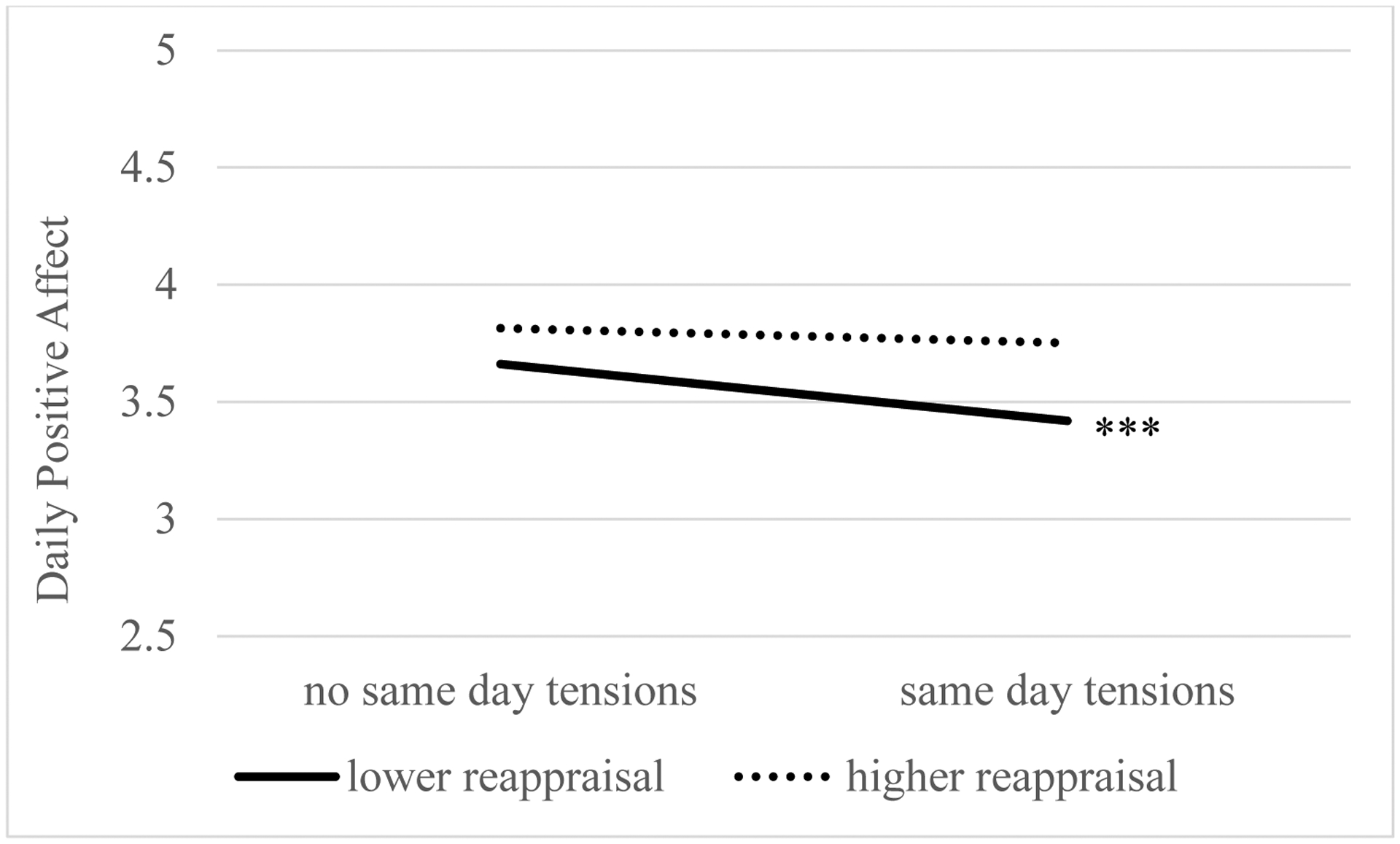
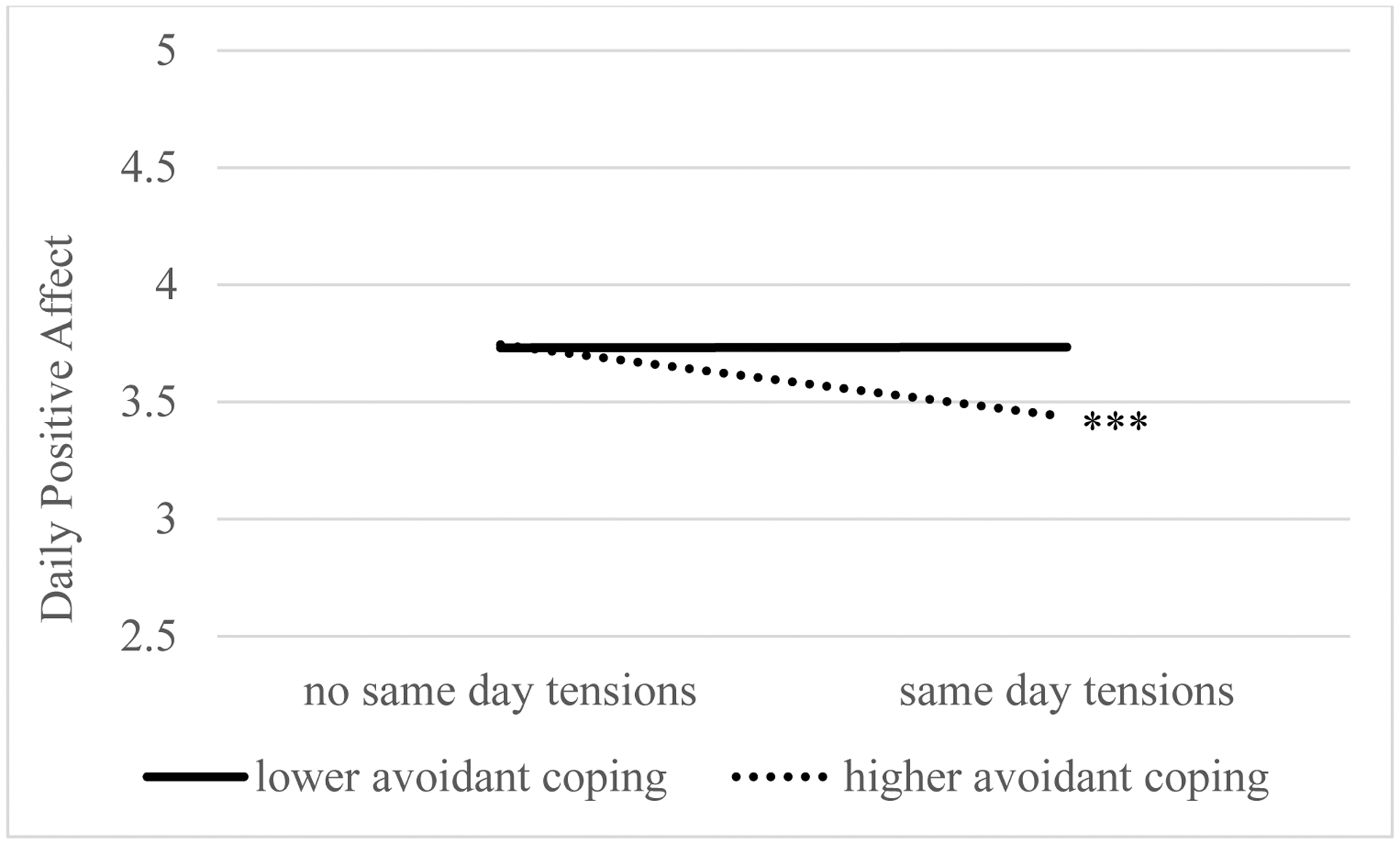
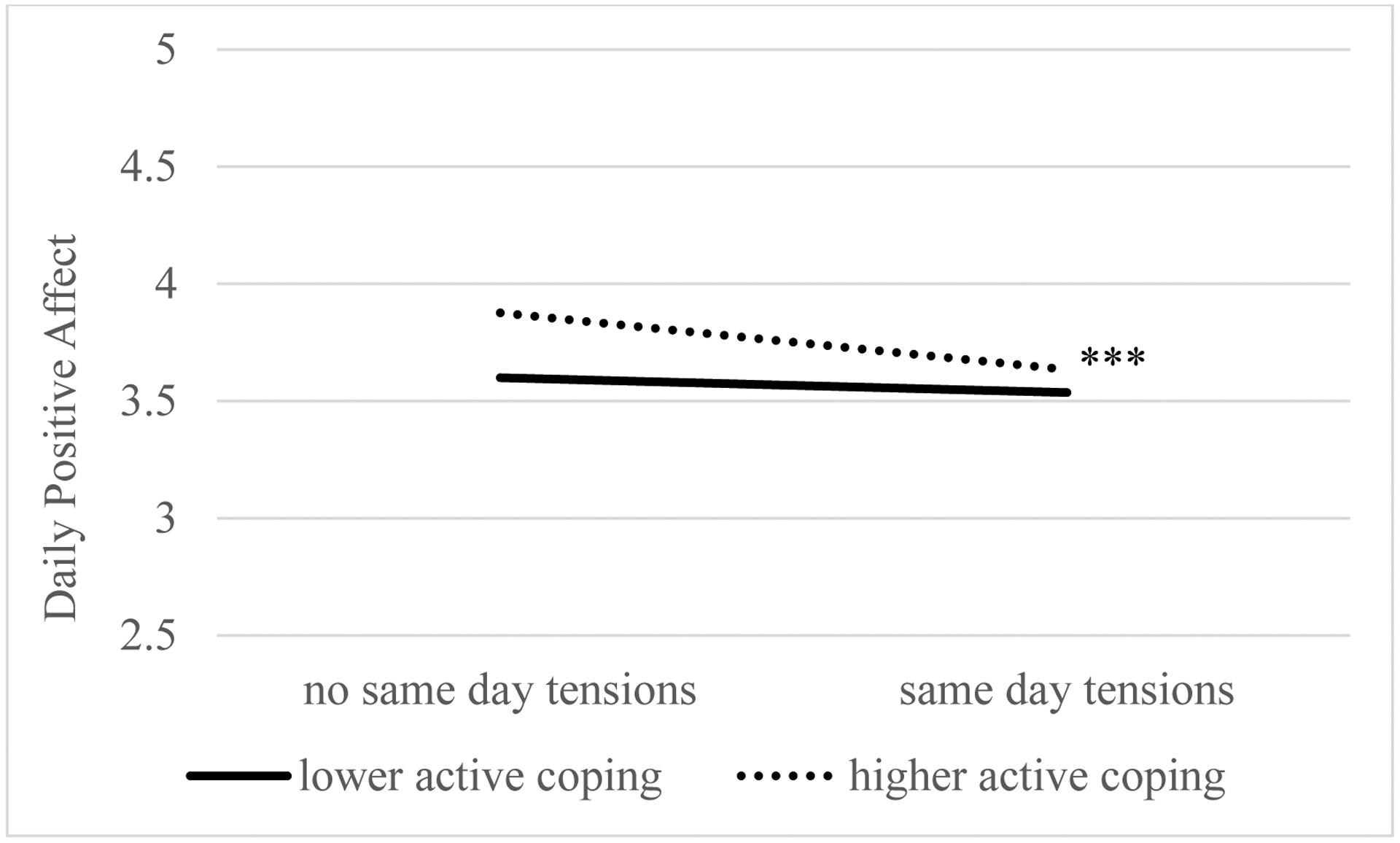
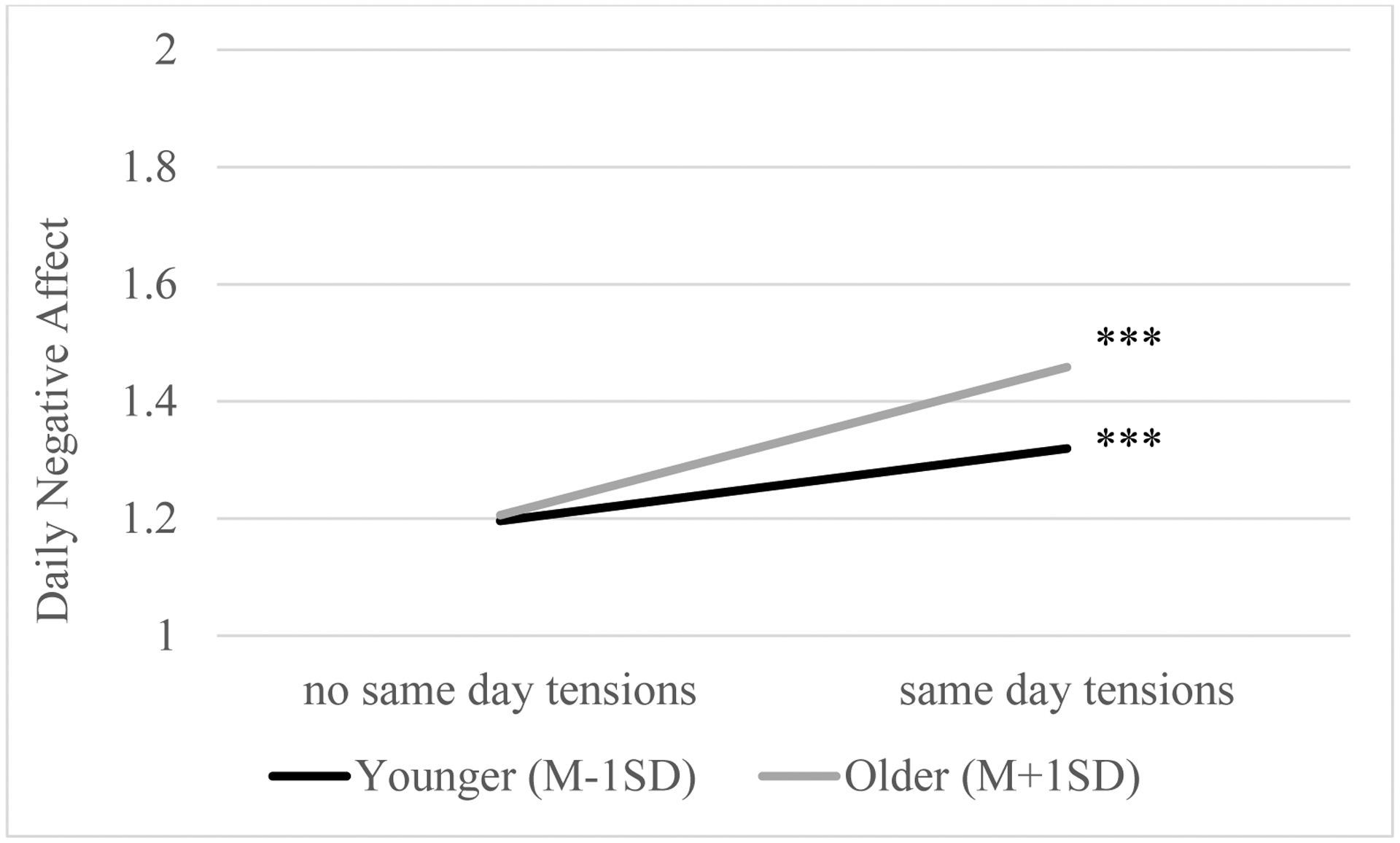
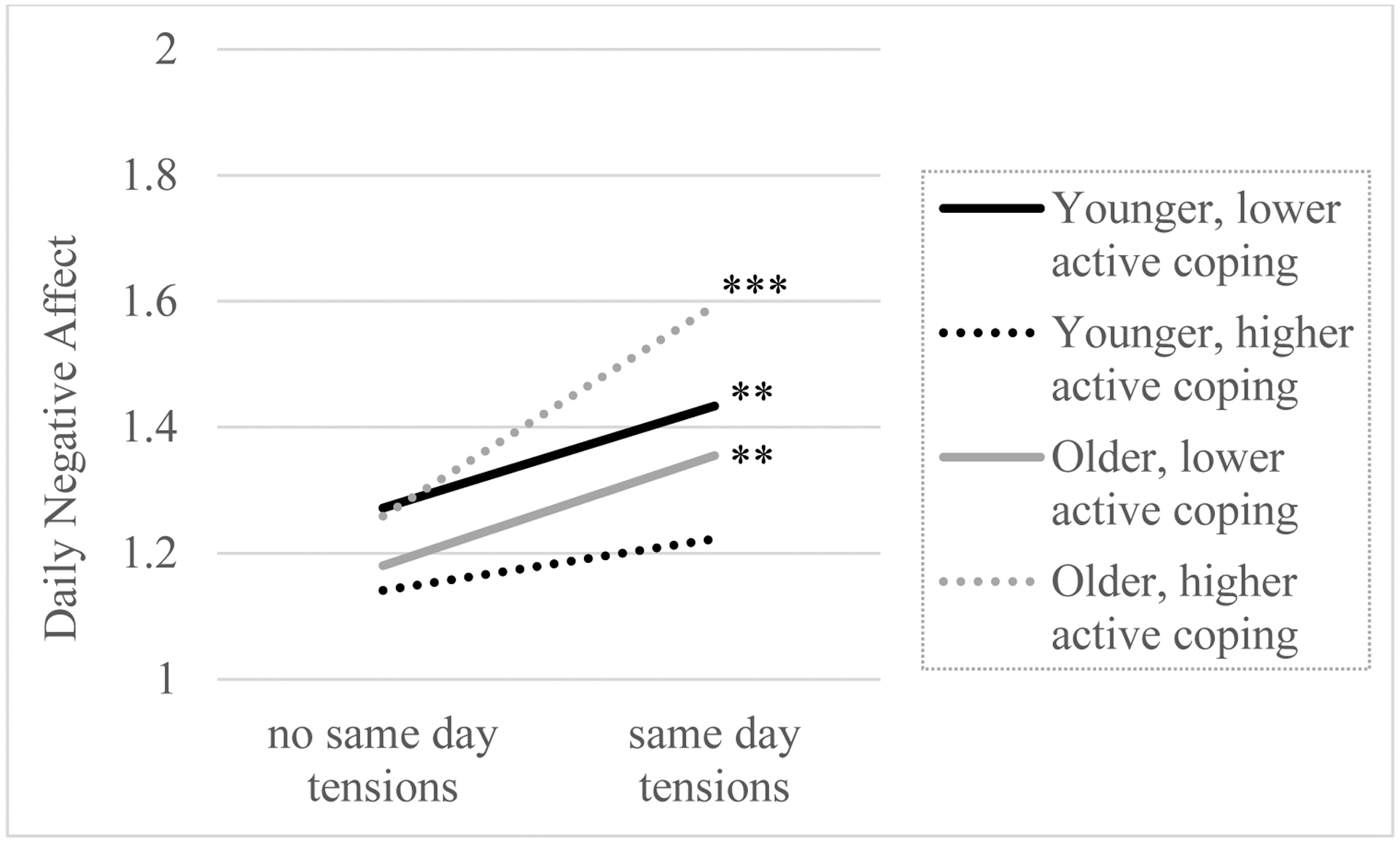
Interpersonal tensions are more strongly associated with well-being than other types of stressors in late life. Yet, there is little understanding of how older adults' preferences for different emotion regulation strategies may buffer or exacerbate effects of daily interpersonal tensions on emotional well-being. The present study examined links between interpersonal tensions and daily emotional well-being and whether those links were exacerbated or buffered by general emotion regulation strategy preferences. Participants were from the Daily Experiences and Well-Being Study, which included 293 older adults (aged 65 + years old) who completed baseline interviews, followed by 5-6 days of ecological momentary assessments, and a leave-behind questionnaire regarding emotion regulation strategies. Interpersonal tensions predicted poorer emotional well-being throughout the day and even more so for oldest-old individuals (aged 80 +) compared to young-old individuals. The effects of tensions on emotional well-being were attenuated among adults who generally preferred reappraisal and exacerbated among people who generally preferred avoidance. Reappraisal was particularly important for buffering the effects of tensions among individuals with poorer self-reported health. The findings regarding active coping were more nuanced and varied by age. The current study advances previous research on emotion regulation and social relations by examining older adults and revealing that links between interpersonal tensions, emotion regulation strategies, and emotional well-being vary on the basis of age and self-rated health. This study highlights the importance of considering how personal characteristics may shape later-life well-being in the context of coping with interpersonal tensions. (PsycInfo Database Record (c) 2020 APA, all rights reserved).
人际关系紧张与晚年的幸福感比其他类型的压力源更密切相关。然而,对于老年人对不同情绪调节策略的偏好如何缓冲或加剧日常人际关系紧张对情绪幸福感的影响,人们知之甚少。本研究考察了人际关系紧张与日常情绪幸福感之间的联系,以及这些联系是否因一般情绪调节策略偏好而加剧或缓冲。参与者来自每日经历和幸福感研究,该研究包括 293 名老年人(年龄在 65 岁以上),他们完成了基线访谈,随后进行了 5-6 天的生态瞬间评估,并留下了一份关于情绪调节策略的问卷。人际关系紧张预测了一整天的情绪幸福感较差,对于最年长的老年人(80 岁以上)比年轻的老年人更甚。对于一般偏好重新评估的成年人,紧张对情绪幸福感的影响减弱,而对于一般偏好回避的成年人,紧张对情绪幸福感的影响加剧。对于自我报告健康状况较差的个体,重新评估在缓冲紧张情绪的影响方面尤为重要。关于主动应对的发现更加微妙,并且因年龄而异。本研究通过考察老年人,推进了关于情绪调节和社会关系的先前研究,并揭示了人际关系紧张、情绪调节策略和情绪幸福感之间的联系因年龄和自我评估的健康状况而有所不同。这项研究强调了在应对人际关系紧张的背景下,考虑个人特征如何塑造晚年幸福感的重要性。(PsycInfo 数据库记录(c)2020 APA,保留所有权利)。