Global Influenza Programme, World Health Organization, Geneva, Switzerland.
Royal Children's Hospital, Melbourne, Vic., Australia.
Influenza Other Respir Viruses. 2020 Nov;14(6):647-657. doi: 10.1111/irv.12688. Epub 2019 Oct 31.
The lack of a uniform surveillance case definition poses a challenge to characterize the epidemiology, clinical features, and disease burden of the respiratory syncytial virus (RSV). Global standards for RSV surveillance will inform immunization policy when RSV vaccines become available.
The WHO RSV surveillance pilot leverages the capacities of the Global Influenza Surveillance and Response System (GISRS). Hospitalized and non-hospitalized medically attended patients of any age were tested for RSV using standardized molecular diagnostics throughout the year in fourteen countries. An extended severe acute respiratory infection (extended SARI) or an acute respiratory infection (ARI) case definition was used that did not require fever as a criterion.
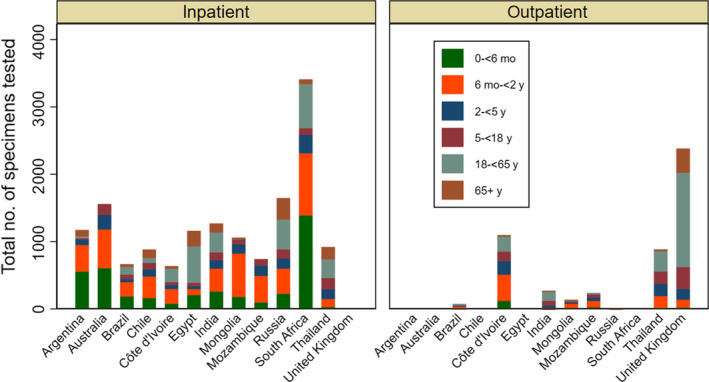
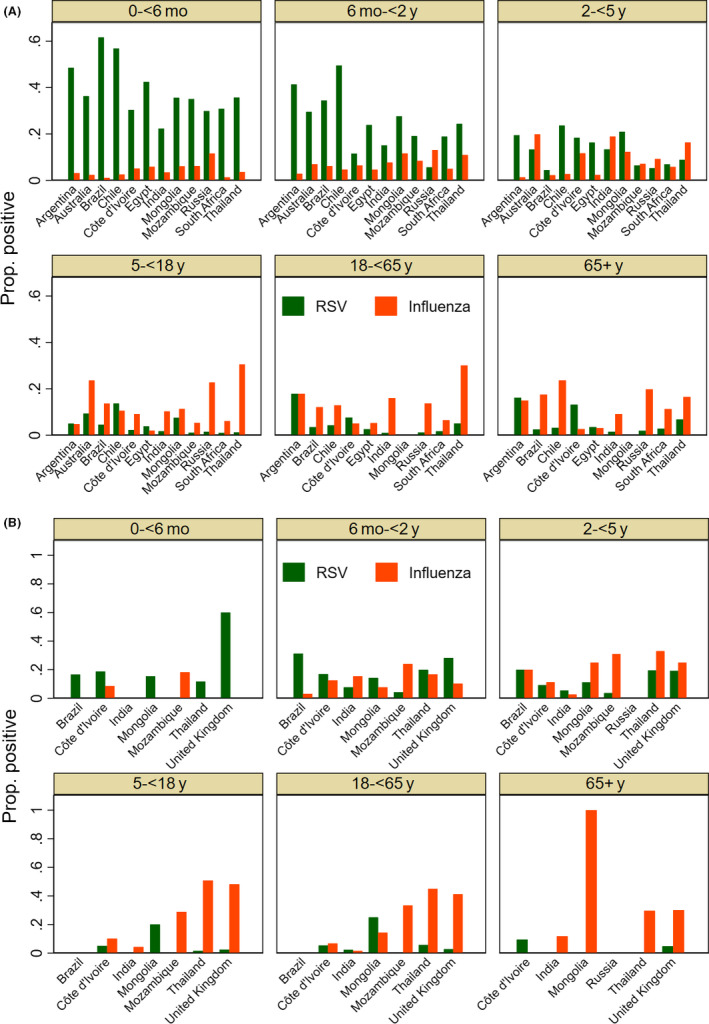
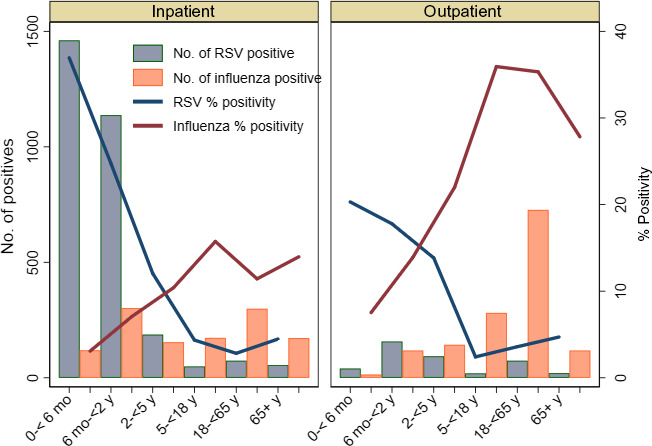
Amongst 21 221 patients tested for RSV between January 2017 and September 2018, 15 428 (73%) were hospital admissions. Amongst hospitalized RSV-positive patients, 50% were aged <6 months and 88% <2 years. The percentage of patients testing positive for RSV was 37% in children <6 months and 25% in those aged 6 months to 2 years. Patients with fever were less likely to be RSV positive compared to those without fever (OR 0.74; 95% CI: 0.63-0.86). For infants <6 months, 29% of RSV ARI cases did not have fever.
Requiring fever in a case definition for RSV lowers the sensitivity to detect cases in young children. Countries should consider ways to leverage the GISRS platform to implement RSV surveillance with an augmented case definition amongst the young pediatric population.
缺乏统一的监测病例定义给描述呼吸道合胞病毒(RSV)的流行病学、临床特征和疾病负担带来了挑战。当 RSV 疫苗可用时,全球 RSV 监测标准将为免疫政策提供信息。
世卫组织 RSV 监测试点利用了全球流感监测和应对系统(GISRS)的能力。在 14 个国家,全年对任何年龄的住院和非住院有医疗需求的患者使用标准化分子诊断方法进行 RSV 检测。使用了一种扩展的严重急性呼吸道感染(扩展 SARI)或急性呼吸道感染(ARI)病例定义,该定义不需要发热作为标准。
在 2017 年 1 月至 2018 年 9 月期间,对 21 221 例 RSV 检测患者中,15 428 例(73%)为住院患者。在 RSV 阳性住院患者中,50%年龄<6 个月,88%年龄<2 岁。年龄<6 个月的患者中,检测出 RSV 阳性的患者比例为 37%,6 个月至 2 岁的患者比例为 25%。与无发热患者相比,发热患者 RSV 阳性的可能性较小(比值比 0.74;95%置信区间:0.63-0.86)。对于<6 个月的婴儿,29%的 RSV ARI 病例没有发热。
在 RSV 病例定义中要求发热会降低检测幼儿病例的敏感性。各国应考虑利用 GISRS 平台,在儿科人群中实施具有增强病例定义的 RSV 监测。