Department of Biology and Evolution of Marine Organisms, Stazione Zoologica Anton Dohrn, Villa Comunale, 80121 Naples, Italy.
Department of Clinical Medicine and Surgery, Gastroenterology Unit, School of Medicine, Federico II University, Via Pansini, 5, 80131 Naples, Italy.
Cells. 2019 Oct 30;8(11):0. doi: 10.3390/cells8111356.
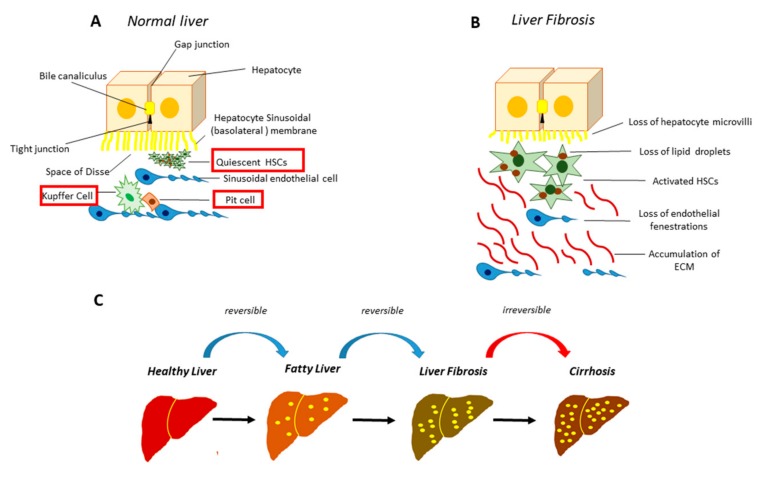
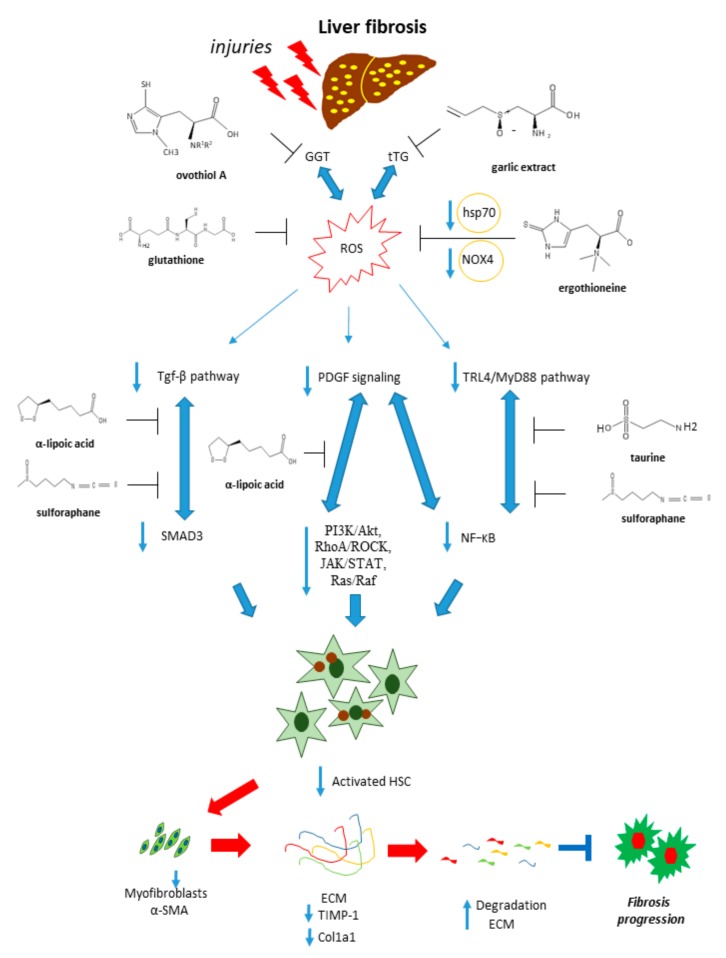
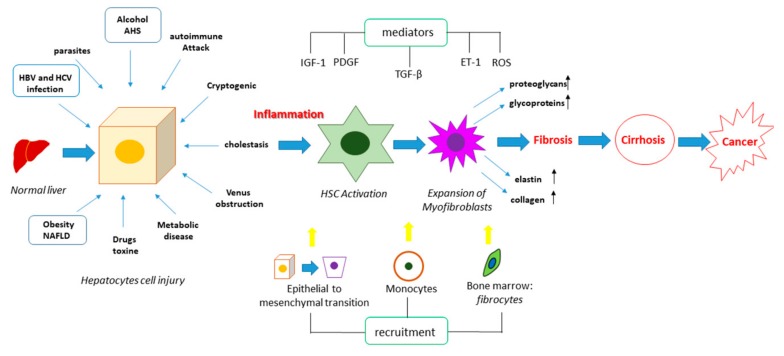
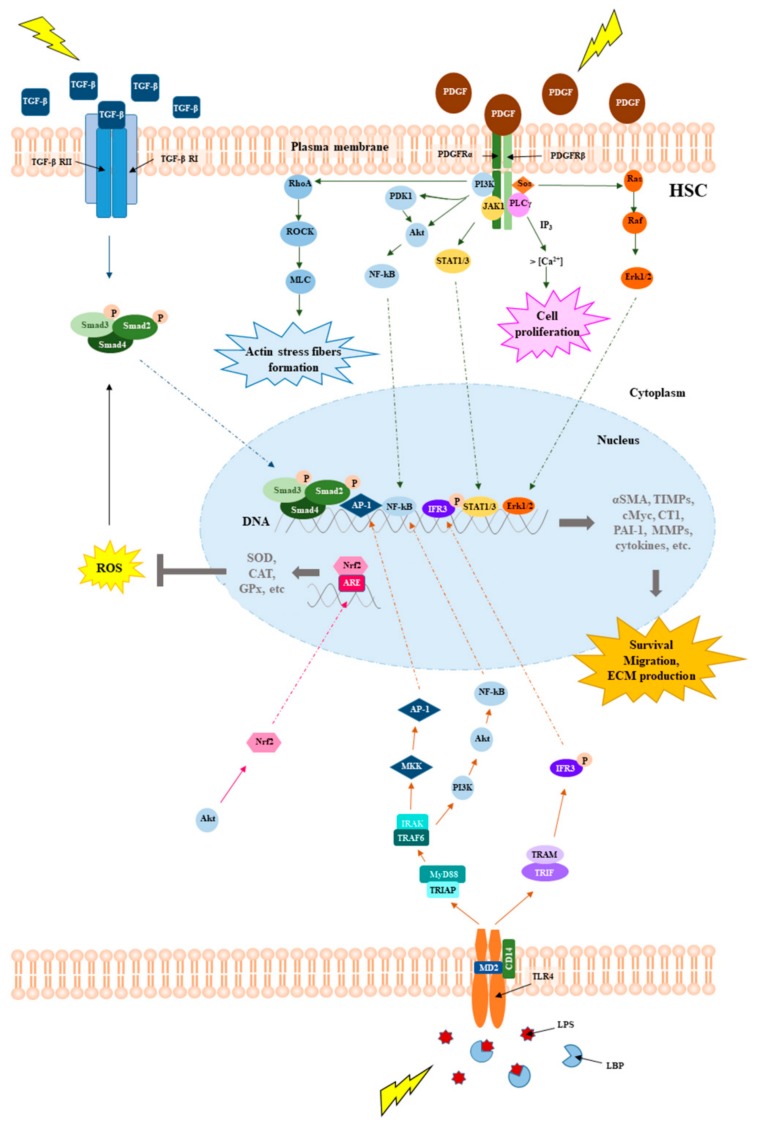
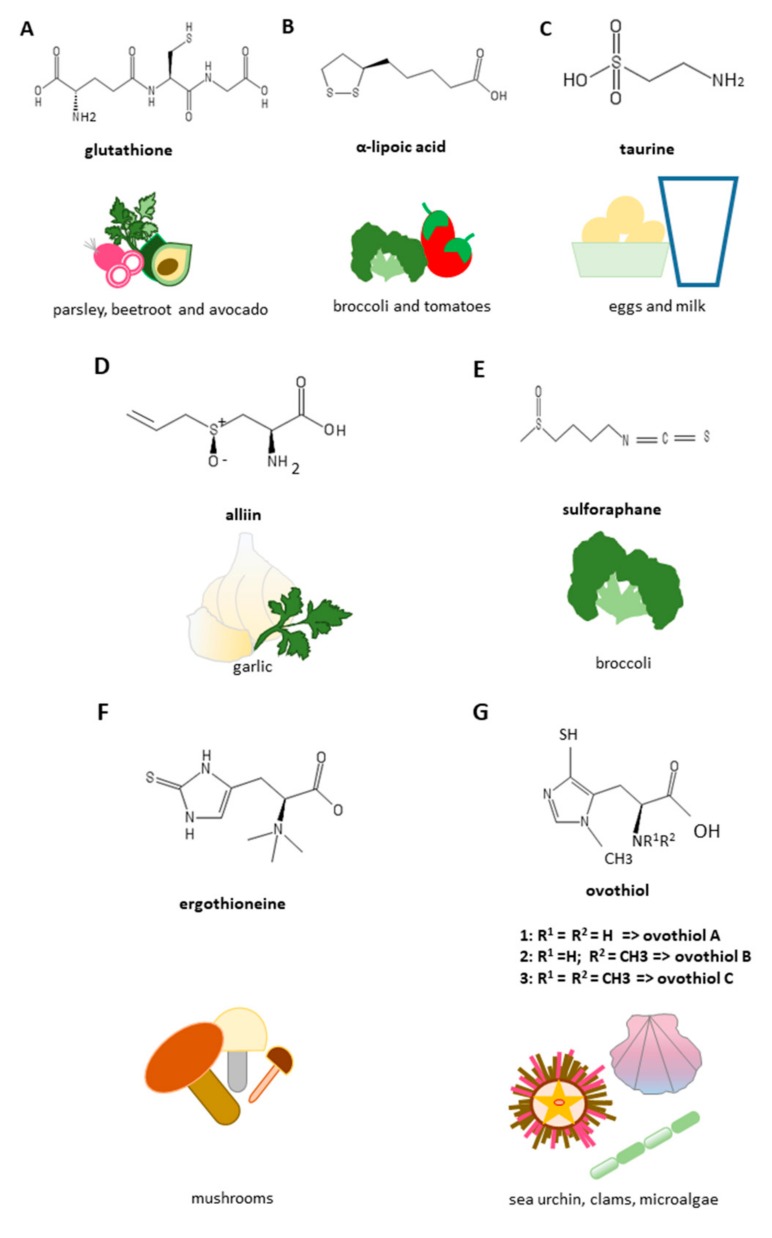
Liver fibrosis is a pathophysiologic process involving the accumulation of extracellular matrix proteins as collagen deposition. Advanced liver fibrosis can evolve in cirrhosis, portal hypertension and often requires liver transplantation. At the cellular level, hepatic fibrosis involves the activation of hepatic stellate cells and their transdifferentiation into myofibroblasts. Numerous pro-fibrogenic mediators including the transforming growth factor-β1, the platelet-derived growth factor, endothelin-1, toll-like receptor 4, and reactive oxygen species are key players in this process. Knowledge of the cellular and molecular mechanisms underlying hepatic fibrosis development need to be extended to find novel therapeutic strategies. Antifibrotic therapies aim to inhibit the accumulation of fibrogenic cells and/or prevent the deposition of extracellular matrix proteins. Natural products from terrestrial and marine sources, including sulfur-containing compounds, exhibit promising activities for the treatment of fibrotic pathology. Although many therapeutic interventions are effective in experimental models of liver fibrosis, their efficacy and safety in humans are largely unknown. This review aims to provide a reference collection on experimentally tested natural anti-fibrotic compounds, with particular attention on sulfur-containing molecules. Their chemical structure, sources, mode of action, molecular targets, and pharmacological activity in the treatment of liver disease will be discussed.
肝纤维化是一种涉及细胞外基质蛋白(如胶原蛋白沉积)积累的病理生理过程。晚期肝纤维化可进展为肝硬化、门静脉高压,并常需进行肝移植。在细胞水平上,肝纤维化涉及肝星状细胞的激活及其向肌成纤维细胞的转化。许多促纤维化介质,包括转化生长因子-β1、血小板衍生生长因子、内皮素-1、Toll 样受体 4 和活性氧,是该过程中的关键参与者。需要扩展对肝纤维化发展的细胞和分子机制的认识,以找到新的治疗策略。抗纤维化治疗旨在抑制纤维生成细胞的积累和/或防止细胞外基质蛋白的沉积。陆地和海洋来源的天然产物,包括含硫化合物,在治疗纤维病理方面表现出有希望的活性。尽管许多治疗干预措施在肝纤维化的实验模型中有效,但它们在人类中的疗效和安全性在很大程度上尚不清楚。本综述旨在提供一份经过实验验证的天然抗纤维化化合物的参考资料,特别关注含硫分子。将讨论它们的化学结构、来源、作用机制、分子靶点以及在治疗肝病方面的药理活性。