Laboratory of Molecular Stem Cell Pharmacology, College of Pharmacy, Chung-Ang University, Seoul 156-756, Korea.
Biomolecules. 2019 Oct 29;9(11):665. doi: 10.3390/biom9110665.
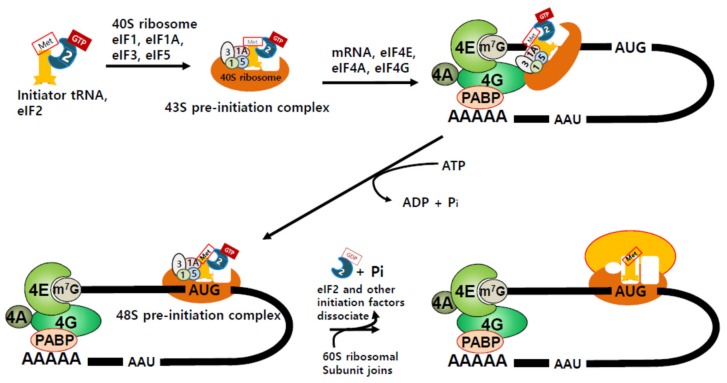
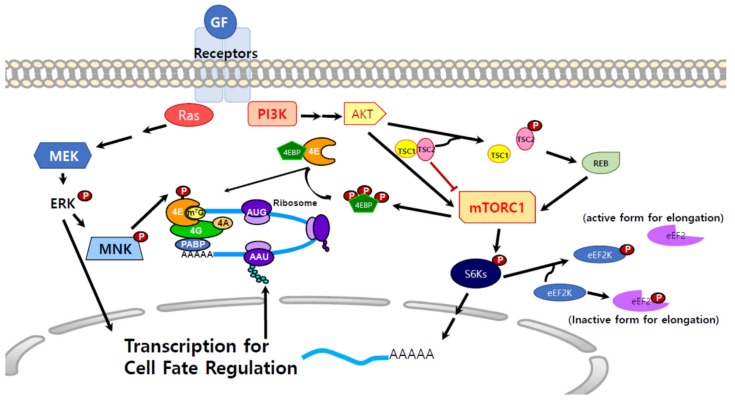
Translation of mRNA is an important process that controls cell behavior and gene regulation because proteins are the functional molecules that determine cell types and function. Cancer develops as a result of genetic mutations, which lead to the production of abnormal proteins and the dysregulation of translation, which in turn, leads to aberrant protein synthesis. In addition, the machinery that is involved in protein synthesis plays critical roles in stem cell fate determination. In the current review, recent advances in the understanding of translational control, especially translational initiation in cancer development and stem cell fate control, are described. Therapeutic targets of mRNA translation such as eIF4E, 4EBP, and eIF2, for cancer treatment or stem cell fate regulation are reviewed. Upstream signaling pathways that regulate and affect translation initiation were introduced. It is important to regulate the expression of protein for normal cell behavior and development. mRNA translation initiation is a key step to regulate protein synthesis, therefore, identifying and targeting molecules that are critical for protein synthesis is necessary and beneficial to develop cancer therapeutics and stem cells fate regulation.
mRNA 的翻译是一个重要的过程,它控制着细胞行为和基因调控,因为蛋白质是决定细胞类型和功能的功能分子。癌症的发生是由于基因突变,导致异常蛋白质的产生和翻译的失调,进而导致异常的蛋白质合成。此外,参与蛋白质合成的机制在干细胞命运决定中起着关键作用。在本综述中,描述了对翻译控制,特别是癌症发生和干细胞命运控制中翻译起始的理解的最新进展。还回顾了用于癌症治疗或干细胞命运调节的 mRNA 翻译的治疗靶标,如 eIF4E、4EBP 和 eIF2。介绍了调节和影响翻译起始的上游信号通路。调节正常细胞行为和发育所需的是蛋白质的表达。mRNA 翻译起始是调节蛋白质合成的关键步骤,因此,鉴定和靶向对蛋白质合成至关重要的分子对于开发癌症治疗和干细胞命运调节是必要和有益的。