Kim Beom-Jun, Lee Jin Young, Park So Jeong, Lee Seung Hum, Kim Su Jung, Yoo Hyun Ju, Rivera De Pena Sarah I, McGee-Lawrence Meghan, Isales Carlos M, Koh Jung-Min, Hamrick Mark W
Division of Endocrinology and Metabolism, Asan Medical Center, University of Ulsan College of Medicine, Seoul, South Korea.
Asan Institute for Life Sciences, Seoul, South Korea.
Aging (Albany NY). 2019 Nov 1;11(21):9388-9404. doi: 10.18632/aging.102389.
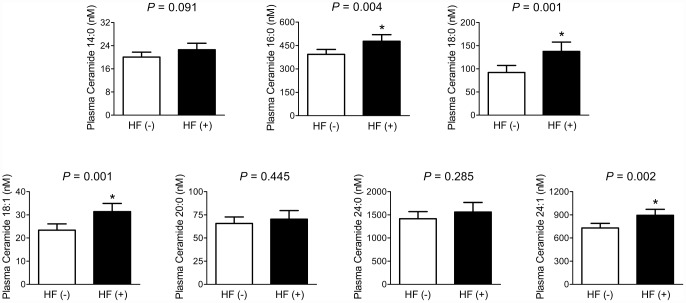
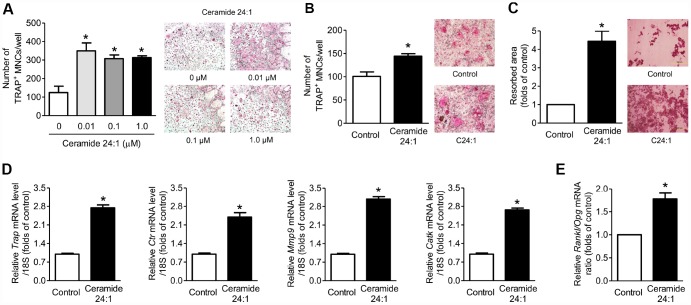
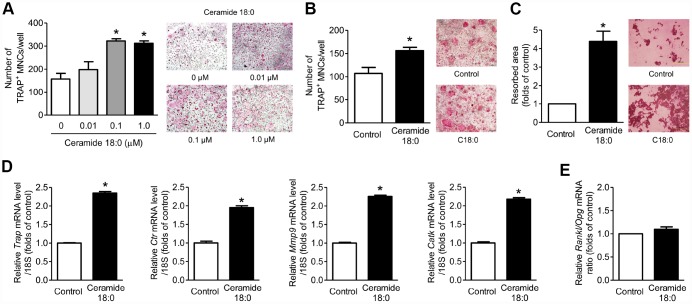
We assessed whether circulating ceramides, which play a role in a number of degenerative changes with aging, significantly differed according to fragility hip fracture (HF) status. We also performed a human study using bone marrow (BM) aspirates, directly reflecting the bone microenvironment, in addition to experiments. Peripheral blood and BM samples were simultaneously collected from 74 patients 65 years or older at hip surgery for either HF ( = 28) or for other causes ( = 46). Ceramides were measured by liquid chromatography-tandem mass spectrometry. Age was correlated positively with circulating C16:0, C18:0, and C24:1 ceramide levels. Patients with fragility HF had 21.3%, 49.5%, 34.3%, and 22.5% higher plasma C16:0, C18:0, C18:1, and C24:1 ceramide levels, respectively, than those without HF. Higher C16:0, C18:0, C18:1, and C24:1 ceramide levels were positively related to bone resorption markers in both blood and BM samples. Furthermore, studies showed that C18:0 and C24:1 ceramides directly increased osteoclastogenesis, bone resorption, and expression levels of osteoclast differentiation markers. These results suggested that the association of increased ceramides, especially C18:0 and C24:1, with adverse bone phenotypes in elderly people could be explained mainly by the increase in osteoclastogenesis and bone resorption.
我们评估了在许多与衰老相关的退行性变化中起作用的循环神经酰胺,是否根据脆性髋部骨折(HF)状态存在显著差异。除了进行实验外,我们还使用直接反映骨微环境的骨髓抽吸物进行了一项人体研究。在髋部手术时,同时从74名65岁及以上因HF(n = 28)或其他原因(n = 46)接受手术的患者中采集外周血和骨髓样本。通过液相色谱-串联质谱法测量神经酰胺。年龄与循环中的C16:0、C18:0和C24:1神经酰胺水平呈正相关。脆性HF患者的血浆C16:0、C18:0、C18:1和C24:1神经酰胺水平分别比无HF患者高21.3%、49.5%、34.3%和22.5%。较高的C16:0、C18:0、C18:1和C24:1神经酰胺水平与血液和骨髓样本中的骨吸收标志物呈正相关。此外,体外研究表明,C18:0和C24:1神经酰胺直接增加破骨细胞生成、骨吸收以及破骨细胞分化标志物的表达水平。这些结果表明,神经酰胺尤其是C18:0和C24:1的增加与老年人不良骨表型之间的关联,主要可以通过破骨细胞生成和骨吸收的增加来解释。