Sol Joaquim, Fernàndez-Bernal Anna, Mota-Martorell Natalia, Martín-Garí Meritxell, Obis Èlia, Juanes Alba, Ayala Victoria, Mayneris-Perxachs Jordi, Ramos Rafel, Pineda Víctor, Garre-Olmo Josep, Portero-Otín Manuel, Fernández-Real José Manuel, Puig Josep, Jové Mariona, Pamplona Reinald
Department of Experimental Medicine, University of Lleida-Lleida Biomedical Research Institute (UdL-IRBLleida), Lleida, Spain; Catalan Health Institute (ICS), Primary Care, Lleida, Spain.
Department of Experimental Medicine, University of Lleida-Lleida Biomedical Research Institute (UdL-IRBLleida), Lleida, Spain.
Redox Biol. 2025 Jul 18;85:103779. doi: 10.1016/j.redox.2025.103779.
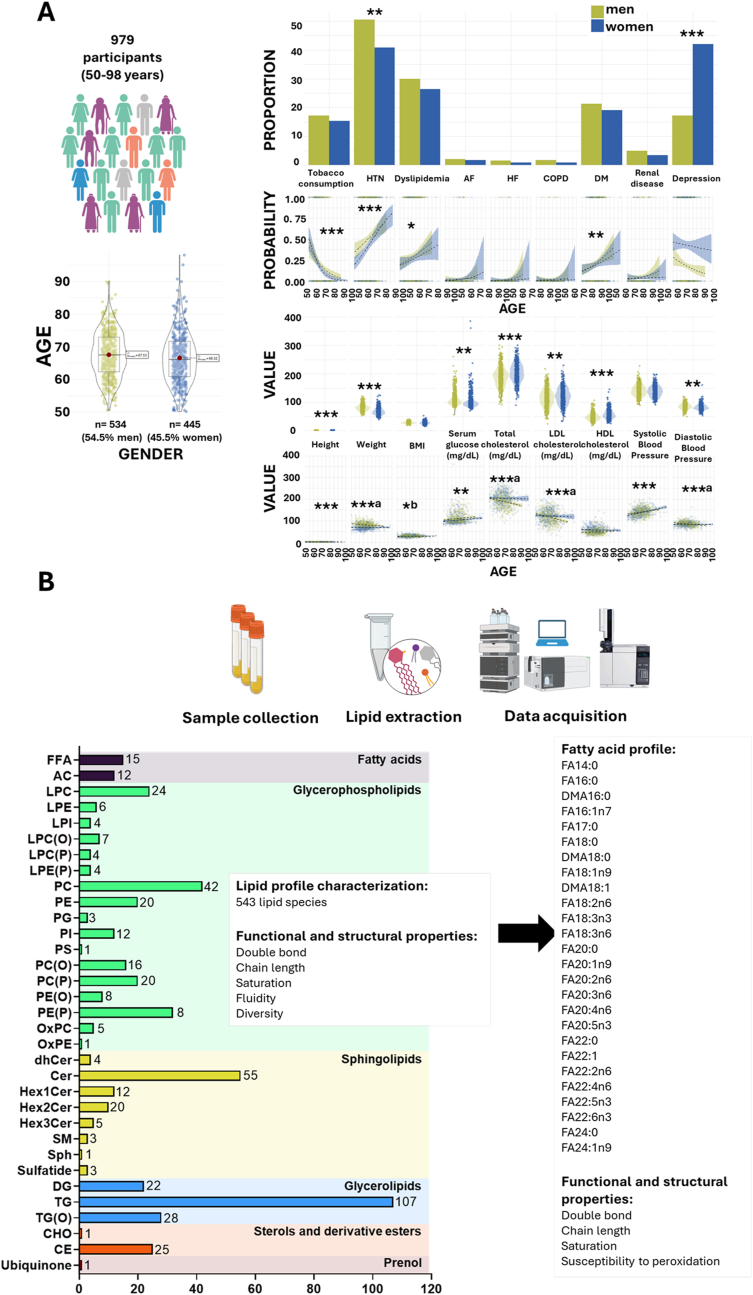
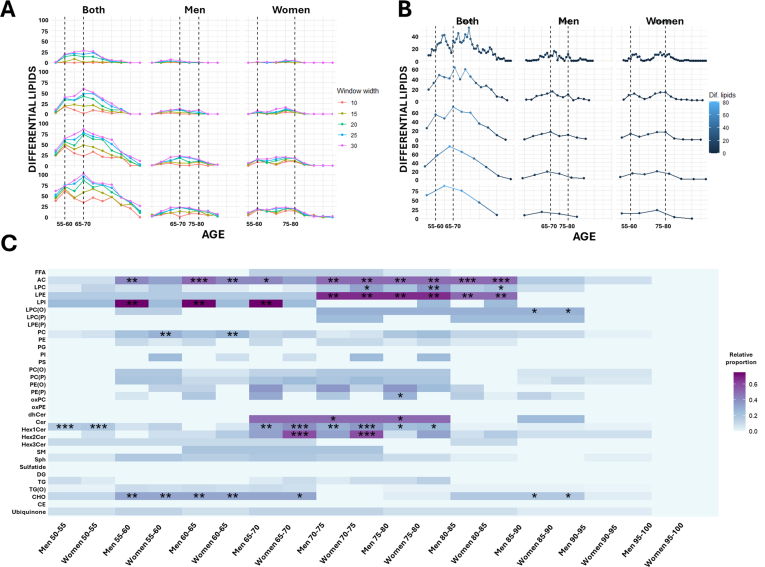
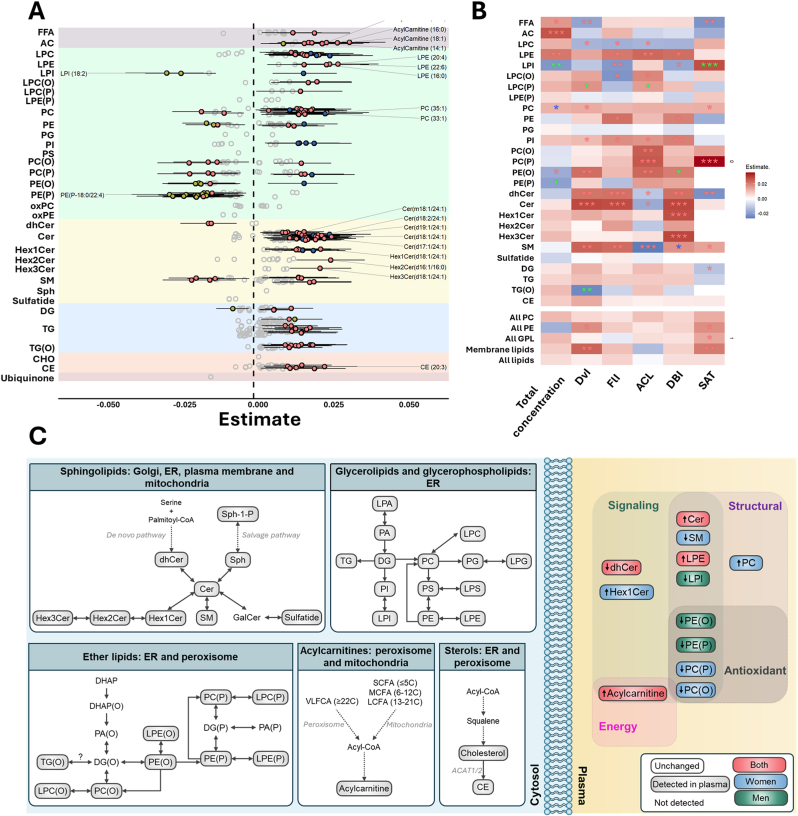
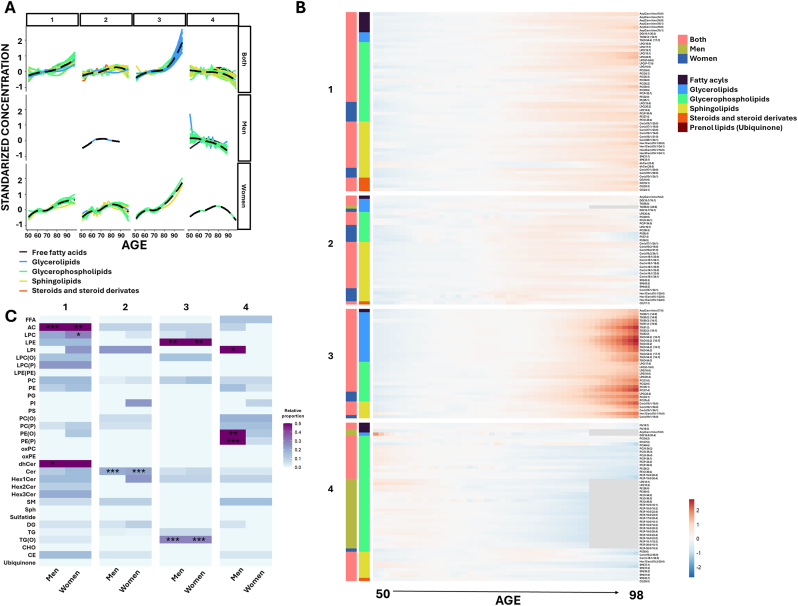
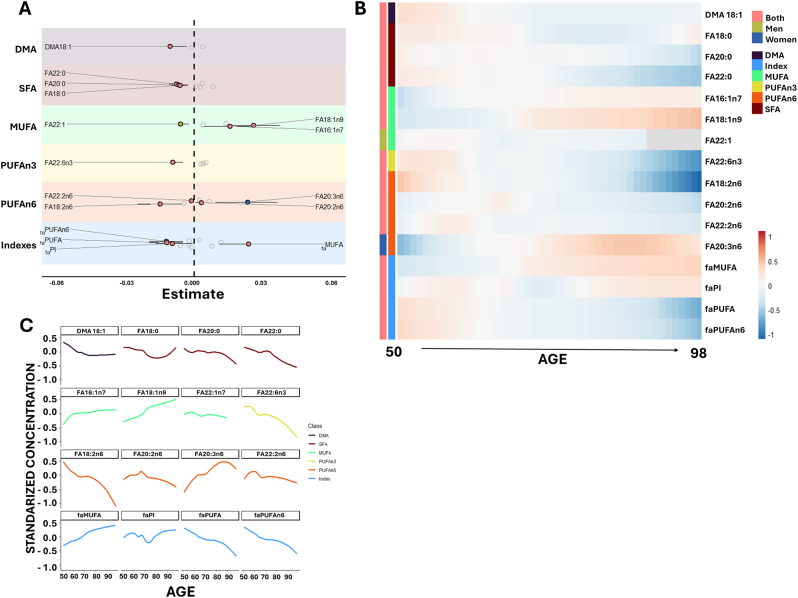
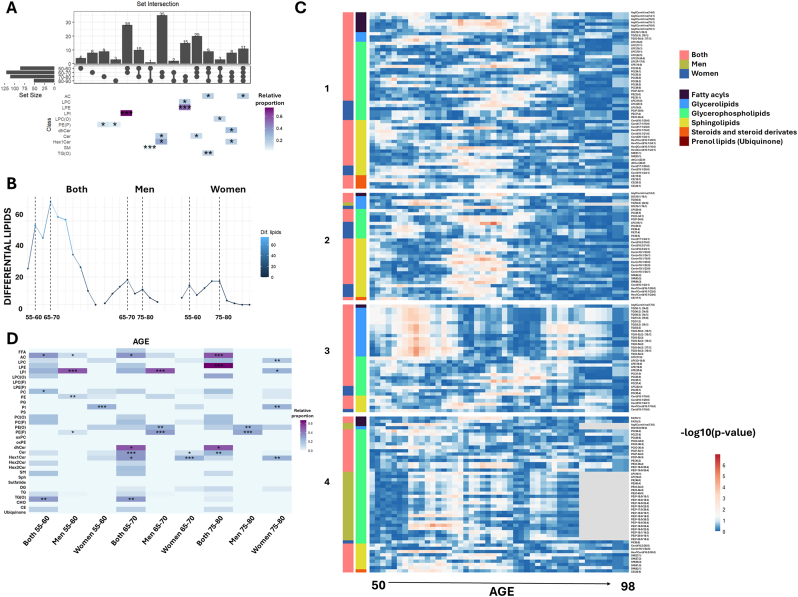
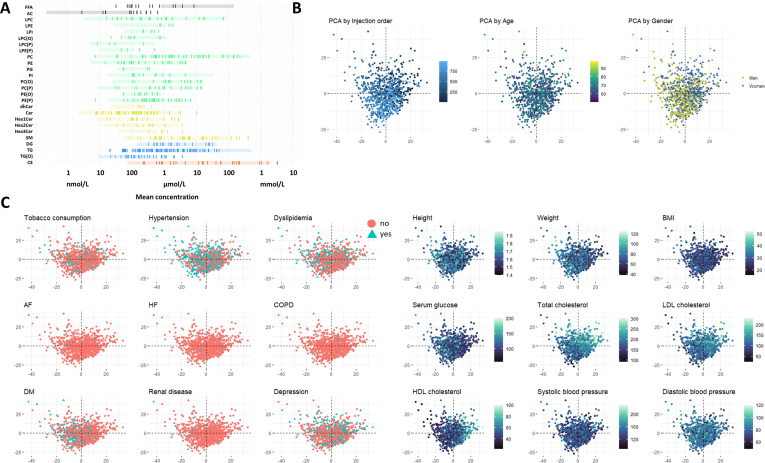
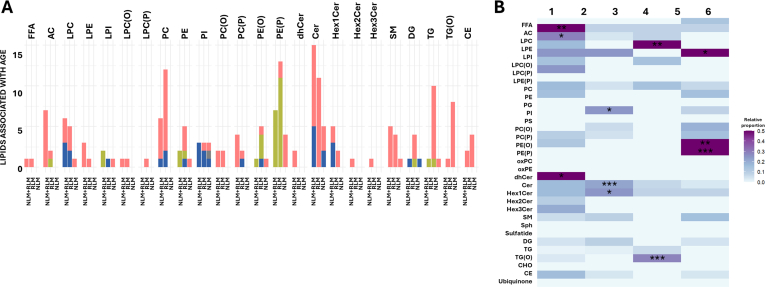
Aging is a dynamic process characterized by complex molecular changes, including shifts in lipid metabolism. To systematically define lipidome dynamics with age and identify sex-specific lipidomic signatures, we performed targeted lipidomic profiling of plasma samples from 1030 adults aged 50-98 years, analyzing 543 lipid species across all lipid classes using high-throughput mass spectrometry and assessing the circulating fatty acid composition by gas chromatography. Our results reveal age-related lipidomic shifts, with ceramides and ether-linked phospholipids most affected. We identified three aging crests (55-60, 65-70, 75-80 years), with the 65-70 years crest dominant in men and the 75-80 years crest in women. Lipid enrichment analyses highlight acylcarnitines, sphingolipids and ether-linked phospholipids as key contributors, with functional indices indicating compositional shifts in lipid species. These findings suggest an impairment of lipid functional categories, including loss of dynamic properties, alterations in bioenergetics, antioxidant defense, cellular identity, and signaling platforms. This study underscores the non-linear nature of lipid metabolism in aging and provides a foundation for identifying biomarkers and interventions to promote healthy aging.
衰老乃是一个以复杂分子变化为特征的动态过程,其中包括脂质代谢的转变。为了系统地界定脂质组随年龄的动态变化并识别性别特异性脂质组特征,我们对1030名年龄在50 - 98岁的成年人的血浆样本进行了靶向脂质组分析,使用高通量质谱分析了所有脂质类别中的543种脂质,并通过气相色谱法评估循环脂肪酸组成。我们的结果揭示了与年龄相关的脂质组变化,其中神经酰胺和醚连接磷脂受影响最大。我们识别出三个衰老高峰(55 - 60岁、65 - 70岁、75 - 80岁),65 - 70岁的高峰在男性中占主导,75 - 80岁的高峰在女性中占主导。脂质富集分析突出了酰基肉碱、鞘脂和醚连接磷脂是关键贡献者,功能指标表明脂质种类的组成发生了变化。这些发现表明脂质功能类别受到损害,包括动态特性丧失、生物能量学改变、抗氧化防御、细胞身份和信号平台的改变。这项研究强调了衰老过程中脂质代谢的非线性性质,并为识别生物标志物和促进健康衰老的干预措施提供了基础。