Department of Radiation Oncology, Brigham and Women's Hospital, Dana-Farber Cancer Institute and Harvard Medical School, Boston, MA, United States.
Institut Lumière Matière, UMR 5306, Université Claude Bernard Lyon 1, CNRS, Villeurbanne, France.
Sci Rep. 2019 Nov 1;9(1):15844. doi: 10.1038/s41598-019-50538-w.
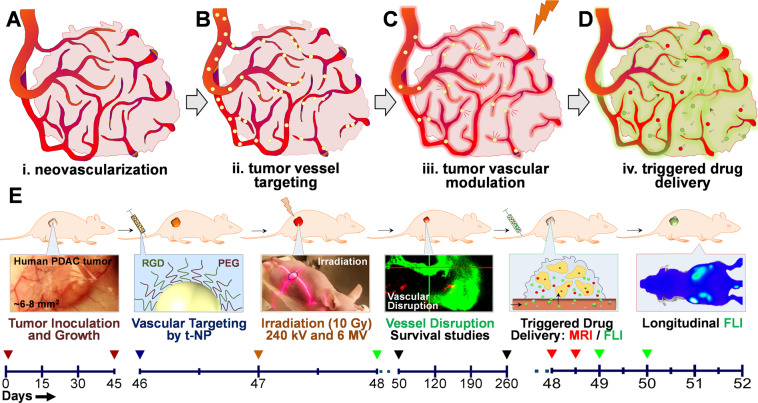
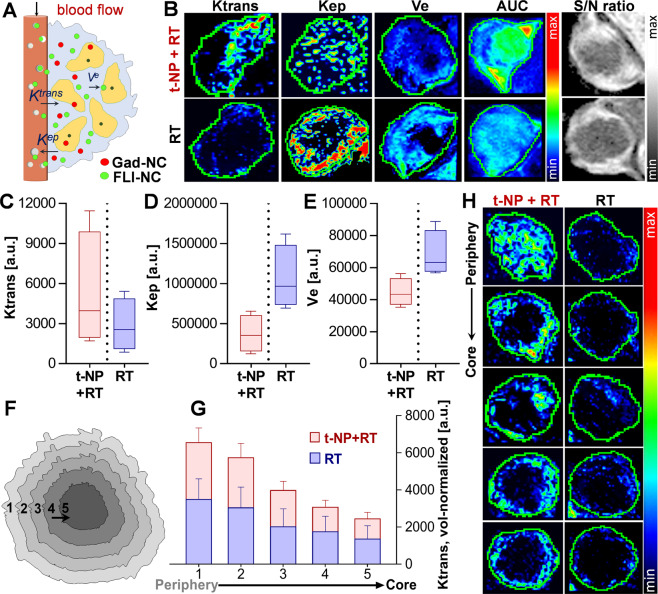
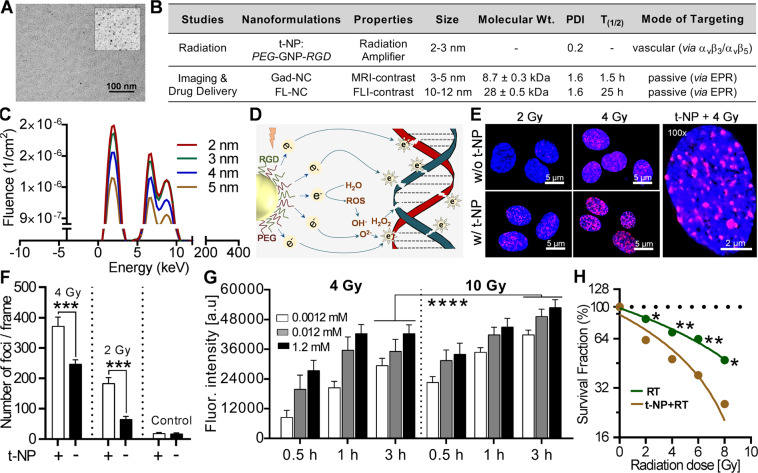
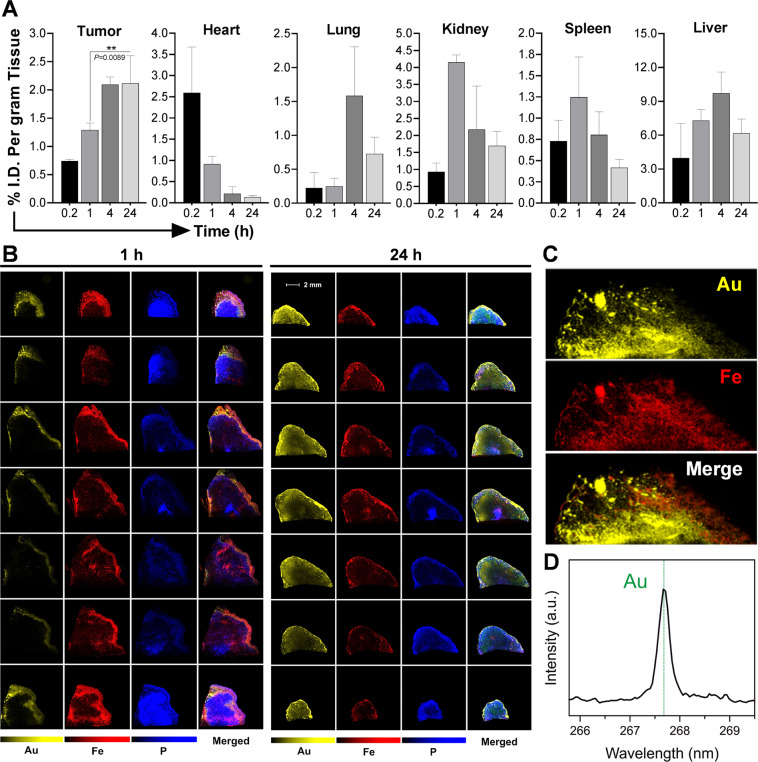
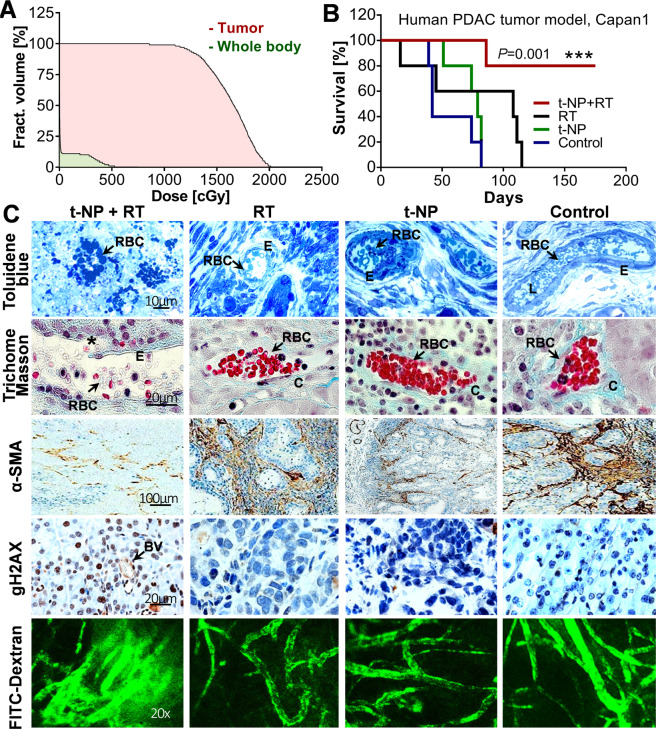
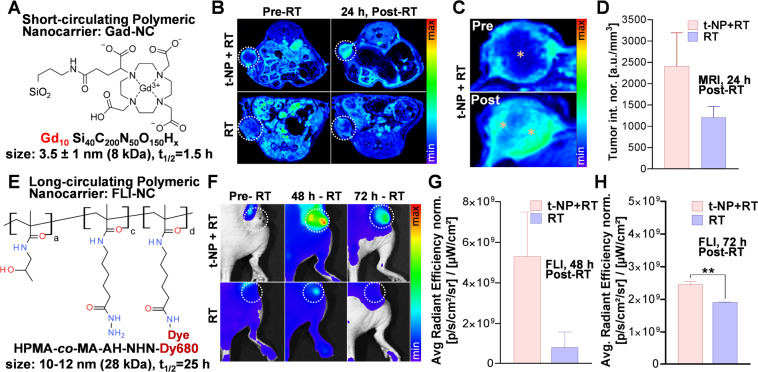
Effective drug delivery is restricted by pathophysiological barriers in solid tumors. In human pancreatic adenocarcinoma, poorly-permeable blood vessels limit the intratumoral permeation and penetration of chemo or nanotherapeutic drugs. New and clinically viable strategies are urgently sought to breach the neoplastic barriers that prevent effective drug delivery. Here, we present an original idea to boost drug delivery by selectively knocking down the tumor vascular barrier in a human pancreatic cancer model. Clinical radiation activates the tumor endothelial-targeted gold nanoparticles to induce a physical vascular damage due to the high photoelectric interactions. Active modulation of these tumor neovessels lead to distinct changes in tumor vascular permeability. Noninvasive MRI and fluorescence studies, using a short-circulating nanocarrier with MR-sensitive gadolinium and a long-circulating nanocarrier with fluorescence-sensitive nearinfrared dye, demonstrate more than two-fold increase in nanodrug delivery, post tumor vascular modulation. Functional changes in altered tumor blood vessels and its downstream parameters, particularly, changes in K (permeability), K (flux rate), and V (extracellular interstitial volume), reflect changes that relate to augmented drug delivery. The proposed dual-targeted therapy effectively invades the tumor vascular barrier and improve nanodrug delivery in a human pancreatic tumor model and it may also be applied to other nonresectable, intransigent tumors that barely respond to standard drug therapies.
有效的药物递送受到实体瘤中病理生理学屏障的限制。在人类胰腺腺癌中,通透性差的血管限制了化疗药物或纳米治疗药物在肿瘤内的渗透和穿透。迫切需要新的、可行的临床策略来突破阻止有效药物递送的肿瘤屏障。在这里,我们提出了一个原创的想法,即在人类胰腺癌模型中选择性地敲低肿瘤血管屏障来增强药物递送。临床放射使肿瘤内皮靶向的金纳米颗粒激活,由于光电相互作用高,导致物理血管损伤。对这些肿瘤新生血管的主动调节导致肿瘤血管通透性的明显变化。使用具有磁共振敏感钆的短循环纳米载体和具有荧光敏感近红外染料的长循环纳米载体进行非侵入性 MRI 和荧光研究,表明在肿瘤血管调节后,纳米药物递送增加了两倍以上。改变的肿瘤血管及其下游参数的功能变化,特别是 K(通透性)、K(通量率)和 V(细胞外间质体积)的变化,反映了与增强药物递送相关的变化。拟议的双重靶向治疗有效地侵袭了肿瘤血管屏障,并提高了人类胰腺肿瘤模型中的纳米药物递送,也可应用于其他对标准药物治疗反应不佳的不可切除、难治性肿瘤。