Department of Nutritional Sciences, University of Toronto, Toronto, ON M5S 1A8, Canada.
Guelph Research and Development Centre, Agriculture and Agri-Food Canada, West Guelph, ON N1G 5C9, Canada.
Nutrients. 2019 Nov 4;11(11):2656. doi: 10.3390/nu11112656.
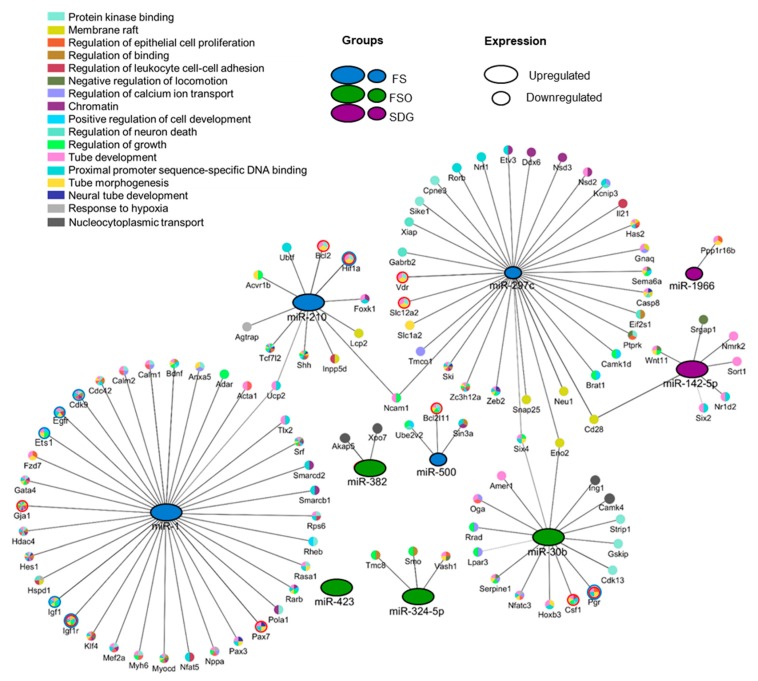
Breast cancer is the most common cancer among women worldwide. We previously showed that early-life exposure to flaxseed (FS) or its components, FS oil (FSO) and secoisolariciresinol diglucoside (SDG), affects the mammary gland (MG) and is associated with the reduction of breast cancer risk during adulthood. However, the underlying mechanisms are not understood. This study aimed to investigate the effect of FS, FSO, and SDG on the MG miRNA signature at a late stage of development. Female C57BL/6 mice, 4-5 weeks of age, were randomized into four groups to receive: (i) basal AIN-93G, (ii) 10% FS, (iii) 3.67% FSO, or (iv) 0.15% SDG. After 21 days, the mice were sacrificed and MG miRNAs were profiled. Diet-specific MG miRNA signatures were identified. Deregulated miRNAs were associated with breast cancer and targeted genes involved in MG development, growth, and cancer. The study allowed for the identification of potential biomarkers or novel therapeutic targets to prevent and/or reduce the risk of breast cancer.
乳腺癌是全世界女性最常见的癌症。我们之前的研究表明,生命早期接触亚麻籽(FS)或其成分亚麻籽油(FSO)和开环异落叶松脂素二葡萄糖苷(SDG)会影响乳腺(MG),并与成年期乳腺癌风险降低有关。然而,其潜在机制尚不清楚。本研究旨在探究 FS、FSO 和 SDG 对发育晚期 MG 微小 RNA 特征的影响。4-5 周龄的雌性 C57BL/6 小鼠被随机分为四组,分别接受:(i)基础 AIN-93G 饲料,(ii)10%FS 饲料,(iii)3.67%FSO 饲料,或(iv)0.15%SDG 饲料。21 天后,处死小鼠并分析 MG 微小 RNA。鉴定出了具有特定饮食特征的 MG 微小 RNA 特征。失调的微小 RNA 与乳腺癌有关,并且靶向基因参与 MG 发育、生长和癌症。该研究为预防和/或降低乳腺癌风险提供了潜在的生物标志物或新的治疗靶点。