Taibi Amel, Ku Michelle, Lin Zhen, Gargari Giorgio, Kubant Alla, Lepp Dion, Power Krista A, Guglielmetti Simone, Thompson Lilian U, Comelli Elena M
Department of Nutritional Sciences, University of Toronto, ON, Canada.
Department of Food, Environmental and Nutritional Sciences (DeFENS), University of Milan, Milan 20133, Italy.
Data Brief. 2021 Sep 22;38:107409. doi: 10.1016/j.dib.2021.107409. eCollection 2021 Oct.
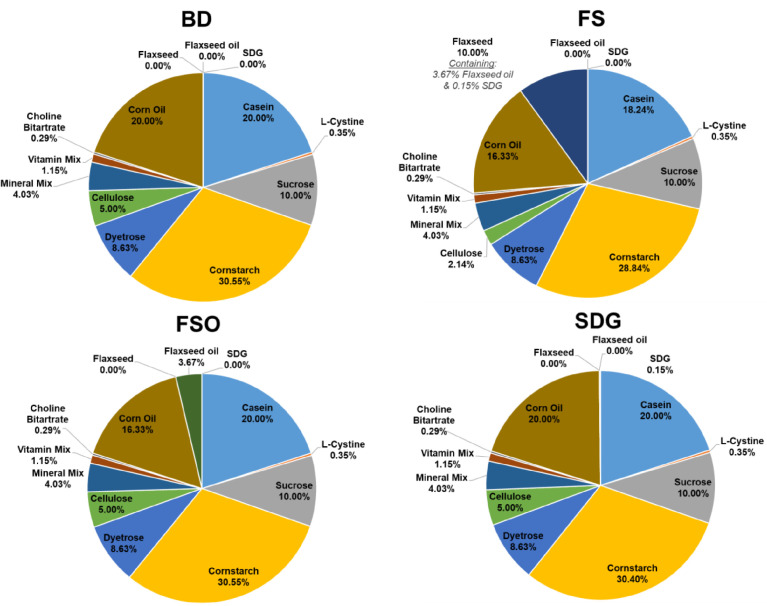
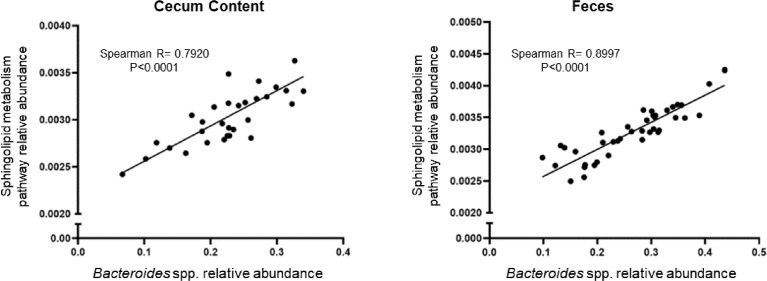
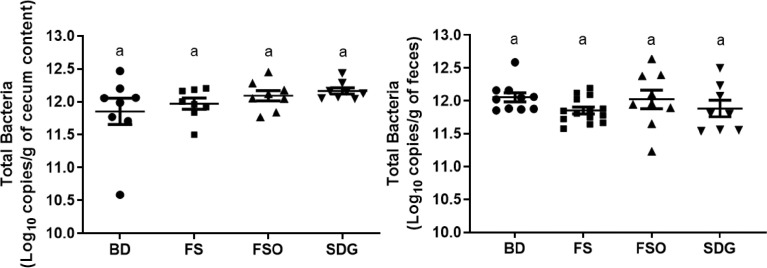
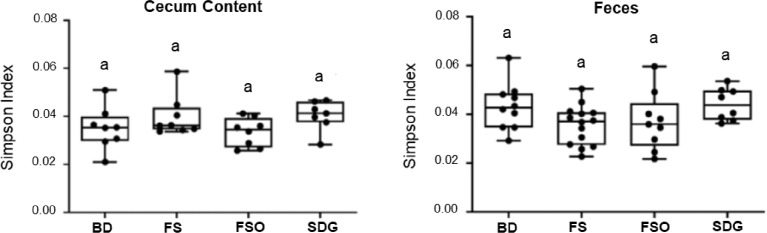
Dietary flaxseed (FS) and its components including FS oil (FSO), secoisolariciresinol diglucoside (SDG) and fiber, are processed by the gut microbiota. These data are in support of the article entitled "Discriminatory and cooperative effects within the mouse gut microbiota in response to flaxseed and its oil and lignan components", Journal of Nutritional Biochemistry [1]. Here we describe data generated by 16S rRNA sequencing of DNA obtained from cecum contents and feces of C57BL/6 female mice fed either a basal diet (BD, AIN93G), or isocaloric diets containing 10% FS, or 10% FS-equivalent amounts of FSO or SDG for 21 days. These include bacterial community composition and inferred KEGG pathways; the raw data are publicly available at the NCBI SRA database (BioProject ID PRJNA683934). Furthermore, this work includes detailed experimentation procedures, total bacterial counts (qPCR) in the cecum content and feces, and correlation analysis between a selected bacterial genus, and a predicted metabolic pathway. FS is utilized worldwide, especially for the prevention and/or treatment of diseases including cardiovascular diseases, diabetes and cancer. These data will be valuable as a reference to study different FS cultivars and SDG- or FSO- enriched products on the gut microbiota, to study gut microbial responses to FS and its components in different mouse strains and mammalian hosts to elucidate individualized effects, and to understand the importance of the gut microbiota for FS benefits.
膳食亚麻籽(FS)及其成分,包括亚麻籽油(FSO)、开环异落叶松脂素二葡萄糖苷(SDG)和纤维,会被肠道微生物群加工处理。这些数据支持了发表于《营养生物化学杂志》[1]上的题为“小鼠肠道微生物群对亚麻籽及其油和木脂素成分的区分性和协同作用”的文章。在此,我们描述了对从喂食基础饮食(BD,AIN93G)、或含10%FS的等热量饮食、或10%FS等量的FSO或SDG的等热量饮食21天的C57BL/6雌性小鼠的盲肠内容物和粪便中提取的DNA进行16S rRNA测序所产生的数据。这些数据包括细菌群落组成和推断的KEGG通路;原始数据可在NCBI SRA数据库(生物项目ID PRJNA683934)上公开获取。此外,这项工作还包括详细的实验程序、盲肠内容物和粪便中的总细菌计数(qPCR),以及选定细菌属与预测代谢途径之间的相关性分析。FS在全球范围内被使用,尤其用于预防和/或治疗包括心血管疾病、糖尿病和癌症在内的疾病。这些数据对于研究不同的FS品种以及富含SDG或FSO的产品对肠道微生物群的影响、研究不同小鼠品系和哺乳动物宿主中肠道微生物对FS及其成分的反应以阐明个体效应,以及理解肠道微生物群对FS益处的重要性而言,将是有价值的参考。