Thoracic Surgery Department, Beijing Chest Hospital, Capital Medical University; Beijing Tuberculosis and Thoracic Tumor Research Institute, Beijing, China.
Ping An Health Technology, Beijing, China.
Thorac Cancer. 2020 Jan;11(1):95-102. doi: 10.1111/1759-7714.13204. Epub 2019 Nov 6.
The main cause of cancer death is lung cancer (LC) which usually presents at an advanced stage, but its early detection would increase the benefits of treatment. Blood is particularly favored in clinical research given the possibility of using it for relatively noninvasive analyses. Copy number variation (CNV) is a common genetic change in tumor genomes, and many studies have indicated that CNV-derived cell-free DNA (cfDNA) from plasma could be feasible as a biomarker for cancer diagnosis.
In this study, we determined the possibility of using chromosomal arm-level CNV from cfDNA as a biomarker for lung cancer diagnosis in a small cohort of 40 patients and 41 healthy controls. Arm-level CNV distributions were analyzed based on z score, and the machine-learning algorithm Extreme Gradient Boosting (XGBoost) was applied for cancer prediction.
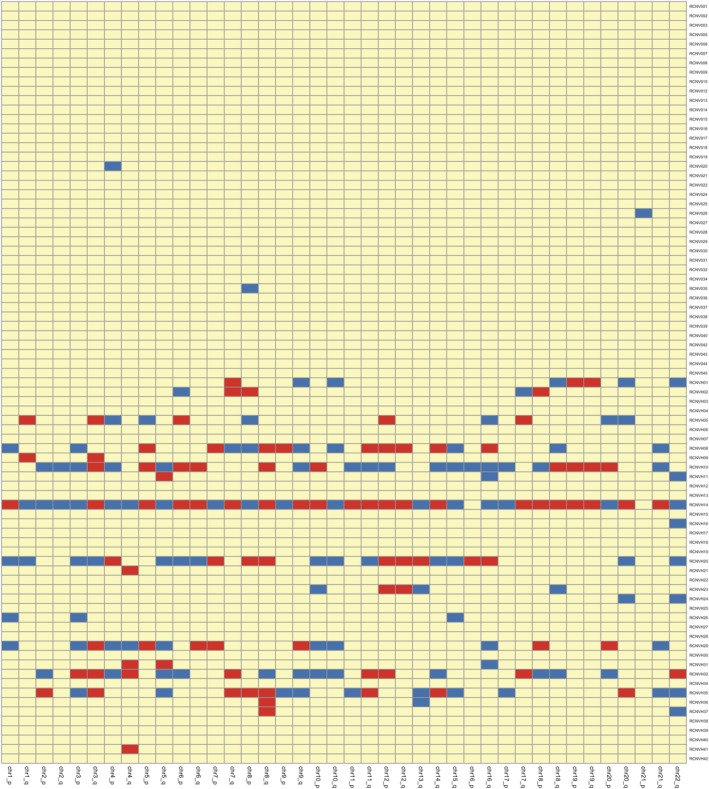
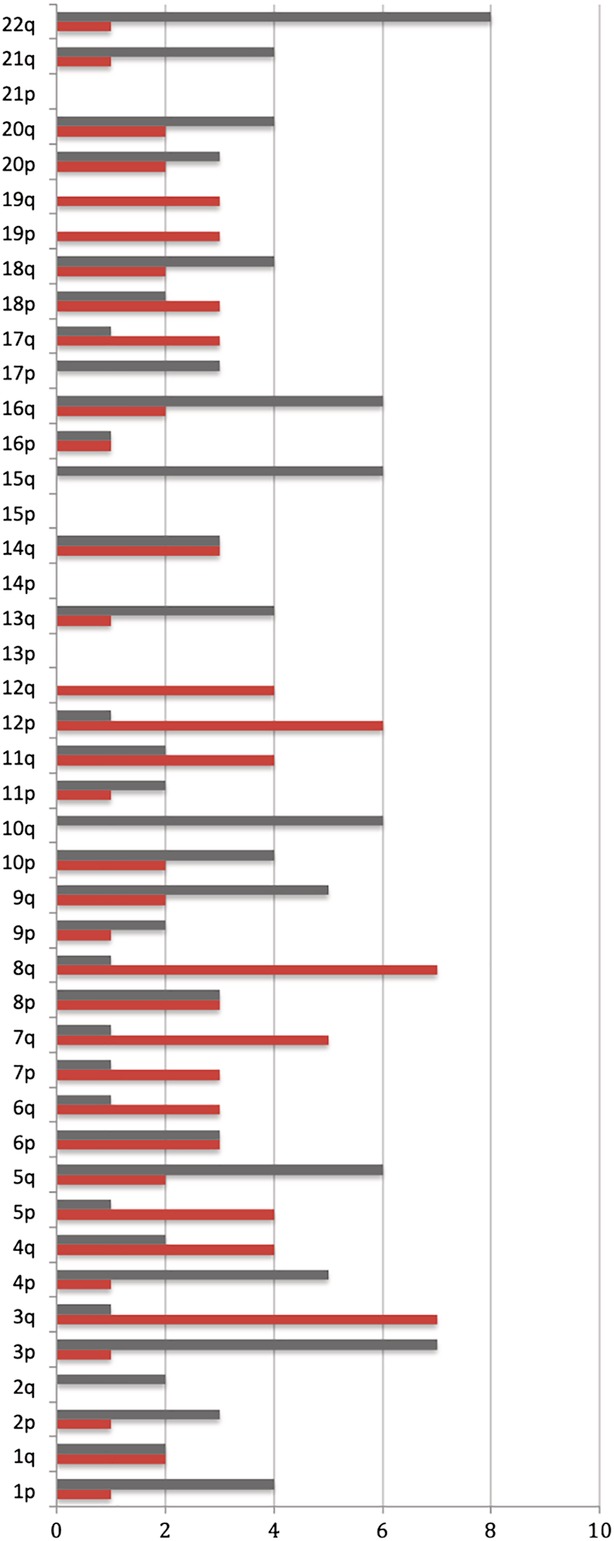
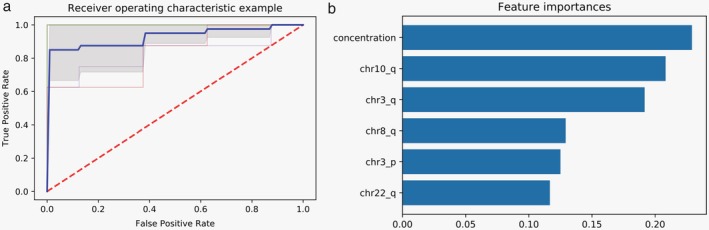
The results showed that amplifications tended to emerge on chromosomes 3q, 8q, 12p, and 7q. Deletions were frequently detected on chromosomes 22q, 3p, 5q, 16q, 10q, and 15q. Upon applying a trained XGBoost classifier, specificity and sensitivity of 100% were finally achieved in the test group (12 patients and 13 healthy controls). In addition, five-fold cross-validation proved the stability of the model. Finally, our results suggested that the integration of four arm-level CNVs and the concentration of cfDNA into the trained XGBoost classifier provides a potential method for detecting lung cancer.
Our results suggested that the integration of four arm-level CNVs and the concentration from of cfDNA integrated withinto the trained XGBoost classifier could become provides a potentially method for detecting lung cancer detection.
Significant findings of the study: Healthy individuals have different arm-level CNV profiles from cancer patients. Amplifications tend to emerge on chromosome 3q, 8q, 12p, 7q and deletions tend to emerge on chromosome 22q, 3p, 5q, 16q, 10q, 15q.
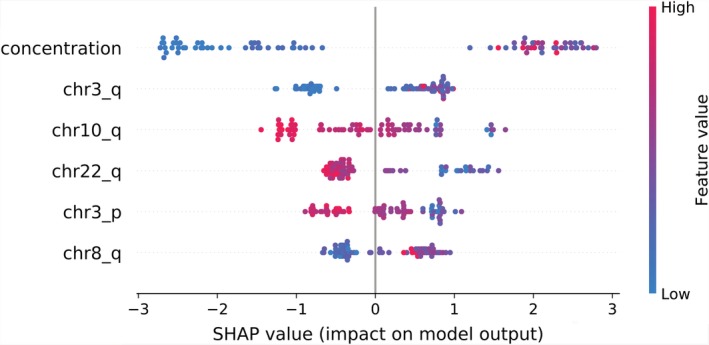
CfDNA concentration, arm 10q, 3q, 8q, 3p, and 22q are key features for prediction. Trained XGBoost classifier is a potential method for lung cancer detection.
肺癌(LC)是癌症死亡的主要原因,通常在晚期出现,但早期发现可以提高治疗效果。由于血液分析相对无创,因此在临床研究中特别受欢迎。拷贝数变异(CNV)是肿瘤基因组中的常见遗传变化,许多研究表明,来自血浆的 CNV 衍生的无细胞 DNA(cfDNA)可以作为癌症诊断的生物标志物。
在这项研究中,我们在 40 名患者和 41 名健康对照者的小队列中,确定了使用 cfDNA 中的染色体臂级 CNV 作为肺癌诊断的生物标志物的可能性。基于 z 分数分析了臂级 CNV 分布,并应用极端梯度增强(XGBoost)算法进行癌症预测。
结果表明,扩增倾向于出现在染色体 3q、8q、12p 和 7q 上。缺失经常出现在染色体 22q、3p、5q、16q、10q 和 15q 上。应用训练好的 XGBoost 分类器后,最终在测试组(12 名患者和 13 名健康对照者)中达到了 100%的特异性和敏感性。此外,五倍交叉验证证明了该模型的稳定性。最后,我们的结果表明,将四个臂级 CNV 和 cfDNA 浓度整合到训练好的 XGBoost 分类器中,为检测肺癌提供了一种潜在的方法。
我们的结果表明,将四个臂级 CNV 和 cfDNA 浓度整合到训练好的 XGBoost 分类器中,可以为检测肺癌提供一种潜在的方法。
本研究的重要发现:健康个体与癌症患者的臂级 CNV 谱不同。扩增倾向于出现在染色体 3q、8q、12p、7q 上,缺失倾向于出现在染色体 22q、3p、5q、16q、10q、15q 上。
cfDNA 浓度、臂 10q、3q、8q、3p 和 22q 是预测的关键特征。训练好的 XGBoost 分类器是一种潜在的肺癌检测方法。