Department of Biology, Botany, University of Osnabrück, Barbarastraße 11, D-49076, Osnabrück, Germany.
Department of Biology, Faculty of Science, Hacettepe University, Beytepe, Ankara, 06800, Turkey.
Sci Rep. 2019 Nov 6;9(1):16108. doi: 10.1038/s41598-019-52520-y.
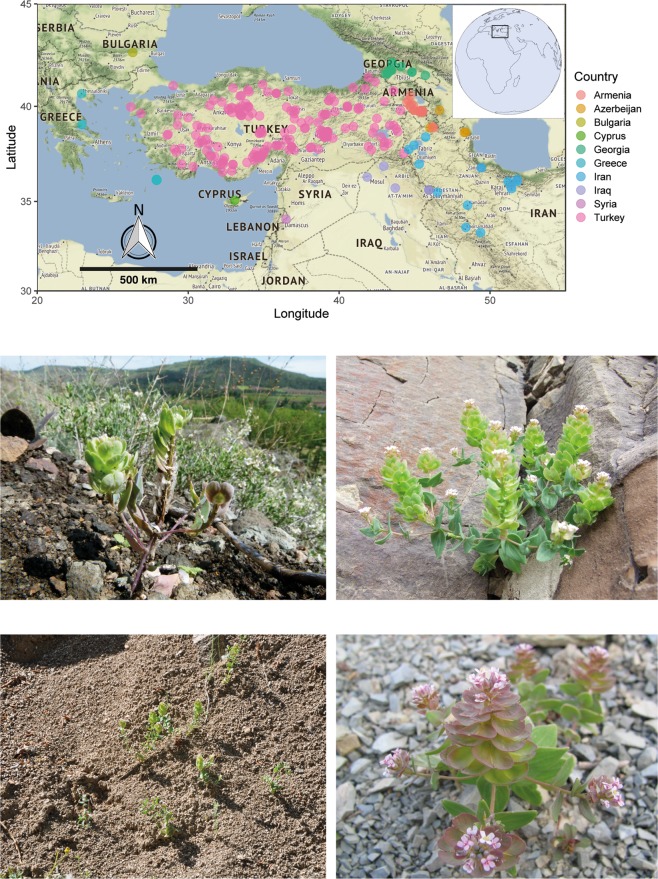
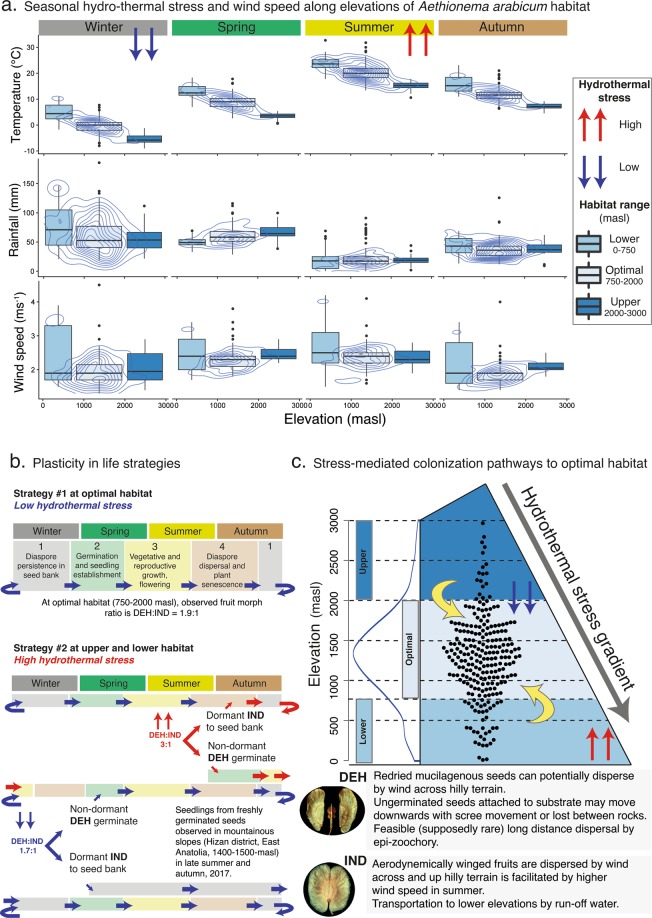
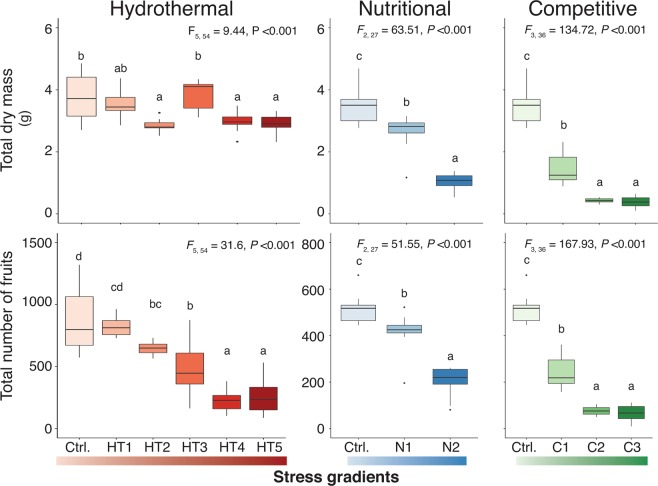
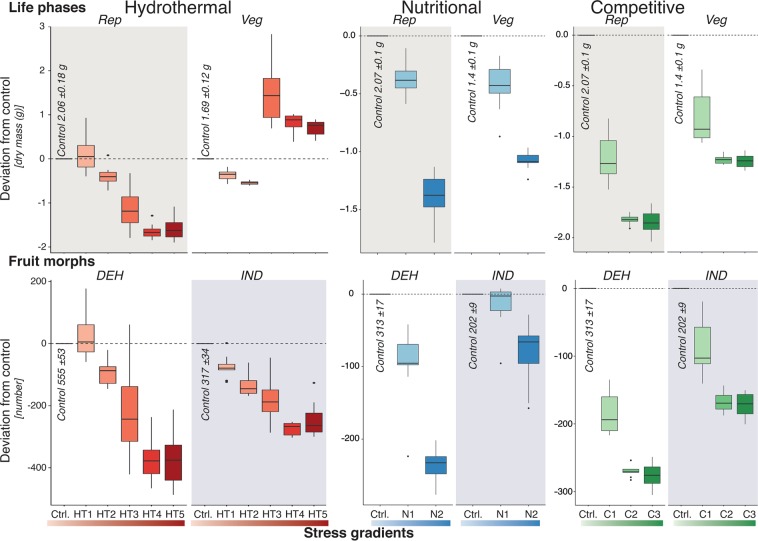
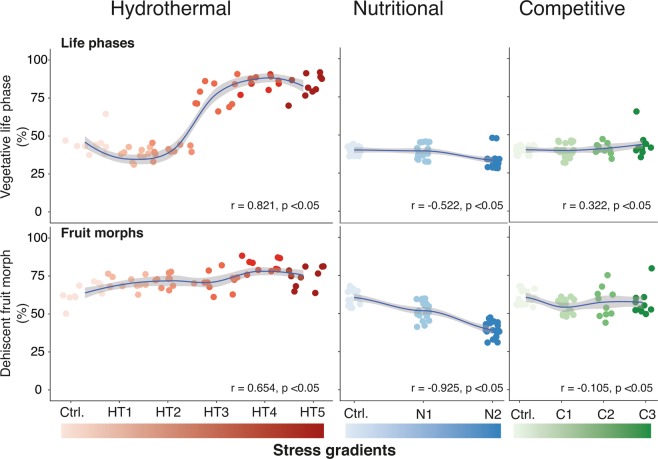
Plasticity in plant dispersal traits can maximise the ability of a plant species to survive in stressful environments during colonization. Aethionema arabicum (Brassicaceae) is a dimorphic annual species that is hypothesized to survive stressful conditions during colonization due to adaptive plasticity in life-phase (vegetative vs sexual) and fruit morph (dehiscent [DEH] vs indehiscent fruits [IND]). We tested for adaptive plasticity in life-phase and fruit morphs along laboratory environmental stress gradients found in the natural habitats of Ae. arabicum. We considered optimal environmental conditions (750-2000 m above sea level) to be those that resulted in the following fitness parameters: higher biomass and a higher total number of fruits compared to stressful habitats. We found evidence of plasticity in life-phase and fruit-morph along a stressful environmental gradient. High hydrothermal stress proportionally increased the number of dehiscent morphs and non-dormant seeds germinating in autumn. This offsets natural phenology towards dry and cold winter (less hydrothermal stress), yielding fewer fruits that dehisce in the next generation. We conclude that the plastic responses of Ae. arabicum to natural stress gradients constitute a strategy of long-term adaptive benefits and favouring potential pathways of colonisation of the optimal habitat.
植物扩散特性的可塑性可以最大限度地提高植物物种在殖民过程中适应压力环境的能力。阿拉伯芝麻菜(十字花科)是一种二态一年生物种,由于生活阶段(营养生长与有性生殖)和果实形态(开裂果实与不开裂果实)的适应性可塑性,它被假设可以在殖民过程中适应压力条件。我们在阿拉伯芝麻菜自然栖息地发现的实验室环境压力梯度中,测试了生活阶段和果实形态的适应性可塑性。我们将最佳环境条件(海拔 750-2000 米)定义为那些与压力条件相比,产生以下适应度参数更高的条件:更高的生物量和更多的总果实数。我们发现生活阶段和果实形态沿压力环境梯度存在可塑性。高湿热胁迫比例增加了秋季开裂形态和非休眠种子的数量。这使得自然物候学向干旱和寒冷的冬季(湿热胁迫减少)倾斜,从而减少了下一代开裂果实的数量。我们的结论是,阿拉伯芝麻菜对自然压力梯度的可塑性反应构成了长期适应优势的策略,并有利于潜在的最优栖息地的殖民途径。