Department of Mathematics, University of York, Heslington, York, United Kingdom.
Fera Science Ltd., Sand Hutton, York, United Kingdom.
PLoS One. 2019 Nov 7;14(11):e0224771. doi: 10.1371/journal.pone.0224771. eCollection 2019.
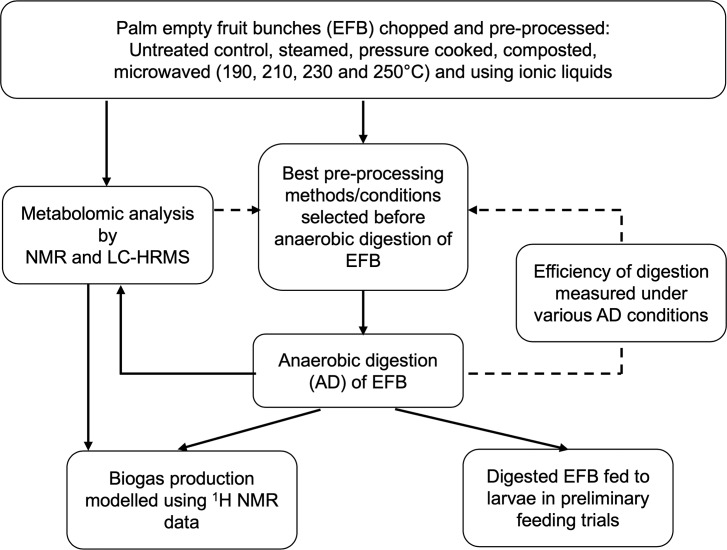
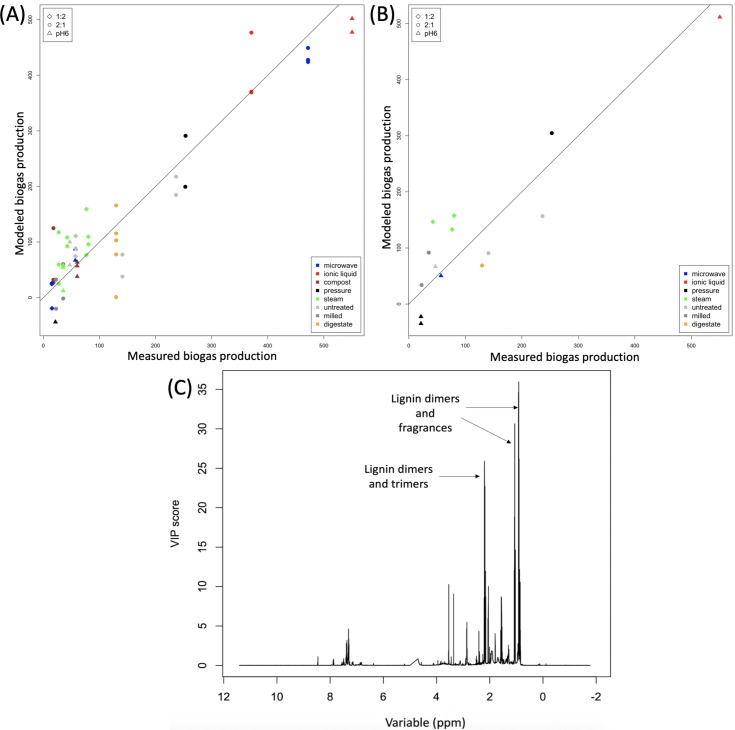
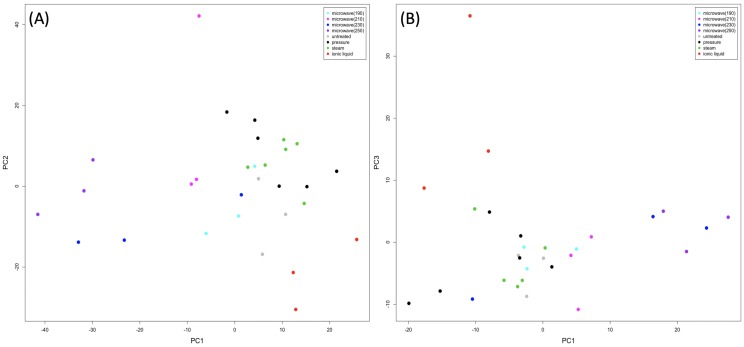
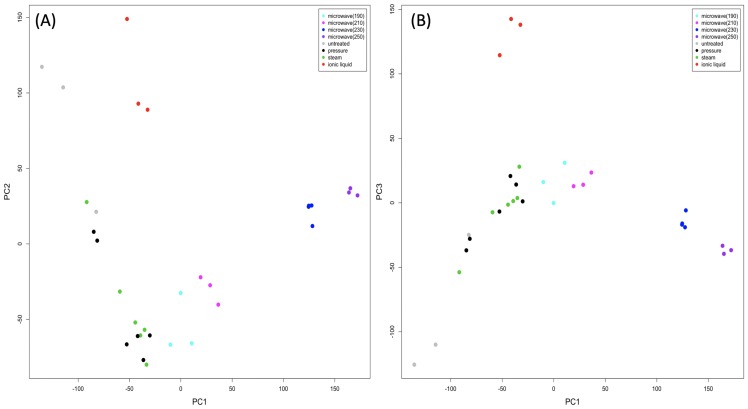
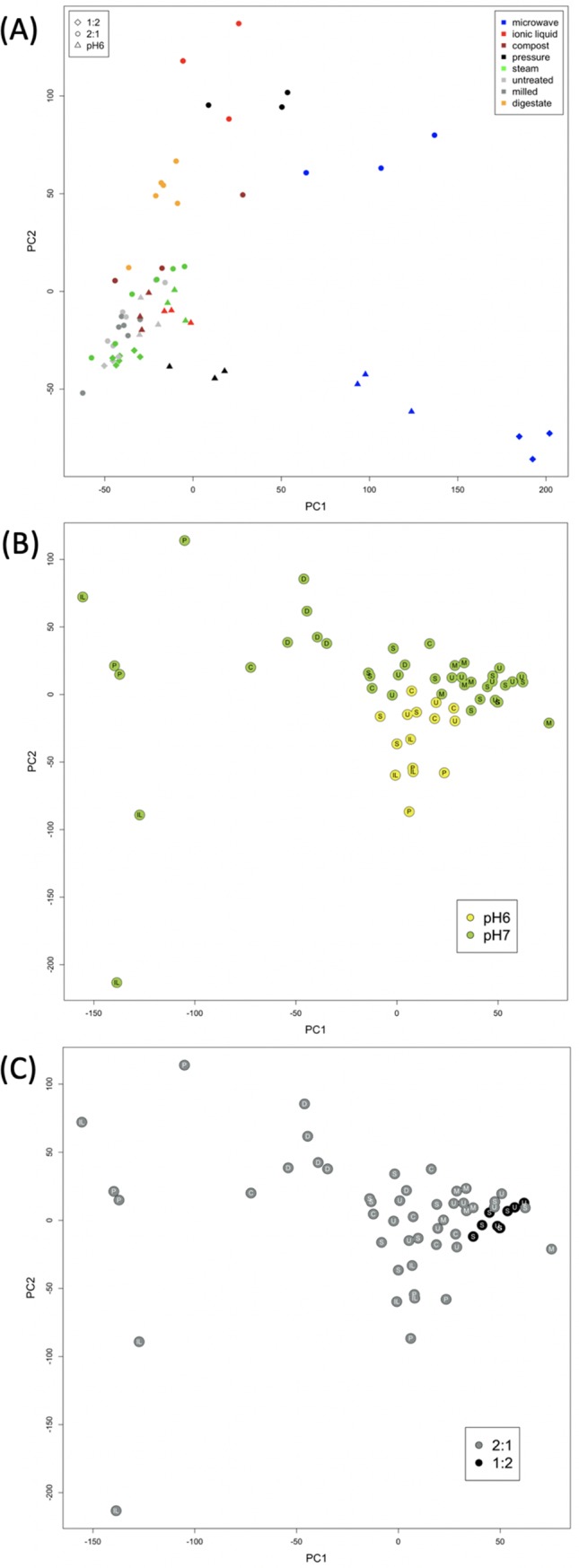
Waste biomass from the palm oil industry is currently burned as a means of disposal and solutions are required to reduce the environmental impact. Whilst some waste biomass can be recycled to provide green energy such as biogas, this investigation aimed to optimise experimental conditions for recycling palm waste into substrate for insects, farmed as a sustainable high-protein animal feed. NMR spectroscopy and LC-HRMS were used to analyse the composition of palm empty fruit bunches (EFB) under experimental conditions optimised to produce nutritious substrate rather than biogas. Statistical pattern recognition techniques were used to investigate differences in composition for various combinations of pre-processing and anaerobic digestion (AD) methods. Pre-processing methods included steaming, pressure cooking, composting, microwaving, and breaking down the EFB using ionic liquids. AD conditions which were modified in combination with pre-processing methods were ratios of EFB:digestate and pH. Results show that the selection of pre-processing method affects the breakdown of the palm waste and subsequently the substrate composition and biogas production. Although large-scale insect feeding trials will be required to determine nutritional content, we found that conditions can be optimised to recycle palm waste for the production of substrate for insect rearing. Pre-processing EFB using ionic liquid before AD at pH6 with a 2:1 digestate:EFB ratio were found to be the best combination of experimental conditions.
棕榈油工业的废生物质目前被作为一种处理方法进行燃烧,因此需要寻找解决方案来减少其对环境的影响。虽然一些废生物质可以回收利用,为沼气等绿色能源提供燃料,但本研究旨在优化实验条件,将棕榈废料回收为昆虫的基质,作为可持续的高蛋白动物饲料进行养殖。NMR 光谱和 LC-HRMS 用于分析在优化条件下产生营养基质而不是沼气时,棕榈空果串(EFB)的组成。统计模式识别技术用于研究不同预处理和厌氧消化(AD)方法组合的组成差异。预处理方法包括蒸煮、加压烹饪、堆肥、微波处理以及使用离子液体分解 EFB。与预处理方法相结合的 AD 条件包括 EFB:消化液的比例和 pH 值。结果表明,预处理方法的选择会影响棕榈废料的分解,从而影响基质组成和沼气产量。尽管需要进行大规模的昆虫喂养试验来确定营养成分,但我们发现可以优化条件,以回收棕榈废料,用于生产昆虫养殖的基质。在 pH6 条件下使用离子液体预处理 EFB,然后以 2:1 的消化液:EFB 比例进行 AD,被发现是实验条件的最佳组合。