Chopyk Daniel M, Stuart Johnasha D, Zimmerman Matthew G, Wen Jing, Gumber Sanjeev, Suthar Mehul S, Thapa Manoj, Czaja Mark J, Grakoui Arash
Emory Vaccine Center, Division of Microbiology and Immunology Yerkes National Primate Research Center, Emory University School of Medicine Atlanta GA.
Division of Infectious Diseases, Department of Pediatrics Emory University School of Medicine Atlanta GA.
Hepatol Commun. 2019 Jul 15;3(11):1435-1449. doi: 10.1002/hep4.1406. eCollection 2019 Nov.
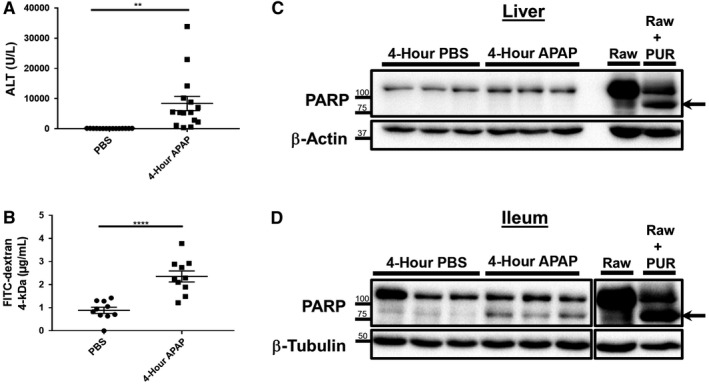
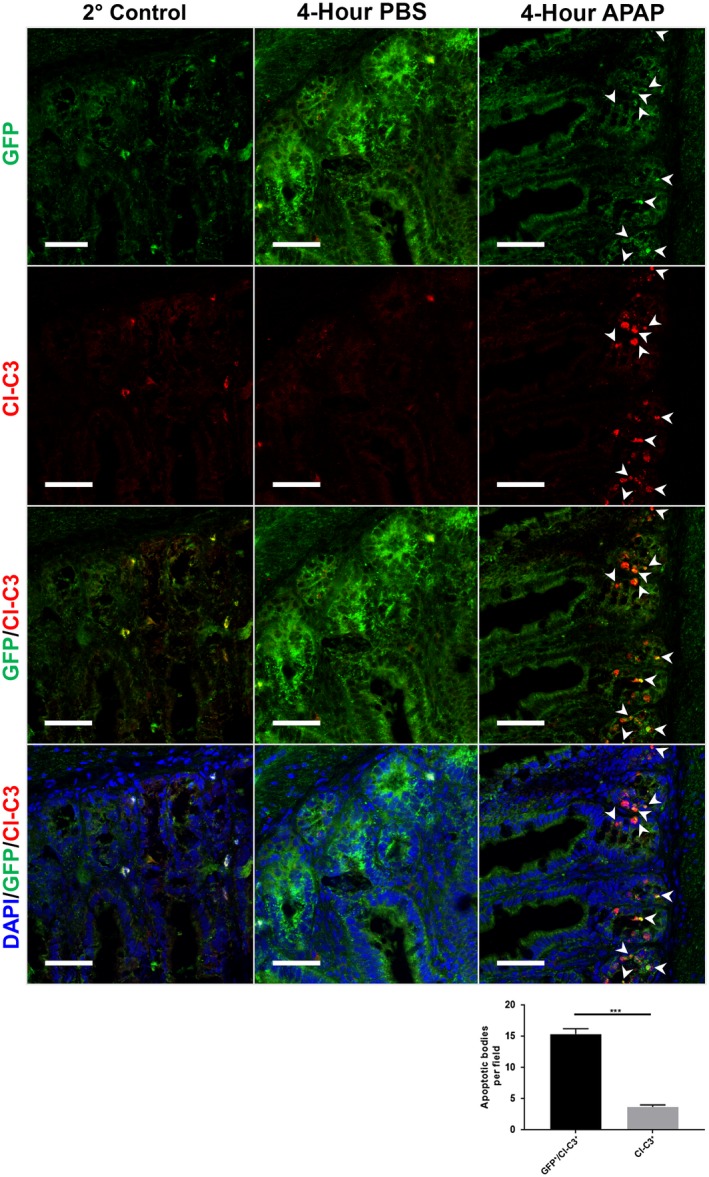
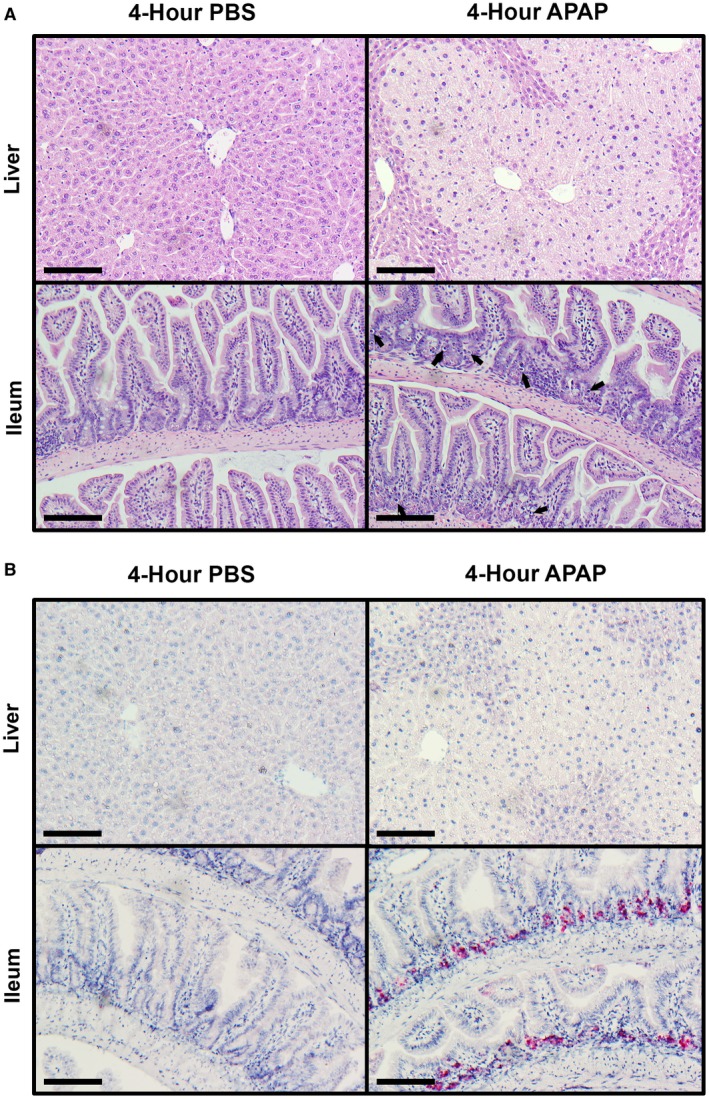
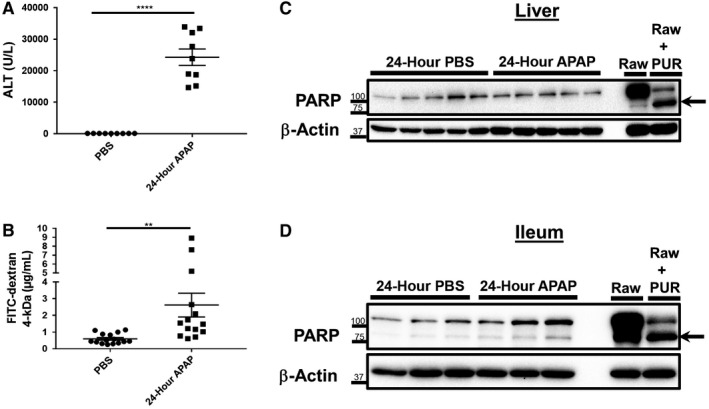
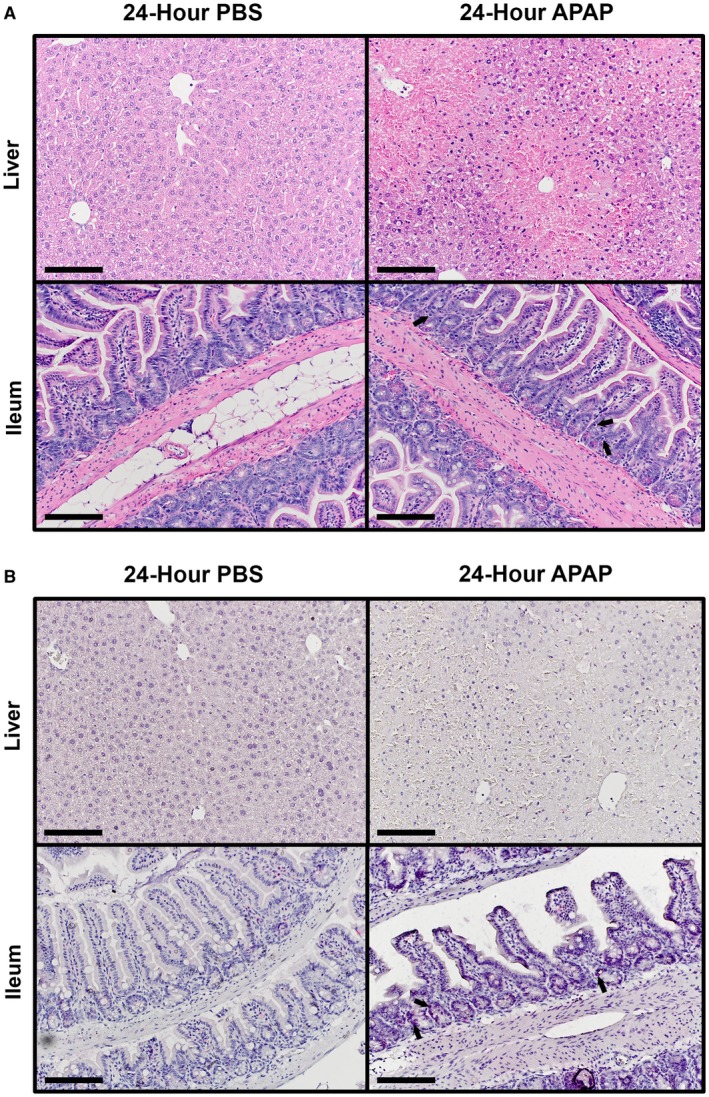
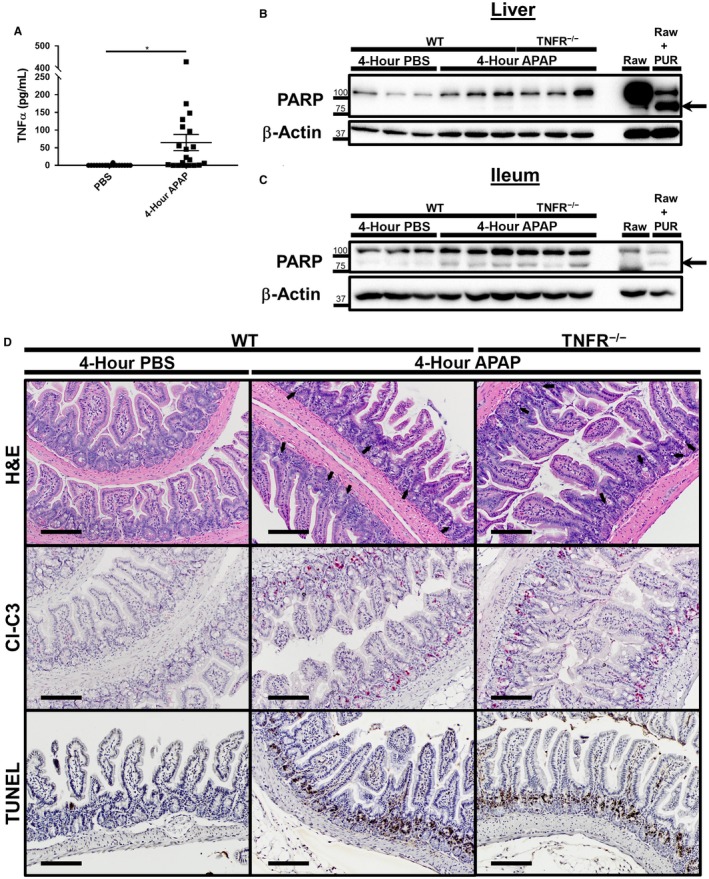
Acetaminophen (APAP)-induced liver injury is the most common cause of acute liver failure (ALF) in the Western world. APAP toxicity progresses to multiorgan dysfunction and thus has broader whole-body implications. Importantly, greater 30-day mortality has been observed in liver transplant recipients following ALF due to APAP-related versus non-APAP-related causes. Reasons for this discrepancy have yet to be determined. Extrahepatic toxicities of APAP overdose may represent underappreciated and unaddressed comorbidities within this patient population. In the present study, rapid induction of apoptosis following APAP overdose was observed in the intestine, an organ that greatly influences the physiology of the liver. Strikingly, apoptotic cells appeared to be strictly restricted to the intestinal crypts. The use of leucine-rich repeat-containing G protein-coupled receptor 5 () reporter mice confirmed that the -positive ( crypt base stem cells were disproportionately affected by APAP-induced cell death. Although the apoptotic cells were cleared within 24 hours after APAP treatment, potentially long-lived consequences on the intestine due to APAP exposure were indicated by prolonged deficits in gut barrier function. Moreover, small intestinal cell death was found to be independent of tumor necrosis factor receptor signaling and may represent a direct toxic insult to the intestine by exposure to high concentrations of APAP. APAP induces intestinal injury through a regulated process of apoptotic cell death that disproportionately affects stem cells. This work advances our understanding of the consequences of APAP toxicity in a novel organ that was not previously considered as a significant site of injury and thus presents potential new considerations for patient management.
对乙酰氨基酚(APAP)诱导的肝损伤是西方世界急性肝衰竭(ALF)最常见的原因。APAP毒性会发展为多器官功能障碍,因此对全身有更广泛的影响。重要的是,与非APAP相关原因导致的ALF相比,APAP相关原因导致的肝移植受者30天死亡率更高。这种差异的原因尚未确定。APAP过量的肝外毒性可能是该患者群体中未被充分认识和解决的合并症。在本研究中,在对肝脏生理学有重大影响的器官——肠道中,观察到APAP过量后凋亡迅速诱导。引人注目的是,凋亡细胞似乎严格局限于肠隐窝。使用富含亮氨酸重复序列的G蛋白偶联受体5()报告基因小鼠证实,-阳性(隐窝基底干细胞受到APAP诱导的细胞死亡的影响不成比例。尽管凋亡细胞在APAP治疗后24小时内被清除,但肠道屏障功能的长期缺陷表明APAP暴露可能对肠道产生长期影响。此外,发现小肠细胞死亡独立于肿瘤坏死因子受体信号传导,可能是由于暴露于高浓度APAP对肠道的直接毒性损伤。APAP通过一个调节性的凋亡细胞死亡过程诱导肠道损伤,该过程对干细胞的影响不成比例。这项工作增进了我们对APAP毒性在一个以前未被视为重要损伤部位的新器官中的后果的理解,从而为患者管理提出了潜在的新考虑因素。