Department of Biological Engineering, Massachusetts Institute of Technology, Cambridge, MA, 02139, USA.
Koch Institute of Integrative Cancer Research, Massachusetts Institute of Technology, Cambridge, MA, 02139, USA.
Nat Commun. 2019 Nov 8;10(1):5080. doi: 10.1038/s41467-019-13093-6.
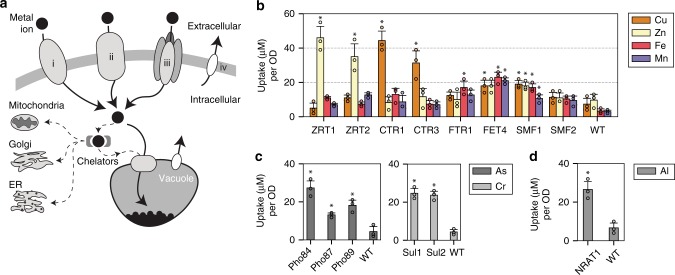
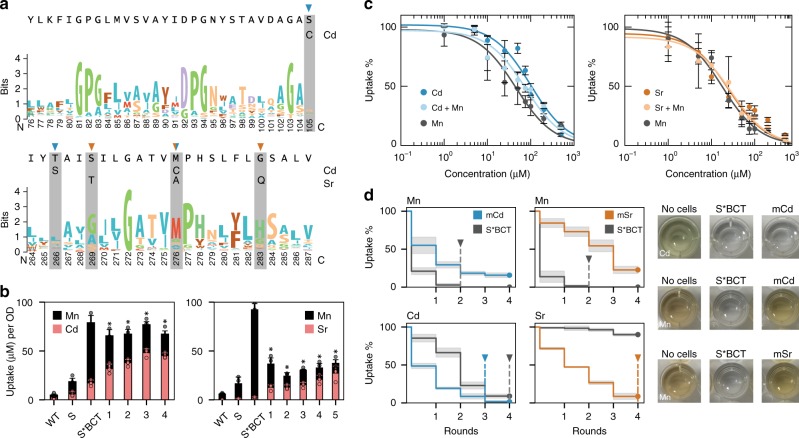
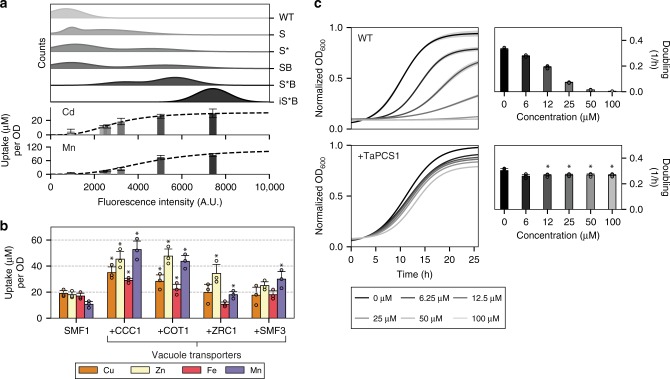
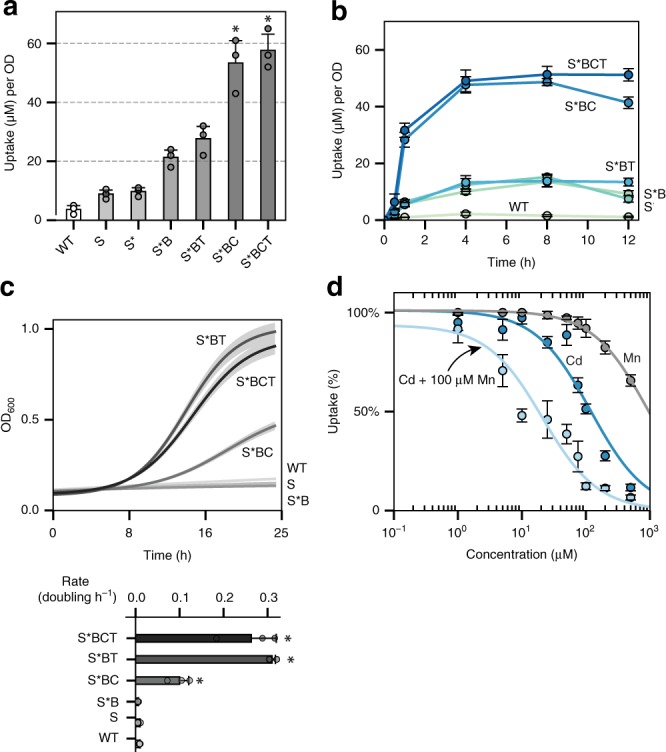
Hyperaccumulators typically refer to plants that absorb and tolerate elevated amounts of heavy metals. Due to their unique metal trafficking abilities, hyperaccumulators are promising candidates for bioremediation applications. However, compared to bacteria-based bioremediation systems, plant life cycle is long and growing conditions are difficult to maintain hindering their adoption. Herein, we combine the robust growth and engineerability of bacteria with the unique waste management mechanisms of plants by using a more tractable platform-the common baker's yeast-to create plant-like hyperaccumulators. Through overexpression of metal transporters and engineering metal trafficking pathways, engineered yeast strains are able to sequester metals at concentrations 10-100 times more than established hyperaccumulator thresholds for chromium, arsenic, and cadmium. Strains are further engineered to be selective for either cadmium or strontium removal, specifically for radioactive Sr. Overall, this work presents a systematic approach for transforming yeast into metal hyperaccumulators that are as effective as their plant counterparts.
超积累植物通常是指能够吸收并耐受大量重金属的植物。由于其独特的金属运输能力,超积累植物是生物修复应用的有前途的候选者。然而,与基于细菌的生物修复系统相比,植物的生命周期长,生长条件难以维持,这阻碍了它们的应用。在这里,我们通过使用更易于处理的平台——普通面包酵母,将细菌的强大生长和可操作性与植物独特的废物管理机制相结合,创造出类植物超积累植物。通过过度表达金属转运蛋白和工程化金属运输途径,工程酵母菌株能够将铬、砷和镉等金属的浓度螯合到比既定超积累植物阈值高 10-100 倍的水平。进一步对菌株进行工程改造,使其具有选择性地去除镉或锶,特别是去除放射性 Sr。总的来说,这项工作提出了一种将酵母转化为金属超积累植物的系统方法,其效果与植物对应物一样有效。