Faculty of Medicine, University of New South Wales, Sydney, Australia.
Office of Medical Education, University of New South Wales, Sydney, Australia.
BMC Med Educ. 2019 Nov 9;19(1):415. doi: 10.1186/s12909-019-1860-z.
Struggling medical students is an under-researched in medical education. It is known, however, that early identification is important for effective remediation. The aim of the study was to determine the predictive effect of medical school admission tools regarding whether a student will struggle academically.
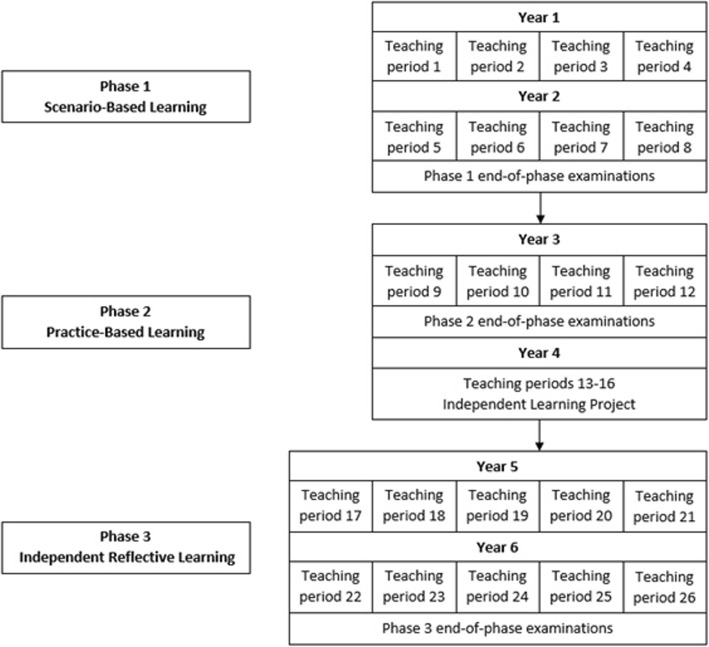
Data comprise 700 students from the University of New South Wales undergraduate medical program. The main outcome of interest was whether these students struggled during this 6-year program; they were classified to be struggling they failed any end-of-phase examination but still graduated from the program. Discriminate Function Analysis (DFA) assessed whether their pre-admission academic achievement, Undergraduate Medicine Admission Test (UMAT) and interview scores had predictive effect regarding likelihood to struggle.
A lower pre-admission academic achievement in the form of Australian Tertiary Admission Rank (ATAR) or Grade Point Average (GPA) were found to be the best positive predictors of whether a student was likely to struggle. Lower UMAT and poorer interview scores were found to have a comparatively much smaller predictive effect.
Although medical admission tests are widely used, medical school rarely use these data for educational purposes. The results of this study suggest admission test data can predict who among the admitted students is likely to struggle in the program. Educationally, this information is invaluable. These results indicate that pre-admission academic achievement can be used to predict which students are likely to struggle in an Australian undergraduate medicine program. Further research into predicting other types of struggling students as well as remediation methods are necessary.
在医学教育中,学业困难的医学生是一个研究不足的群体。然而,众所周知,早期识别对于有效的补救措施很重要。本研究的目的是确定医学院录取工具对学生是否会在学业上挣扎的预测效果。
数据包括来自新南威尔士大学本科医学项目的 700 名学生。主要关注的结果是这些学生在这个 6 年的项目中是否挣扎过;他们被定义为在该项目中失败了任何阶段性考试但仍毕业的学生。判别函数分析(DFA)评估了他们入学前的学业成绩、本科医学入学考试(UMAT)和面试成绩是否对他们是否可能挣扎具有预测效果。
发现入学前的学业成绩(以澳大利亚高等教育入学排名(ATAR)或平均绩点(GPA)的形式)较低是学生是否可能挣扎的最佳正预测指标。较低的 UMAT 和较差的面试成绩则被发现具有相对较小的预测效果。
尽管医学入学考试被广泛使用,但医学院很少将这些数据用于教育目的。本研究的结果表明,入学考试数据可以预测被录取的学生中哪些人在该项目中可能会挣扎。从教育的角度来看,这些信息是非常宝贵的。这些结果表明,入学前的学业成绩可以用来预测哪些学生在澳大利亚本科医学课程中可能会挣扎。进一步研究预测其他类型的学业困难学生以及补救方法是必要的。